
Enjoy Happy Trails, the free monthly newsletter from Hiking For Her
Receive a free resource: "Hiking Layering System Explained"
Backpacking Water
Purification and Treatment:
Best Tips For Hikers
By Diane Spicer
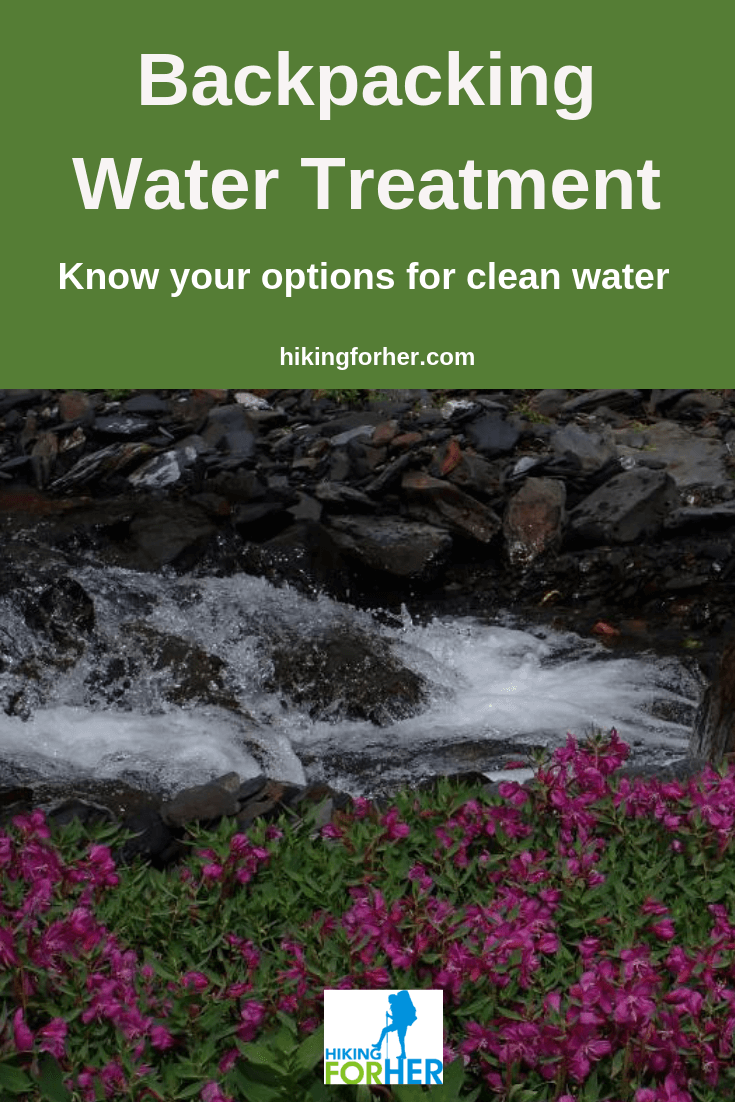
Backpacking water purification is an absolute must if you are venturing into areas with untreated surface water as your only drinking water source.
Water treatment has unfortunately become the rule for backpackers.
It's the only way to avoid picking up digestive infections such as beaver fever i.e. unpleasant giardia symptoms.
Microscopic troublemakers are left behind when people and animals leave sweat, feces or urine in ponds, lakes and streams:
- viruses
- bacteria
- protozoa
- worms
They have one mission in life: to seek and find a gut in which to reproduce.
And for you, that means diarrhea, dehydration and other non-fun issues to deal with on a backpacking trip if you play host to one of these invaders.
Sometimes all it takes is 10 little organisms, or a few cysts, to knock you out for days.
Yuck, right?
Before you vow to drink not one drop of surface water on your trip, let's take a clear eyed look at the problem of providing yourself with safe hiking water on an extended backcountry trip.
- You cannot carry all of the water you're going to need from your own household tap.
- So you're going to have to learn some backpacking water purification and treatment strategies.
It's going to take a bit of time to work through all of the options for clean hiking water here on this page, so please hang in there.
We'll start with a question that you'll have to answer again and again on a backpacking trip.
Which type of surface water
should I go for?
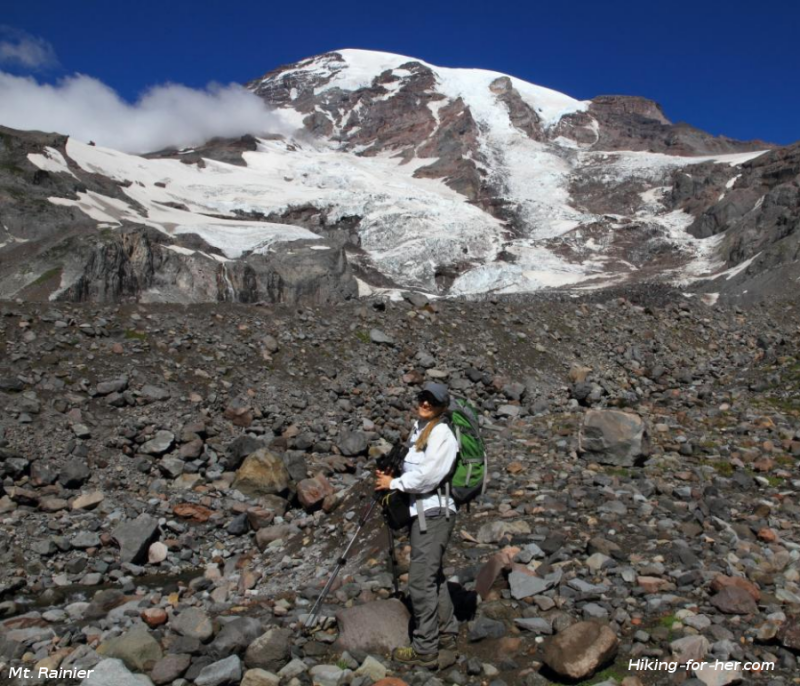
Lots of surface water looks clean: a sparkling stream cascading down the rocks from snow melt or a glacier, for instance.
- Notice the emphasis on flowing, cold and clear water.
If you can find a fast moving water source like that, you're less likely to pick up lurkers in your water because they have a tough time hanging around and reproducing.
Ah, if only we could all hike in such lovely places! Backpacking water purification would be one less thing to worry about and prepare for on our gear lists.
Lakes, tarns or ponds
What if there are no flowing streams handy as a water source?
Your backup choice would be water that has had time to settle and is relatively cool and clear.
Take your water from the top layer of the lake or pond, because gravity has helped pull debris and microorganisms into the bottom layers.
If you have to wade out into the water clutching a cooking pot, don't go in like a raging bull; slow, soft steps will avoid churning things up.
- Having the patience to wait a few minutes before gathering your water, also helpful.
And if you can get away from the shoreline a bit, perched on a log or rock, that's even better because there is less chance of a random pooping event from a passing animal (and I hate to say it, a human in a hurry).
Slow to no flow
Stagnant, murky water has several problems, such as clogging a filter and hosting mosquitoes (never fun to swallow)
- Gravity sedimentation will remove some of the murk, insect eggs and plant debris, but it still might be challenging to pull it through a filter.
- We'll mention pre-filtering soon.
If green, algal-y (word invention?) is all you've got, there are other ways to get that water clean enough to drink, so keep reading.
Heavy rainfall
If you go backpacking enough times, you're going to go through a deluge.
Or a week of heavy rain.
Try to get to your water sources right before a big dump of rain.
And wait several hours until a turbulent stream flow settles down.
- You don't want heavy run off and turbulence to increase the odds of running into fecal contaminants if you can avoid it.
- And you don't want a clogged filter or a long wait time for debris to settle out.
Best water source tip
Take a good look around your potential water source before you bend over.
Do you see a lot of footprints, tracks, disturbed vegetation, scuffed up rocks, piles of animal poop?
Any signs of a campsite or human litter?
Those are signs that animals and humans prefer this location, and when they visit, they are likely to spit, poop, pee, and spread their normal flora around (microbes in their digestive tract and on skin).
These organisms might be brand new to you if you're visiting a new part of the world, or of a particular strain which will challenge your immune system.
- As a backpacker, you are likely to be at less than 100% strength after a few tough days on the trail.
- The last thing you want is a gastrointestinal infection which depletes your body of water, electrolytes, and strength.
So do your best to find undisturbed locations for access to backpacking water sources, even if it's less convenient at first or second glance. It makes backpacking water purification less risky.
Go on, admit it!
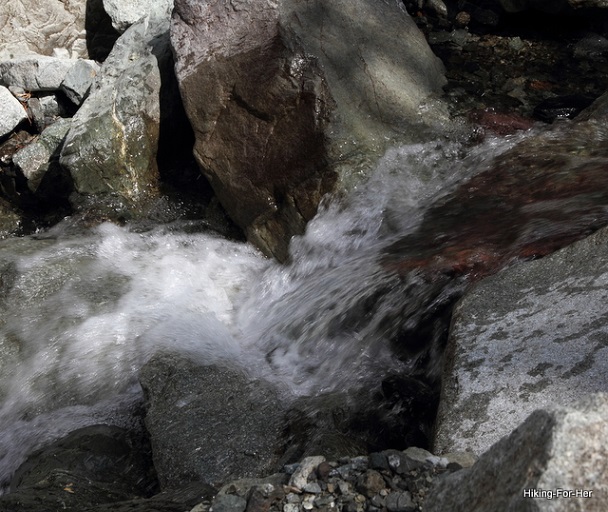 Looks clean to me!
Your eyes are not up to the task of determining if there is danger in the water (sorry to diss your eyeballs, but it's true).
There are many unseen sources of water contamination lurking in that "clean" water.
Microorganisms are the main focus here, but be aware that water can harbor other problems.
For instance, heavy metals or pesticides can be a danger in surface water near populated areas, fields or old mines.
- Choose a water purification method with activated carbon to handle this scenario.
So face facts: you're going to have to treat your water correctly, each and every time, to be sure it's safe to drink.
Don't skip these next sentences!
Keep in mind this important distinction:
- a water filter may not remove viruses, but a purification method (including a purifying filter) will remove or neutralize them.
This is a huge consideration if you are traveling to areas known to be contaminated with human feces.
And that's just about anywhere that humans have access to surface water - pristine appearing mountain lakes and streams included.
- If there's a boot path or game trail to it, there are pathogens in the water.
Some advice givers say that backpackers in the United States will likely face protozoan and bacterial problems in surface water, rather than viruses.
Elsewhere in the world, viral diseases become more likely, especially in heavily traveled areas.
Err on the side of total elimination of problems if you're at all worried: backpacking water purification.
Which water treatment method
makes sense for you?
Should a hiking water filter be your first line of defense against dirty drinking water?
Not necessarily.
- It all depends on how aggressive you want to be about backpacking water treatment,
- how much you want to pay for clean water,
- how strong your immunity is known to be,
- the amount of maintenance you're willing to perform in the field,
- and how much weight and bulk you want to carry.
Let's begin your quest for choosing a method of backpacking water purification with a close look at water filtration methods.
Backpacking water treatment option:
carry a water filter
A filter is just a physical barrier to keep the microbes behind as water molecules flow through.
We're talking pore size here.
Size does matter (as any female with enlarged pores on her nose will tell you).
- Worm (helminth) eggs are tricky little devils, and you don't want them to wake up inside your gut (not as dire as the movie Alien, but close).
- Smaller trouble makers are protozoa like the previously mentioned Giardia, but Cryptosporidium (crypto meaning hidden) is also a top contender for your gut real estate.
- Even smaller, bacterial fecal contaminants like E. coli, Campylobacter and Salmonella are deposited in water by animals and humans alike.
Large, easy to block (relatively speaking, because come on, they're microscopic!) eggs and organisms like these are effectively removed by any water filter on the market.
But there are various methods to push, squeeze or guide the water through the filter.
So let's look at some backpacking water filter options to clean up your water.
And heads up:
- A filter is heavy and bulky when compared with some of the other water treatment options.
- But it has definite advantages.
So keep an open mind as you read.
Removal of bacteria and protozoa
via a pump filter
A pump filter has three important pieces:
- pre filter, intake hose, filter
You place the pre filter with its flotation device in your water source.
- The float prevents the intake valve from sinking to the mucky or gritty bottom and thus becoming fouled.
Make sure you have a solid connection between the clean intake hose and the water filter.
Have your clean water bottle or other receptacle ready to receive the water.
Two people with clean, dry hands ensure a straight forward filtering event - with the right type of surface water: deep enough, or flowing enough.
Some filters are designed to screw onto the mouth of a water bottle, making this more readily a one person job.
Pump filters are relatively easy to use when conditions are ideal, but if you have arthritic hands or it's a cold, wet day, pumping gets hard.
And consider the volume of water you need each day.
In a group hiking situation with high water demands, you can rotate the water pumping chores.
- But after a few days, it's going to be tough to psych yourself up for the tedium of the task.
Is there an easier way?
Keep reading.
Gravity water filters
to remove protozoa and bacteria
A gravity filter makes use of the planetary force which drags everything downward (including your feet at the end of the day).
So this water treatment method makes use of a simple two bag design, and I'm guessing you've already figured this out:
- The top bag contains the dirty water while the lower bag (labeled "clean") receives water that has flowed through a replaceable in line filter.
No pumping!!! Can I get an amen?
But before you get too excited about gravity filtration, let me point out a major drawback: fast flowing water is the ideal source because it fills up the top "unclean" bag lickety split.
If you're in an area where water is scarce (think seasonal seepage or trickles), it's going to be tough to get that bag filled up in any reasonable amount of time.
You'll also have to hang the bags, or at least the top one, so if you're in high alpine or tundra conditions, that might not be an ideal solution to your water filtration.
Don't expect fast results, as you would with a pump filter.
The pliable BPA free plastic bags need to be kept clean, out of direct sunlight for any period of time, and can be brittle in really cold weather.
Not sounding right for you?
There's a third filtration option
for larger microbes
One more option for you: a squeeze through, or drink through, filtration method.
This filtration method is super easy to use: fill up your bottle from any source, and sip or squeeze water into your mouth through a filter.
Or kneel down and drink directly from the surface water through a straw attached to a filter.
Pretty exciting, right?
You can drink from any surface water sources (use the tips above for best results), and these backpacking water treatment methods will filter OR purify, depending upon your choice.
These small lightweight devices are perfect for supplying your personal clean water needs as you move along the trail.
But for preparing large volumes of clean water, they're not so great (see pump and gravity methods instead).
Read Hiking For Her's review of the LifeStraw Water Filter to decide if this approach would work as your primary water treatment method.
If you want to go as lightweight as possible and still purify your water on a backpacking trip, consider a Lifestraw Go two stage water filtration bottle.
- Read my review here.
Viral removal
via purification
Here's where backpacking water purification comes into its own.
Why?
Because viruses in water are a completely different kettle of fish (sure, let's mix metaphors, it's all fun and games until someone's gut gets colonized).
Viral particles are so.much.smaller than our wormy, bacterial and protozoal frenemies.
Hepatitis, norovirus, rotavirus: these are the human pathogens you're most likely to meet as a backpacker looking for drinking water.
Enter your secret weapon: technology on steroids.
A well designed filter can remove them, if the pore size is small enough.
- That's going to increase the cost of the technology to produce the filter, and thus the cost that you pay to buy it.
So don't grab just any filter if water borne viruses are a concern.
A filter which promises water purification is telling you that the pore size is guaranteed to be small enough to keep viruses behind, while allowing the even smaller water molecules to flow into your water bottle.
- In an abundance of caution, read the specifications carefully for pore size.
And for the love of all that is healthy, allow murky gunky water to settle for an hour, or run it through a bandanna, before you use a filter of this sophistication and cost!
Filter maintenance
Your water safety is only as good as the filter, right?
Replacing a filter cartridge and maintaining your filtration system seems like an additional expense of time and money, but it's really an investment in your health - and ultimately, in the success of your backpacking trip.
A few tips:
Don't let a newbie handle the filter without some training.
Test your filter for flow rate and tight seals before you leave for your trip.
Bring along some replacement parts.
If you're going into a situation where you have no idea about water quality, carry a replacement cartridge.
Back flush the filter if the intake valve gets clogged, or take time to clean the entire unit if the flow rate drops way off (see my experience below).
An older filter will need more force to push water through, meaning you'll pump harder for less water.
Read the manufacturer's specifications to really understand the commitment it's going to take to achieve clean backpacking water under field conditions.
In other words, backpacking water purification technology is only as good as the person handling it.
My backcountry adventures
with water filters
I started using an MSR water filter 15+ years ago.
A few user notes:
- My filter is rather heavy, using a ceramic core with a plastic pump handle (yes, I'm a purifier).
- It has a plastic tube with a Styrofoam float, which is tossed into the water source.
- The pump handle creates suction to draw the water through the filter, and the clean water flows into a water bottle attached to the other end.
I've noticed several problems with this type of filter.
The first was that I had to pump hard to get enough water flowing through the filter: priming took some serious muscle action as well as time.
Second: If the flow rate drops, I take apart the entire *!#? apparatus, clean the ceramic core with the recommended abrasive pad, and reassemble it.
Sometimes not much improvement, but at least I get a good workout every time I pump water!
Another problem was created by my own clumsiness.
I was cleaning the filter in my kitchen sink prior to a trip, and accidentally knocked the ceramic core against the metal sides.
CRACK!
That set me back about $80 to replace the ceramic filter.
One more issue: with murky or debris-filled water sources and no pre filtering, the filter clogged often.
- I had to take it apart, clean off the debris, and reassemble it.
- Irritating!
Plus it added time to my preparations for the next day, robbing me of relaxation time :(
One more "little" thing:
- There's no way to know if/when a filter has failed.
My personal tale of woe:
After a week long backpacking trip near Mt. Adams, my hiking companion came down with blastocystis - even though we filtered all of our water, including our dish washing water.
Obviously, something was amiss.
Operator error?
A weakened immune system?
Or maybe it was a hand washing faux pas? (see below)
Regardless, I still use MSR technology for backpacking water purification on my trips.
MSR is an outdoor gear brand I really trust to get the job done right for a lot of my gear.
Read more here:
Filter recommendations
|
This version is lighter, faster and more reliable than my older pump filter. Note the sturdy handle! You're gonna fall in love with it ;) Also note the pre filter and float, tubing, and filter cartridge. |
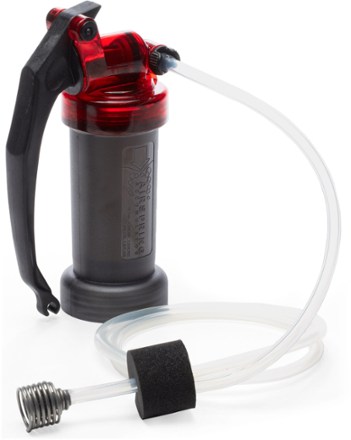 MSR MiniWorks EX Water Filter | REI Co-op MSR MiniWorks EX Water Filter | REI Co-op
|
For gravity filtration, again consider MSR technology.
Here's a comparison of two of their water filtration systems.
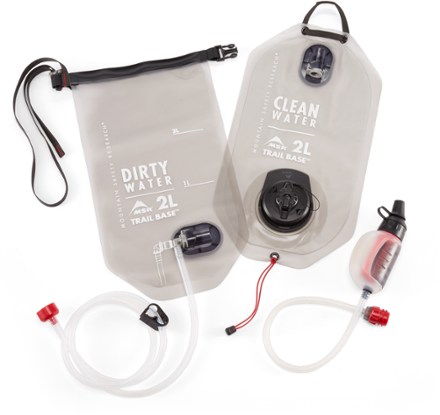 MSR Trail Base Gravity Water Filter System | REI Co-op MSR Trail Base Gravity Water Filter System | REI Co-op
|
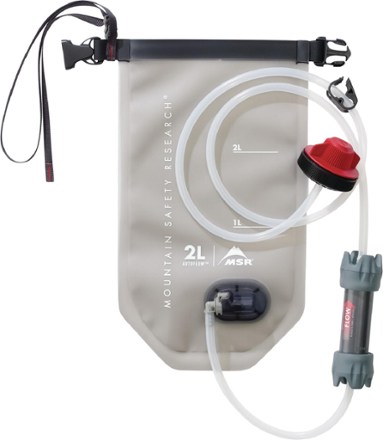 MSR AutoFlow Gravity Water Filter - 2 Liter | REI Co-op MSR AutoFlow Gravity Water Filter - 2 Liter | REI Co-op
|
The Autoflow system is lighter (10 ounces, rather than 16 oz), and a bit smaller.
The Trail Base can also be used as a squeeze filter (see below) for on-the-go usage while hiking.
- Nice option when you're not exactly sure of your water source locations or availability.
Both have a good output rate, use BPA free materials, and are field cleanable.
Platypus also makes good options for water filtration.
Here's a viable solution for group backpacking water supplies, filtering 4 liters in a few minutes at one go.
And you did hear the NO pumping part, right?
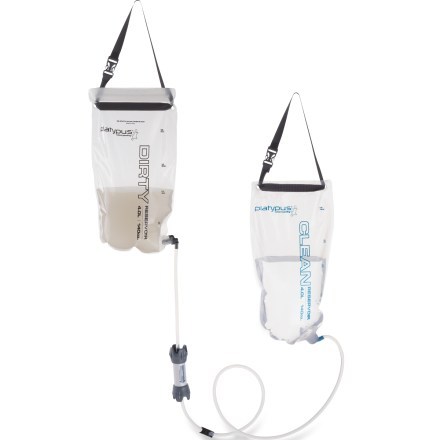 Platypus GravityWorks Water Filter System - 4 Liter | REI Co-op
Backpacking water purification
filters
And now for the gold standard of pure water: viral removal filters.
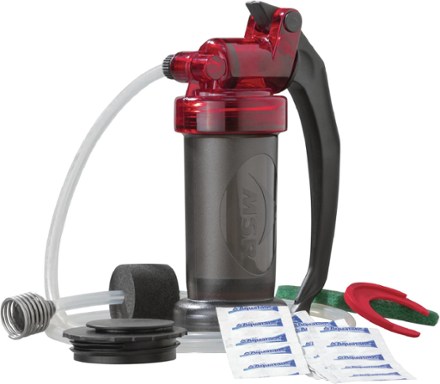 MSR MiniWorks EX Purifier System | REI Co-op
You can see my MSR brand bias.
Note that this system takes the "back up" strategy to new heights by including a chemical treatment along with the ceramic filter.
Treat that filter with care, as noted above!
Backpacking water purification without a filter
But you're not locked into carrying a hiking water filter in your backpack.
There are three other avenues to clean drinking water, each with drawbacks and benefits.
As you read through these options, take mental notes on which could be your primary method, and which strategy makes sense as a viable backup method.
Yes, my dear, you need two methods of backpacking water purification or filtration.
Clean water is THAT important.
Here's your first non-filter option.
Boil your water
This seems easy, right? Nothing high tech to purchase or maintain.
Except a reliable backpacking stove.
Plus extra fuel.
- Extra extra fuel at higher elevations!
Think weight, cost and bulkiness of that fuel.
And there are a few precautions to take if boiling your water is your preferred method of treatment.
Things to do
to ensure clean water
The water must reach a rolling boil (not just a few tiny bubbles on the bottom of the pot) for a full minute in order to eliminate viruses, bacteria and protozoa.
- Time this! It's important to your health.
If you're at higher elevations, 6000+ feet, give it a full three minutes.
The water then has to cool down if you're not using it immediately for a meal.
If you forget to boil water in the evening, it's going to take extra time in the morning to get those water bottles or hydration reservoirs full before you can hit the trail.
Tips to make boiling better:
If your water has plant debris, sand
or other detritus, you can prefilter your water before boiling by
pouring it through a clean bandanna into your cooking pot.
Murky, silty water can be left to sit for an hour and the top water poured off into a cook pot for boiling.
Don't mix up clean and dirty water bottles.
- If you've boiled water, it should go into a washed vessel (bottle, reservoir, bladder, pot) and segregated from "to be boiled" water.
- If in doubt, re-boil.
Good & bad news about boiled water
The good thing about boiled water: it kills all microscopic pathogens, including those hard to filter viruses, so your water has been purified.
The bad news?
Boiled water will taste flat.
Give it a good shake to add some oxygen back to it.
If you have a personal straw with you (hey, it's a thing!), bubble some O-2 through.
You might also need to add a little something to jazz it up.
- Flavored electrolytes might do the trick, AND provide you with skeletal muscle benefits.
Here's one of the brands I use, available in a mind bending variety of flavors:
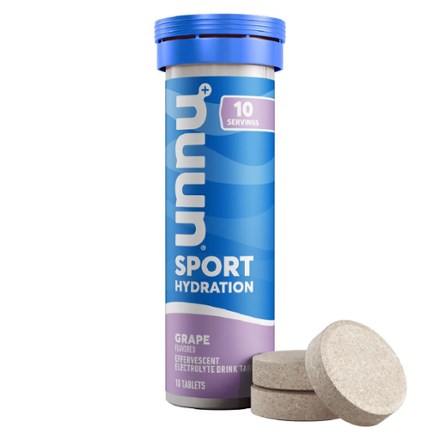 NUUN Active Tabs Hydration Tablets | REI Co-op
Chemical treatment
for potable hiking water
Another way to purify water (remove ALL microscopic pathogens, including viruses) is to add chemicals to it.
Chlorine (think household bleach) and iodine both mess up microbes, so pick your poison (literally).
But wait, won't it poison you, too?
Not in small quantities, no.
If you're looking for the smallest, most lightweight and inexpensive method for backpacking water purification, look no further!
Read the instructions, drop the tablets into the water, and after the correct amount of time has passed (which can be hours, not minutes), you'll have water that is devoid of troublemakers.
- Extremely cold water will take longer for the chemicals to work.
- Remember solubility from chemistry class?
Tip:
Consider this as your first choice for a back up option if you prefer a different primary method of backpacking water purification.
Nothing can go wrong here, unless the tablets contact water before you're ready for them to!
- Hint: double plastic bags
A bit of chemical nostalgia - not!
I remember adding drops of iodine to my drinking water way back when, as in when no water filters were on the market for backpackers.
It tasted beyond awful!
And I remember adding flavored drink mixes (Tang, anyone?) to the water, just to be able to choke it down.
But at least it was a safe backpacking water purification method, right?
Today, you have the option of using chemicals which are a new generation of effectiveness.
- Read about Polar Pure and decide if it's the right approach to back country water purification for you.
After all these decades, iodine will still leave a metallic taste in your mouth, so be prepared to neutralize the nastiness by adding a little something to your treated water.
- See Nuun above
A few more notes about iodine:
it's ineffective against Cryptosporidium.
And you don't want to ingest it if you're pregnant or have a thyroid disorder.
So it's pretty clear by now that I'm a chlorine fan.
You can bring along chlorine bleach and add it to your water, but why mess around with liquids?
Here's a chlorine dioxide tablet option, similar to what is used in municipal water systems:
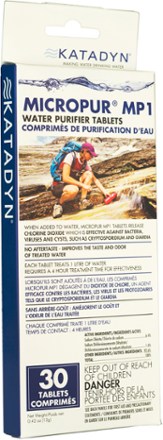 Katadyn Micropur Purification Tablets - Package of 30 | REI Co-op
Ultraviolet (UV) light treatment
for backpacking water
purification
Not a fan of chemicals?
Ever heard of a SteriPen?
Steri stands for sterilization, the removal of life from the water using UV light.
And you know what a pen looks like!
As a microbiologist, I understand how UV rays can eliminate microorganisms by mutating the DNA or outright killing the cells and viruses.
- Messes them up, big time!
- Also a good reason for you to wear sunglasses and sunscreen ;)
Field research confirms that these devices work as advertised to purify your water.
Easy to use: stick the UV ray emitting end into your water receptacle, wave it around for the recommended time, and you're good to go.
Lightweight, compact, and really handy to have in weather that is less than ideal because you're not using your hands to pump or waiting for gravity to do its thing.
You don't have to replace any filters, but you do have to keep an eye on the battery life or your water purification method is no more.
- Add "extra batteries" to your gear list.
This method is not the way to go with large volumes of water.
Pre-filtering cloudy water first is absolutely necessary, so the UV rays can do their zapping damage.
This is the one I'm considering adding to my hiking gear repertoire for backpacking water purification purposes:
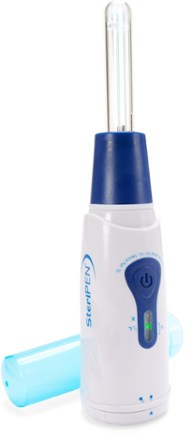 SteriPEN Classic 3 Water Purifier with Prefilter | REI Co-op
Just so you know, SteriPens come in various options at different price points.
Here's another one to consider:

But what about the
naysayers?
Sooner or later, you're going to run into a hiker who swears she has never treated her water, not once, not ever.
And never gotten sick!
Two possible explanations: untruth, or an immune system which has yet to meet its match.
Denial is a river in Egypt, they say...
Treat it first,
then glug, glug, glug
So by now you might have come to this conclusion: unless you absolutely have to in a survival situation, don't drink surface water without treating it.
[Caveat:
If you find yourself in one of the few untouched by humans locations on Earth, feel
free to gulp down untreated ice cold glacier or melt water by the liter.]
Regardless of the method you choose, you want it to be:
- lightweight
- reasonable size and fingerprint in your backpack
- able to treat enough water for your needs (solo, duo, group consumption)
- easy to use, maintain & replace
- cost effective for your backpacking budget
- reliable - most important!
When you use the REI Co-op website, you can compare various options for all of these variables, side by side.
And to get you started, REI provides a comparison chart of water treatment methods here.
Quite handy for beginner backpackers!
Practice impeccable
hand hygiene
You don't want to go to all of this trouble to choose a water purification method, learn to use it appropriately, haul it around and treat your water, and then introduce microscopic troublemakers from your own dirty hands.
At least I don't think you do!
Enforce a strict "wash your hands" policy for everyone who is treating water.
Keeping all hands clean for food preparation is non-negotiable, too.
Keep track of dirty and clean water bottles, cooking pots, etc. with some sort of system.
Use clean water for tooth brushing, dishwashing and rinsing.
Sanitize your hands before plunging them into clean dish water.
Keep your unwashed hands out of your mouth, nose and eyes.
Bring your hygiene kit and be scrupulous about using it after you defecate and urinate.
Clean hand strategies
to back up your
backpacking water purification
Soap or hand sanitizer?
I prefer soap for two reasons:
- It doesn't dry out my skin as much as alcohol based sanitizers.
- The lathering action of frothy soap ensures that I'm using a physical method to remove microbes from my skin along with the chemical action of the soap.
I'm a big fan of Dr. Bronners unscented soap for dishes and personal hygiene.
Go ahead and splurge: it's the best investment in your health that $3.50 US can buy.
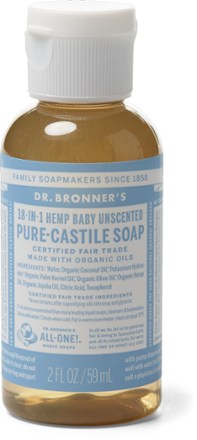 Dr. Bronner's Baby Mild Liquid Soap - 2 fl. oz. | REI Co-op
One more clean water note
We all deserve clean water.
Use Leave No Trace practices so the next backpacker coming down the trail has some, too.
Bottom line for backpacking
water purification methods
Bottom line for you?
Water is important to a high functioning hiker's body.
Don't deprive yourself of this vital fluid - just be sure it's safe before consuming it.
Choose a primary method of water purification, and also carry a back up method.
- REI Co-op has more information and a video for you to use as you make your choices.
Home page > Best Backpacking Tips >
Backpacking Water Purification
Hiking For Her offers only the recommendations that work hard for you on the trail, based on personal usage and research.
By purchasing through this website, you pay nothing extra and allow HFH to continue freely sharing trusty, virus free trail tips.

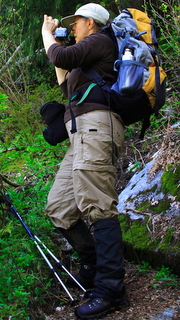
Diane started hiking in 1971. She started Hiking For Her in 2008 as a resource to encourage every woman to take a hike. Please enjoy these expert hiking tips as you explore what hiking offers in any weather, season or location.
Meet Hiking For Her's Diane
TODAY'S BEST OUTDOOR GEAR DEALS
REI Co-op Members save an extra 25% on REI Outlet fitness clothing & gear 4/12 thru 4/15.
Example: Hydro Flask bottle with cap, marked down from $49.95 to $26.73.
Use code OUTFIT24.
See ALL the great deals on the Hiking For Her Best Current Deals page!
POPULAR POSTS



Diane Spicer founded the Hiking For Her community in 2008 to encourage female hikers, those who wanted to begin hiking as well as those who were in love with this fantastic sport already.
On this website she shares expert hiking tips and recommendations, gear reviews and photos from her outdoor adventures to welcome everyone to learn the necessary skills for comfort and safety on a hike.
This reader supported website does not use sponsored or promoted content. There are no ads or paid link placements. Everything you read is based on decades of personal hiking experience in many different locations.
All rights reserved.
Photo credits: All photos on this website were taken by David Midkiff or Diane Spicer except where noted.
Disclosures
Privacy
Copyright
Media
As an Amazon Associate, Hiking For Her earns from qualifying purchases.
When you buy through our links to trusted outdoor gear affiliates, we may earn a commission while you pay nothing extra.