
Enjoy Happy Trails, the free monthly newsletter from Hiking For Her
Receive a free resource: "Hiking Layering System Explained"
Best Blister Prevention
Tips For Hikers
By Diane Spicer
Let's keep this simple:
Blister prevention is better than blister treatment.
You, an active hiker, do not want blisters.
Trust me on this.
Blister prevention for hikers:
use this 8 step checklist
To avoid the nastiness of blood blisters or deep, painful eroded blisters on your heels and toes, these 8 tips are what you need to take good care of your hiking feet.
None of this is medical advice, just common sense!
If you have extreme blisters or skin wounds that don't heal quickly, get thee to a medical professional ASAP.
Now let's look at eight ways you can take good care of your hiking feet.
#1: Choose the right trail footwear
Spend time and money on finding boots that fit properly. Keep trying until you find boots hat give you no cause for concern on any type of terrain or any length of hike.
The quest for the holy grail of hiking - great boots or trail shoes - is worth this investment.
Give your toes plenty of room with these Hiking For Her tried and true trail footwear recommendations.
#2: Spot hot spots
Take fast action on spots on your feet that feel hot or tender after the first hour of hiking.
- Before heading to the trail, loop a few feet of duct tape around your water bottle.
- Tear off chunks as needed at your first rest/water break.
- Be sure your socks aren't taped to your feet or your boots. You want your feet to move freely with each step, but not slide around or stick to the sides.
Full disclosure: Duct tape doesn't breathe very well, and is very slippery.
It also welds into one solid, unusable mass if left too long on a water bottle.
Here's an alternative: Leukotape.
This breathes better that tape, but the stickiness rapidly disappears if trail grit gets on it or your fingers touch it too much.
- Handle with care!
And use the scissors from your first aid kit to cut it to fit.
- No first aid kit? Here's a minimalist kit with scissors.
#3: Wacky but effective
Carry an extra pair of boots or hiking shoes in your pack.
I have been known to do this if I don't trust a new, or cranky, pair of boots.
As far as my feet are concerned, the extra weight is worth it for blister prevention.
#4: Mix up your socks
As in, play around with different sock combinations.
Liners and hiking socks abound!
But not all of them are designed for the type of hiking you like to do.
So be willing to experiment for awhile until you find exactly what works best for you.
- Read my recommendations on best hiking socks for different styles of hiking here.
- If you have to wear two different socks to cater to your unique feet, so be it.
And don't get discouraged.
You're looking for a combo that works for your particular feet and your choice of trail footwear.
Luckily, socks are not as pricey as boots, and you'll eventually find the perfect boot and sock combo if you keep at it.
- Or swap socks (clean ones, of course) with hiking buddies until you chance upon The Magic Combination.
To prevent hot spots from forming on your toes, try these high performance toe socks:


And read my review of Armaskin anti-blister socks here. They're something completely different for hiking feet!
#5: Toenail trim
Pay attention to your toenails.
- Trim your nails before each hike.
- Get rid of hang nails.
If you clench your toes inside your boots due to nail issues, it can lead to blisters or worse - hammer toes, for instance.
Ouch!
For a full discussion of hiking foot care approaches, read this.
Trail tip:
Spot check yourself along the trail:
- Do you have the habit of curling your toes or clenching them up as you go downhill?
#6: Normal or not?
Know what normal wear & tear looks like on your feet.
Here's a personal example:
I have a zone on my soles between my toes and the arch where dead skin bubbles up and flakes off, similar to a blister but painless.


- I use a callus stone made of pumice like this one every week to get rid of it in the shower.
- I've noticed that my liner socks fit better because of that weekly ritual.
Why is that a big deal?
My liners can't rub and cause hot spots, which inevitably lead to blisters.
So check out your feet, especially the bottoms, and do a little preventive maintenance.
- Can't see the bottoms of your feet?
- Use your cell phone to snap a photo!
#7: Practice avoidance
Avoid high heels in your non-trail life.
The shoes you wear daily have a huge impact on how your hiking boots fit.
There are any number of reasons for avoiding high heels, including
But the link between high heels and blisters is this:
Your feet will be molded into the shape of your daily shoes much more so than your hiking boots, simply because of the amount of contact time.
When you plunge your foot into your hiking boot on Saturday, after wearing heels Monday through Friday, the contact points will be vastly different.
This sets you up for rubbed skin, and the creation of a blister (which is the separation of your epidermis from your underlying dermis, in case I didn't mention it earlier).
#8: Hydrotherapy
Harness the magic of water with applied hiking hydrotherapy!
Every chance you get on the trail, take off your boots and allow Mother Nature's cool waters to caress your footsies!
Hiking hydrotherapy is:
- refreshing
- hygenic
- a fast and easy way to connect with Mother Earth
- and a smart way to get blood flowing out of the engorged blood vessels in your hard working feet.
Ahhhh... perfect blister prevention!
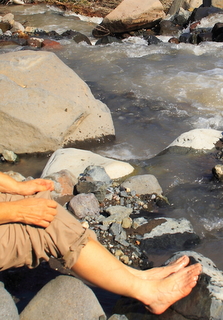 My toes are happy because I practice blister prevention.
Oops!
Got a blister anyway?
Sometimes blister prevention just isn't enough!
Especially if you have a tough hike out to the trail head.
Blister treatment is pretty straightforward, but you need a few supplies.
Try this magic stuff! I carry it in my pack "just in case".
Adventure Medical Kits GlacierGel Blister and Burn Dressing
To combine the magic of Glacier Gel and the physical barrier of moleskin, get this kit.
- It includes alcohol prep pads and antiseptic towelettes to ward off infection from trail dirt.
To pop, or not to pop...
that is the question you must answer
Now for the fun part:
- Deciding if you're a blister popper, or not.
Read this first for blister treatment tips.
Then steel yourself to pop, or let the friction of your socks and footwear do the job for you.
Keep your skin as clean as possible, regardless of which path you take to dealing with a blister.
Then make up your mind to put these blister prevention tips into practice next time!
The bottom line for blister prevention
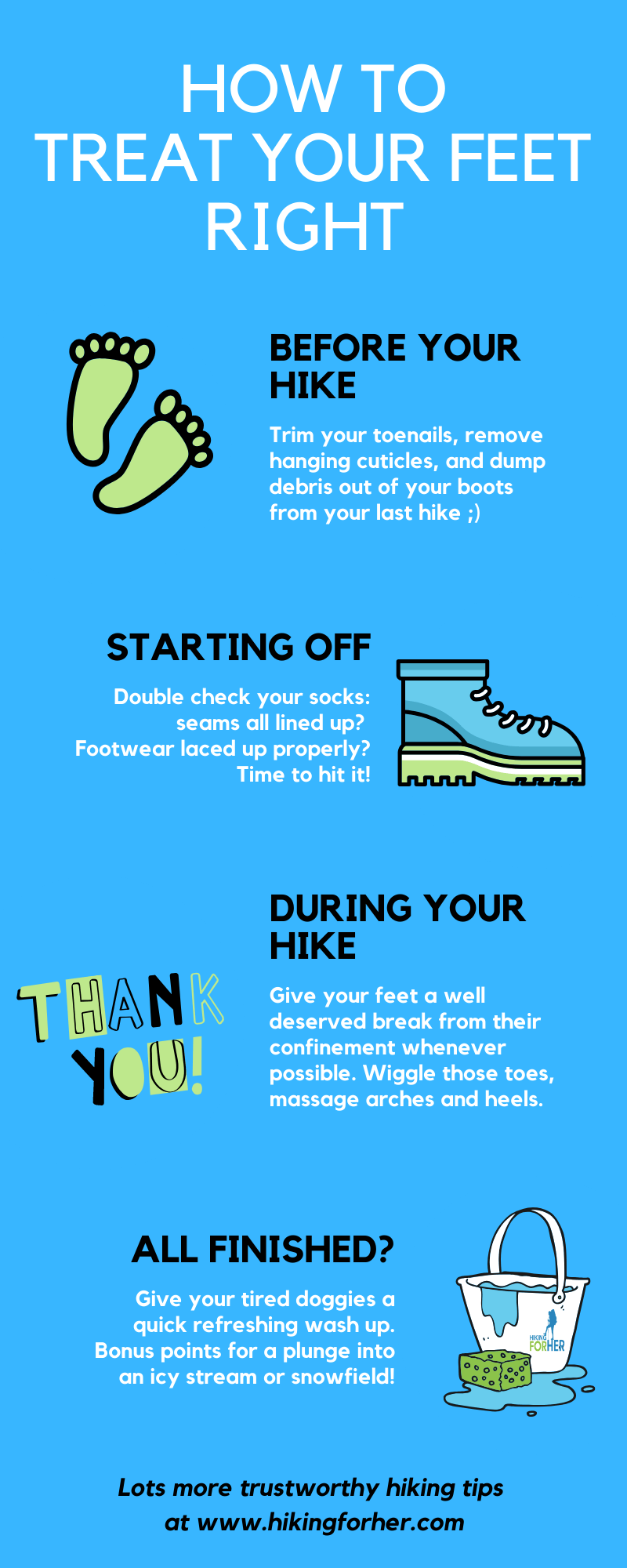
Don't be defeated by your feet!
Pay attention to them.
With these 8 tips for blister prevention you're well on your way to breaking the blister cycle.
Invest a bit of time and money into hiker self care, and you'll be dancing down the trail.
Disclaimer: As long as someone else carries your pack. But that's a different story!
Before you go, dip into more hiking self care tips for happy trails.
Home page > Best Hiking Tips >
Best Blister PreventionTips
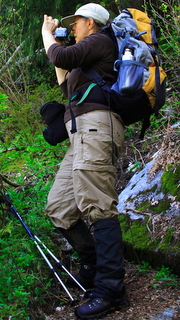
Diane started hiking in 1971. She started Hiking For Her in 2008 as a resource to encourage every woman to take a hike. Please enjoy these expert hiking tips as you explore what hiking offers in any weather, season or location.
Meet Hiking For Her's Diane
TODAY'S BEST OUTDOOR GEAR DEALS
REI Co-op Members save an extra 25% on REI Outlet fitness clothing & gear 4/12 thru 4/15.
Example: Hydro Flask bottle with cap, marked down from $49.95 to $26.73.
Use code OUTFIT24.
See ALL the great deals on the Hiking For Her Best Current Deals page!
POPULAR POSTS


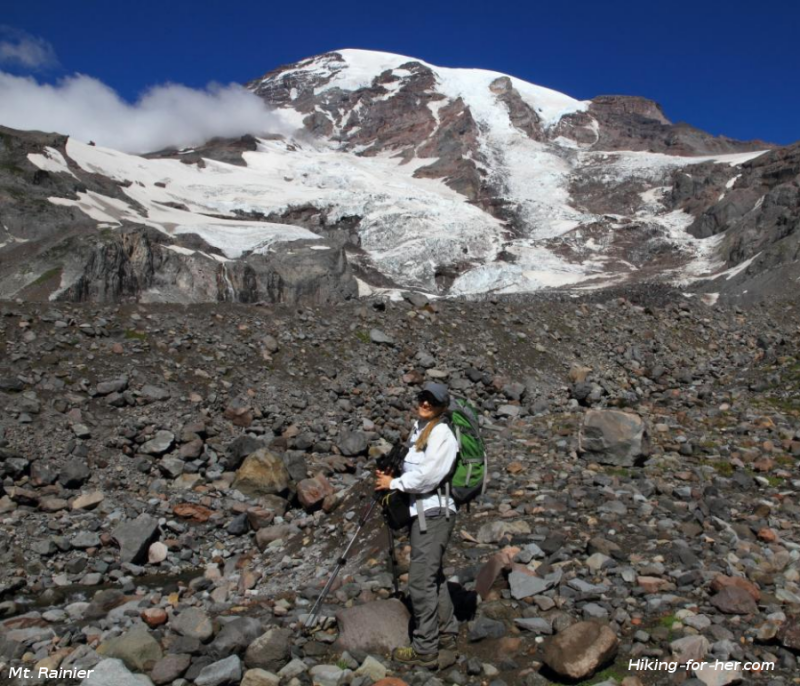
Diane Spicer founded the Hiking For Her community in 2008 to encourage female hikers, those who wanted to begin hiking as well as those who were in love with this fantastic sport already.
On this website she shares expert hiking tips and recommendations, gear reviews and photos from her outdoor adventures to welcome everyone to learn the necessary skills for comfort and safety on a hike.
This reader supported website does not use sponsored or promoted content. There are no ads or paid link placements. Everything you read is based on decades of personal hiking experience in many different locations.
All rights reserved.
Photo credits: All photos on this website were taken by David Midkiff or Diane Spicer except where noted.
Disclosures
Privacy
Copyright
Media
As an Amazon Associate, Hiking For Her earns from qualifying purchases.
When you buy through our links to trusted outdoor gear affiliates, we may earn a commission while you pay nothing extra.