
Enjoy Happy Trails, the free monthly newsletter from Hiking For Her
Receive a free resource: "Hiking Layering System Explained"
Foot Injury Prevention For Hikers: Stay Out Of Trouble!
By Diane Spicer
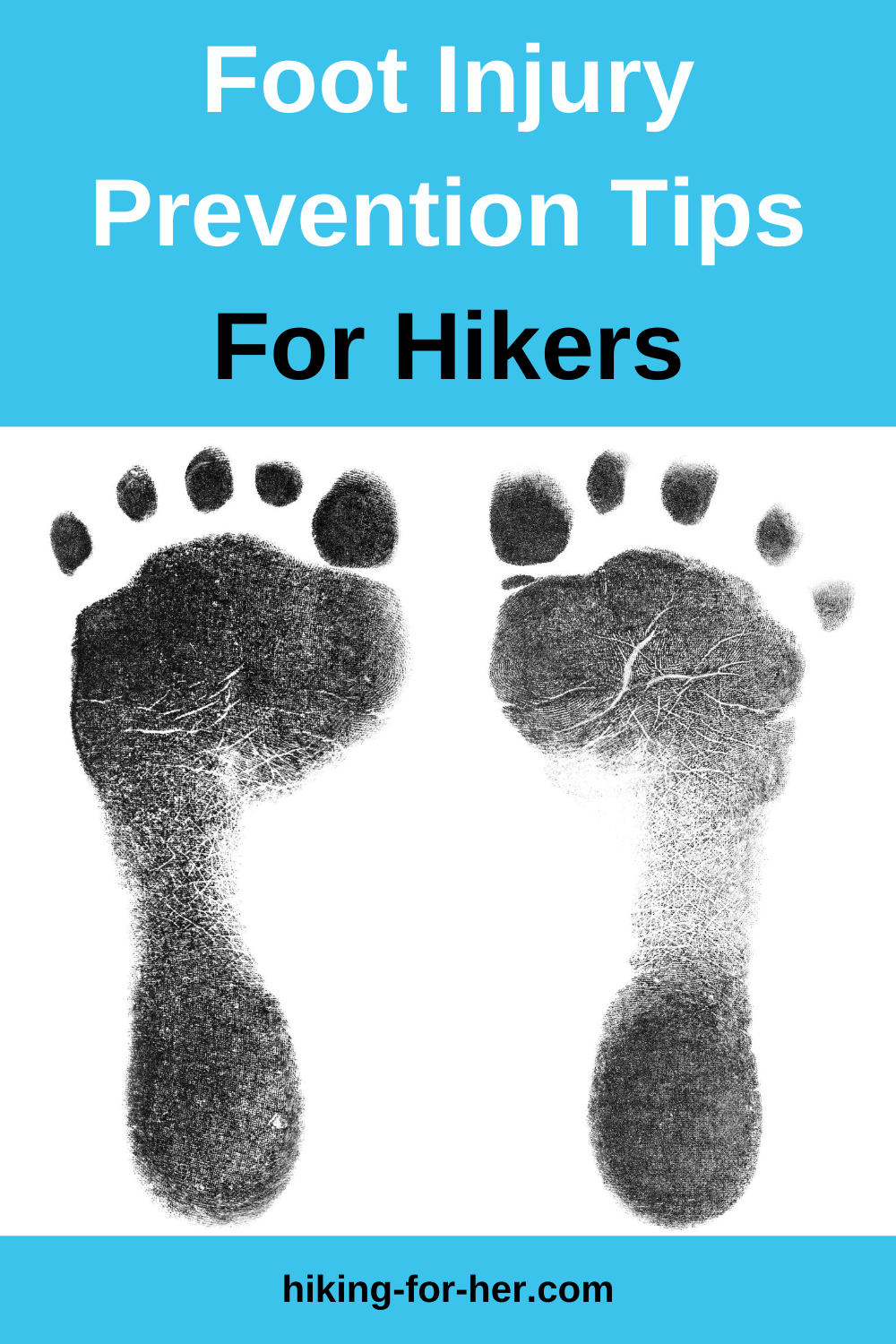
Let's get right "down" to the "why" of foot injury prevention for hikers:
- taking good care of your stable connection to Terra Firma, the reason you don't fly off into space, is the most important thing you can do as a hiker.
(OK, not really, but wouldn't it be cool if we had Velcro feet we could undo once in awhile and just float up the trail?)
That's why the best tips for sore or injured hiking feet are coming right up.
Each element of your foot requires different strategies to keep you pain free and striding confidently down the trail.
Let's start with the hard bony structures in your feet, and work our way through the soft tissues.
Or skip down to the tips if anatomy is not your thing!
Foot injury prevention for hikers:
be kind to your foot bones
(you've got alot of them)
Bones are up first in our discussion of foot injury prevention.
Not to be a stickler for detail, but your foot and your ankle are so interconnected that we can describe the part connected to what you refer to as your ankle as the "proximal" foot and the long horizontal part of your foot as the "intermediate" and "distal" regions.
Each of these regions have bones which are shaped differently compared with one another.
Why?
They have different jobs to do, and so they are shaped differently.
- Form and function are always intertwined!
An inventory of the human foot comes up with 7 tarsal bones in the proximal foot, 5 metatarsal bones "beyond" the tarsals, and lots of bones in the distal toe area: 2 big clunky bones in your "big toe", and 3 bones in each of the other 4 toes.
Let's do the math (or let me do it for you): 7 + 5 + 2 + 4(3) = 26 bones.
But you need to multiply it by 2, because you hike on your own 2 feet, right?
So the grand total is 52 bones.
Just in your feet!!
I hope you are suitably impressed.
Arches are important in
foot injury prevention for hikers
The bones of the feet are arranged in arches to handle their big jobs:
- weight bearing,
- distribution of body weight (which changes throughout a woman's life as she goes through puberty, pregnancy and menopause AND can change drastically when she straps on a heavy pack), and
- leverage during each step you take.
The arches occur in 2 directions: longitudinal along the length of the foot, and transverse across the shorter part.
You may have heard of "fallen" arches or "high" arches, which refers to the height of the arch.
Hikers with these arch problems need to pay special attention (and dollars, well spent) to find a good pair of supportive boots that fit.
Orthotics are custom fitted arch supports which can be worn in shoes and boots. Work with a podiatrist to get just the right fit for your feet.
Or try some inexpensive arch supports that can be removed from your boots if wet or worn out, like these:

More tips on choosing the best hiking insoles here.
Explore your feet
Just for fun, on your next hike, gently poke around on your feet when you stop for lunch once you take off your boots for a bit of fresh air.
You do that on every hike, right?
It's a great habit to get into, because it relieves some of the blood vessel engorgement, gives your socks a chance to dry out, and takes pressure off your bones.
As you probe around, how many bones you can feel?
If you're really curious, find a picture of your bony feet in an anatomy book to savor a full appreciation of how well constructed each foot is - notice how all the bones fit together in a jigsaw puzzle, while the unified whole moves and bends with each step you take.
This "puzzle" keeps you upright and stable on the trail. You might want to send a little love their way, right?
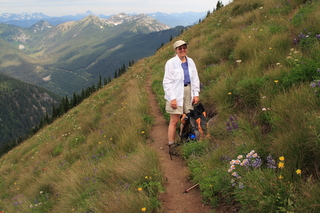 Foot injury prevention for hikers includes taking a break when you need one
Muscles in your feet?
OK, so far, so good in our quest for foot injury prevention for hikers.
But to really understand foot injury prevention, you also need to understand the soft tissue connected to your bones:
- muscles
- ligaments
- tendons
- fascia
There are a lot of muscles with long names connected to your foot bones.
The names aren't important for our discussion, but if you like Latin, you'll love 'em!
If you've ever had a foot massage (highly recommended for hikers!), you know how sore those muscles can become.
Treating them right is a smart step toward foot injury prevention.
The intrinsic muscles of the foot are designed to support and move the bones.
There are a few muscles coming from the calf area that also help to move the toes, but we'll talk about those when we consider a hiker's leg.
For now, let's focus on the muscles that begin and end in the foot.
Surprise!
Would it surprise you to compare the muscles of the foot and the hand, and find them comparable?
It shouldn't!
Of course we don't have the amount of control over our foot bones like we do with our hand bones, so they won't be exactly alike.
And we don't ask our hands to support our body weight on the trail, at least I don't!
So we can expect layers of foot muscles that connect to the metatarsals and toe bones (phalanges) in order to provide stable surface areas.
How many foot muscles?
There are quite a few, with names referring to the action they perform, the bones they communicate with, or their shape (like an earthworm, for example: "lumbricals").
They are arranged in 1 layer on the top of the foot, and 4 layers on the bottom of the foot - from the outside to deep within the foot.
This gives your feet flexibility and integrity, but can also lead to aches and potential problems.
More on that below.
Let's get back to some basic anatomy that underlies foot injury prevention for hikers.
Foot injury prevention for hikers: tend your tendons!
What is the relationship between the muscles and the previously mentioned bones?
Muscles are anchored to the bones by tendons, and this firm anchorage allows them to tug on the bones to create movements.
Curl up your toes right now: see how the tendons act as cables to move your bones into a curled shape, thanks to the contraction of the muscles?
OK, now uncurl.... ah!
That's what you should do at your lunch break during a long hike.
See how your small steps (pun intended) toward foot injury prevention don't have to be time consuming or dramatic?
Ligaments = natural duct tape
A quick word about ligaments is also needed.
Ligaments hold (ligate or bind) one bone to another.
They can be overstretched ("pulled") or torn, creating a bad situation for a hiker who needs to make it back to base camp under her own power.
One way to avoid these painful issues is to stretch before and after a hike, and do some ankle rolls and toe crunches during your lunch break.
Limber ligaments = less limping!
Are you getting the idea that foot injury prevention for hikers is built on a layered approach?
Fascia?
Is that some kinda disease?
To finish off our portrait of a hiker's foot, let's give a nod to fascia.
That's a clunky word for some lovely (fascinating, actually) soft tissue which acts as material to connect one part of the body to another: skin to muscle, for example, or the arches of the foot.
The fancy name for it is "aponeurosis" when it covers a broad area such as the longitudinal arch of the foot.
If you've heard of "plantar fasciitis" or "painful heel syndrome", you're in fascia territory.
This inflamed, painful problem involves a heel bone called the calcaneus. Hikers DO NOT want this chronic condition, not only because it's painful but because it will cut down on your ability to hike any distance.
Foot injury prevention for hikers in the realm of soft tissue includes
- good nutrition
- adequate
levels of hydration
- taking anti-inflammatory actions if sore feet begin to plague you after a hike
Try this on your next hike
Here's a fun little thing to do for your fascia:
- toe pulling and foot massage at your lunch spot.
It will release all of those tight, sore spots.
Then elevate your feet for 10 minutes before confining them to your hot dank boots again.
These tips are among the best for foot injury prevention for hikers, and take a bit of awareness to pay off big time in happy hiking feet.
You're worth it!!
Foot injury prevention strategies
for hikers start at home!
So where should foot injury prevention for hikers start?
At home, before you ever lace up your hiking boots.
For starters, go barefoot whenever you can around the house/yard.
- Pick up marbles with your toes. Kids love this "nimble toes" exercise so loop them into the fun.
- Get out of those tight, uncomfortable "fashion" shoes as soon as possible after a long day at work.
- Avoid high heels, because they stress your foot biomechanics. Seriously, ladies! High heels are hell on hiking feet.
- Walk bare footed across grass or sand whenever you can. Grip the Earth with your toes, feel the ridges and indentations, really connect with the surfaces.
And if you have access to a foot reflexology path, make use of it!
- What starts out as painful hopping around on embedded stones will toughen up your feet - and perhaps your internal organs, if the reflexologists are to be believed.
Foot massages
Self-inflicted (I mean administered!) foot massages work wonders for sore feet, too.
They help to prevent foot injuries by bringing blood supply to the muscles and draining the muscle compartments of excess fluid.
- Muscle strains require time and attention to heal, and gently working
out the "knots" in your feet will help this healing process.
- Choose a favorite scent and seek out a high quality foot lotion, or make your own using almond oil.
Professional foot massages are a good investment if you are having foot problems with soft tissues.
- Be sure your therapist is licensed & well trained - there's more to a foot massage than you might imagine!
Professional reflexology is an intriguing approach to prevention & treatment of foot injuries, and again, you should go to a trained person in order to gain the maximum amount of foot therapy for your time and money.
If all else fails, go to a licensed foot doctor and sort out bony issues from soft tissue issues.
I can't stress this enough...
I can't stress properly fitting hiking boots enough, but I don't want to beat you over the head.
So just a few gentle words of advice:
- Please take the time to search out the best hiking boots for your feet.
- Don't settle for "good enough".
Go for AMAZING boots, ones you want to shout about from the rooftops. [OK, perhaps not that much enthusiasm, but close!]
You owe it to yourself as a dedicated and smart hiker in order to prevent foot injuries which may keep you off the trail for months.
Seriously, it's the bvest foot injury prevention for hikers tips I can offer you.
What else?
Keep your toenails ruthlessly short.
- Long nails will bump up against your boot and make your toes sore, and could lead to long term problems such as ingrown nails or worse.
The socks you choose are more important than you might think.
They have a tough job to do!
They wick away moisture from your feet.
Think of moist, dark places as ideal spots for fungal growth known as athlete's foot. Yuck!
Socks cushion your skin to prevent abrasions from the boots, or bits of trail debris.
And they need to stay in one spot: if they slip around inside your boots, they will create hot spots and leave you with blisters.
So please listen to these words of wisdom from a veteran hiker:
- Put careful thought and consideration into your footwear, or face the hobbling wrath of grumpy feet!
And in conclusion...
the password to
foot injury prevention for hikers
is "Divas"
I'll say it one more time, with feeling:
Treat your feet like divas
They take you up the trail, they get you home again, and they only ask for some basic maintenance and attention.
- Give it to them!
Otherwise, you know what divas do - they whine and demand attention, and who wants to listen to their rants and tantrums?
Repeat this hiking mantra with me: Feet first!
That should go a long way down the trail toward establishing the right mindset for good habits that yield years of foot injury prevention for hikers.
Foot care for hikers is a big deal.
Spread the word!
Troubled by toe problems?
Home page > Hiking Self Care >
Foot Injury Prevention

Diane started hiking in 1971. She started Hiking For Her in 2008 as a resource to encourage every woman to take a hike. Please enjoy these expert hiking tips as you explore what hiking offers in any weather, season or location.
Meet Hiking For Her's Diane
TODAY'S BEST OUTDOOR GEAR DEALS
REI Co-op Members save an extra 25% on REI Outlet fitness clothing & gear 4/12 thru 4/15.
Example: Hydro Flask bottle with cap, marked down from $49.95 to $26.73.
Use code OUTFIT24.
See ALL the great deals on the Hiking For Her Best Current Deals page!
POPULAR POSTS



Diane Spicer founded the Hiking For Her community in 2008 to encourage female hikers, those who wanted to begin hiking as well as those who were in love with this fantastic sport already.
On this website she shares expert hiking tips and recommendations, gear reviews and photos from her outdoor adventures to welcome everyone to learn the necessary skills for comfort and safety on a hike.
This reader supported website does not use sponsored or promoted content. There are no ads or paid link placements. Everything you read is based on decades of personal hiking experience in many different locations.
All rights reserved.
Photo credits: All photos on this website were taken by David Midkiff or Diane Spicer except where noted.
Disclosures
Privacy
Copyright
Media
As an Amazon Associate, Hiking For Her earns from qualifying purchases.
When you buy through our links to trusted outdoor gear affiliates, we may earn a commission while you pay nothing extra.