
Enjoy Happy Trails, the free monthly newsletter from Hiking For Her
Receive a free resource: "Hiking Layering System Explained"
Hip Injury Prevention
for Hikers:
A Way To Avoid Sore Hips?
By Diane Spicer
You probably won't be looking for information about hip injury prevention for hikers unless you're already dealing with sore hips after a hike.
The Mayo Clinic says that hip pain can be caused by many things, including serious medical conditions such as pinched nerves, chronic medical conditions, and recent injuries.
Here, let's consider the aches and hip soreness associated with hiking.
Common explanations
This type of pain could be part of normal wear and tear in your hip joints, increasing in likelihood as you age.
It could be a result of recent weight gain.
Or it could be a little postcard from your pelvic area, begging for some hiking gear changes like a new backpack or different boots.
Let's
assume there is something that you can do to alleviate, or at least
lessen, the pain in your hips during and after your hike.
Brace yourself! Here comes that pesky P word!
Sore back and hips?
Try a little
hip injury prevention
for hikers!
Hip injury prevention for hikers is really important, because the bones in your hip (pelvic) area transfer the weight of your hiking backpack away from your backbone (spine, vertebrae).
If and when something goes wrong, you'll have hip soreness, stiff hips, and sometimes chronic pain to deal with after a hike.
And every hiker knows that sore hips and hiking pain are no fun as you are trying to stride down the trail toward a gorgeous destination.
Worse yet, hip injuries might discourage -or prohibit- you from hiking. No fun at all!!
So paying attention to your hips BEFORE they start to hurt is a smart trail move.
Second best?
- Listening to them when they start to complain.
I'm guessing that's why you're reading this. So let's give you some ideas to try.
Hip injury prevention for hikers starts with the right gear!
How to keep yourself out of hip trouble?
Or lessen the pain after a hike?
Wear the proper hiking gear.
And by proper, think proper for your height, weight, and type of hiking.
Invest time and money in the basics.
It's essential to have
sturdy boots and a
well fitted pack if you want to preserve high functionality in your hips and back as the years (and miles on the trail) roll along.
Believe it or not, wearing the wrong foot wear on a hike can show up as hip pain.
- Forcing your feet into an unnatural gait, mile after mile, will wreak havoc in the muscles of the hip, and you'll have a deep nagging ache as you hike.
Another trick to try: lace your boots differently.
And a pack that's too big for you? With a hip belt that doesn't fit?
These will put stress on your hips and back.
- The hip belt of your pack should fit snugly, and transfer the pack's weight efficiently to your lower body (thus protecting your spine).
- And don't settle for a thinly padded hip belt that digs into your bones. Go deluxe in this particular feature!
Hopefully, avoiding hip soreness might be as easy as trying a different backpack.
Or adding trekking poles to your gear list.
So be sure you do!
'Cuz you're worth it ;)
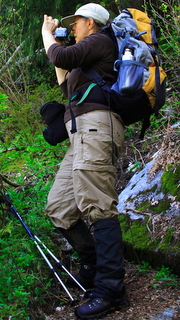 Hip injury prevention includes using trekking poles.
More things to think about
when your hips are sore
after a hike
If you're confident that your hiking gear is fit for purpose, think about these things:
- Are
you noticing loss of mobility on top of the soreness? It could be an early sign of
osteoarthritis, and should be looked into with a medical care provider
you trust.
- Maybe some stretches or a Pilates class would help your hip flexors function more easily.
- Do you know any deep hip stretches? Maybe a vinyassa flow yoga class would give you increased hip flexibility and decreased soreness.
- Non-weight bearing exercise like swimming or stationary bike workouts could help you build up your hip and butt (gluteal) muscles. Bonus: Strong muscles are less prone to long recovery times after a hike.
- Are you staying hydrated throughout the day? Lack of water and electrolytes can lead to soreness.
- Is your pack weight lopsided? Example: If you carry two full one-liter water bottles, and always empty the right side before the left side, could that be contributing to your pain? Re-pack your pack!
Are you getting the idea that you need to be your own detective in getting to the bottom of why your hips hurt after a hike?
Now for some tips for how to deal with the pain.
Try some of these
self care tips
for sore hips
If you've tweaked your
gear, and are using hiking poles
during each hike to help transfer weight from your pelvis,
AND you are addressing the soft tissues in this area (muscles, ligaments and tendons) by stretching and staying hydrated,
have you tried some self care to cut
down on
hiking inflammation?
How about a five minute hip self massage using a homemade "ice cup"? (You just can't have more fun than this!)
- Freeze water in a paper cup the day before your hike (this is the hardest part, I promise).
- After your hike, peel off the top half of the paper, keeping the bottom paper to protect your hand from the cold.
- Rub the ice in circular motions on the affected area for at least 5 minutes, with little breaks in between so you don't freeze the tissues.
- When finished, recycle the paper cup!
If the idea of a self-applied ice massage doesn't float your boat, try a professional massage therapy session focused on your sore hips.
A trained therapist knows all about hip injury prevention for hikers.
- Ask
the therapist to recommend a few stretches for the large muscle groups
that attach in the hip area.
- And then demonstrate some tough self love
by actually doing them every day. Consistency is the key to this self care strategy.
Get salty
If you haven't discovered the post-hike magic of Epsom salts yet, here's your chance.
- Fill a bathtub with warm water,
- dissolve a cup or two of salts in the water, and
- settle down for a nice soak while you plan your next hike.
Bonus points for sipping water as you soak.
If you feel less sore afterwards, remember this little self care routine for future painful hip episodes.
Above all, don't be discouraged. Work out the best pre-hike and post-hike self care routine for your hiking goals.
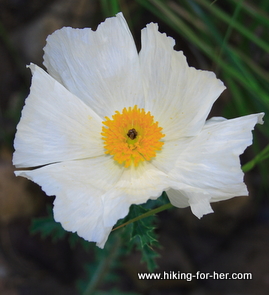 You want your hip and back muscles as supple and soft as these flower petals!
Hip bones:
what's not to love?
When was the last time you thought about the bones in your hip area?
C'mon, be honest!
Don't you think about your hips whenever you pull on a pair of jeans?
(Or is it just me?)
Once the jeans are on, you probably don't focus on the bones beneath all of the (ahem!) muscles of your hips, do you?
Hip injury prevention for hikers actually begins by looking at the design of your pelvis and these associated soft tissues.
So just a bit of anatomy, to round out these suggestions for hip injury prevention for hikers!
Fusion
Hip bones are a fusion of several smaller bones that build a bowl for your internal organs, the so-called "pelvic basin".
As females, our pelvic bones have a different flare to them than males.
Why?
We are built to deliver babies! We need room for pushing out the newborn, right?
And that's a basic anatomical fact that many outdoor gear manufacturers don't pay attention to, although that's beginning to change rapidly as more and more women hit the trail.
So rejoice with me over this fact:
- Women's packs and hiking pants as well as female specific trekking poles are being designed with hips in mind, and allow for the wider, more shallow female pelvis.
Girdles
You might also see the word pelvic "girdle" ("gird" refers to strength) when reading about hip pain or hip injury prevention for hikers.
- The girdle provides a strong base for the backbone to rest upon, with the sacrum of the spine fitting neatly between the 2 hip bones.
- Think of it as a handy bowl made of bone, holding your important internal organs, which also functions to transfer the weight of your backpack to your lower legs.
Anchors
And one more thing about hip bones:
- They
create an anchoring place for our lower limbs, using a deep hip socket.
- We have less mobility in our hip joints, compared with our shoulder joints, but we also have stability that bodes well for crossing streams or navigating talus slopes.
To sum it all up
To pull this hip anatomy all together, the word "hip" can refer to:
- the deep leg socket and any associated pain or grinding sensations there,
- the lower back where your sacrum & "sit bones" are located, as in "referred hip pain",
- the side of your body where your "hip bones" stick out (or not, depending on your body weight).
So don't be too eager to "borrow" a solution that works for your trail buddy.
- Get to the bottom of your specific situation.
- The reason why your hips are sore and stiff are probably different, and need different approaches.
Tuning into
your hip troubles
I think we agree that hip aches and pains are no fun for a hiker.
And we also agree that hip injury prevention for hikers is the way to go.
And perhaps we can agree that it's up to you to play detective until you figure out what's going on when hip pain and soreness crops up, starting with the self care tweaks and experimental gear adjustments outlined here.
- Intractable pain and loss of mobility? You need an expert medical opinion, not Epsom salts and stretches.
- Hip replacement surgery may be in your future.
Caution:
Because hip injury prevention for hikers is not a straightforward topic, be careful about "borrowing" advice that works for a hiking buddy.
Get to the bottom of your own situation by paying attention to the signals your body sends you.
Keeping a "hip pain diary" is a good first step in your trail journal.
Journaling questions
Ask yourself:
- Is there a seasonal pattern to the soreness? (cold, damp, windy, etc.)
- Are you only sore after hikes with double digit mileage, or a lot of elevation gain/loss?
- Does adjusting your pack and your boot laces help (or worsen the pain)?
- Do hiking or trekking poles help?
- Are you stretching before the hike? What about afterwards?
- What else have you noticed about the pain free days? What did you do, or not do?
Pain is a message.
What are your hips trying to tell you?
Maybe they're whispering a request for some hip injury prevention for hikers!
More hiking self care tips here.
Home page > Best Hiking Tips > Injury Prevention
> Hip Injury Prevention For Hikers

Diane started hiking in 1971. She started Hiking For Her in 2008 as a resource to encourage every woman to take a hike. Please enjoy these expert hiking tips as you explore what hiking offers in any weather, season or location.
Meet Hiking For Her's Diane
TODAY'S BEST OUTDOOR GEAR DEALS
REI Co-op Members save an extra 25% on REI Outlet fitness clothing & gear 4/12 thru 4/15.
Example: Hydro Flask bottle with cap, marked down from $49.95 to $26.73.
Use code OUTFIT24.
See ALL the great deals on the Hiking For Her Best Current Deals page!
POPULAR POSTS

Diane Spicer founded the Hiking For Her community in 2008 to encourage female hikers, those who wanted to begin hiking as well as those who were in love with this fantastic sport already.
On this website she shares expert hiking tips and recommendations, gear reviews and photos from her outdoor adventures to welcome everyone to learn the necessary skills for comfort and safety on a hike.
This reader supported website does not use sponsored or promoted content. There are no ads or paid link placements. Everything you read is based on decades of personal hiking experience in many different locations.
All rights reserved.
Photo credits: All photos on this website were taken by David Midkiff or Diane Spicer except where noted.
Disclosures
Privacy
Copyright
Media
As an Amazon Associate, Hiking For Her earns from qualifying purchases.
When you buy through our links to trusted outdoor gear affiliates, we may earn a commission while you pay nothing extra.