
Enjoy Happy Trails, the free monthly newsletter from Hiking For Her
Receive a free resource: "Hiking Layering System Explained"
Maintaining Energy Level:
Best Tips For Your Hike
By Diane Spicer
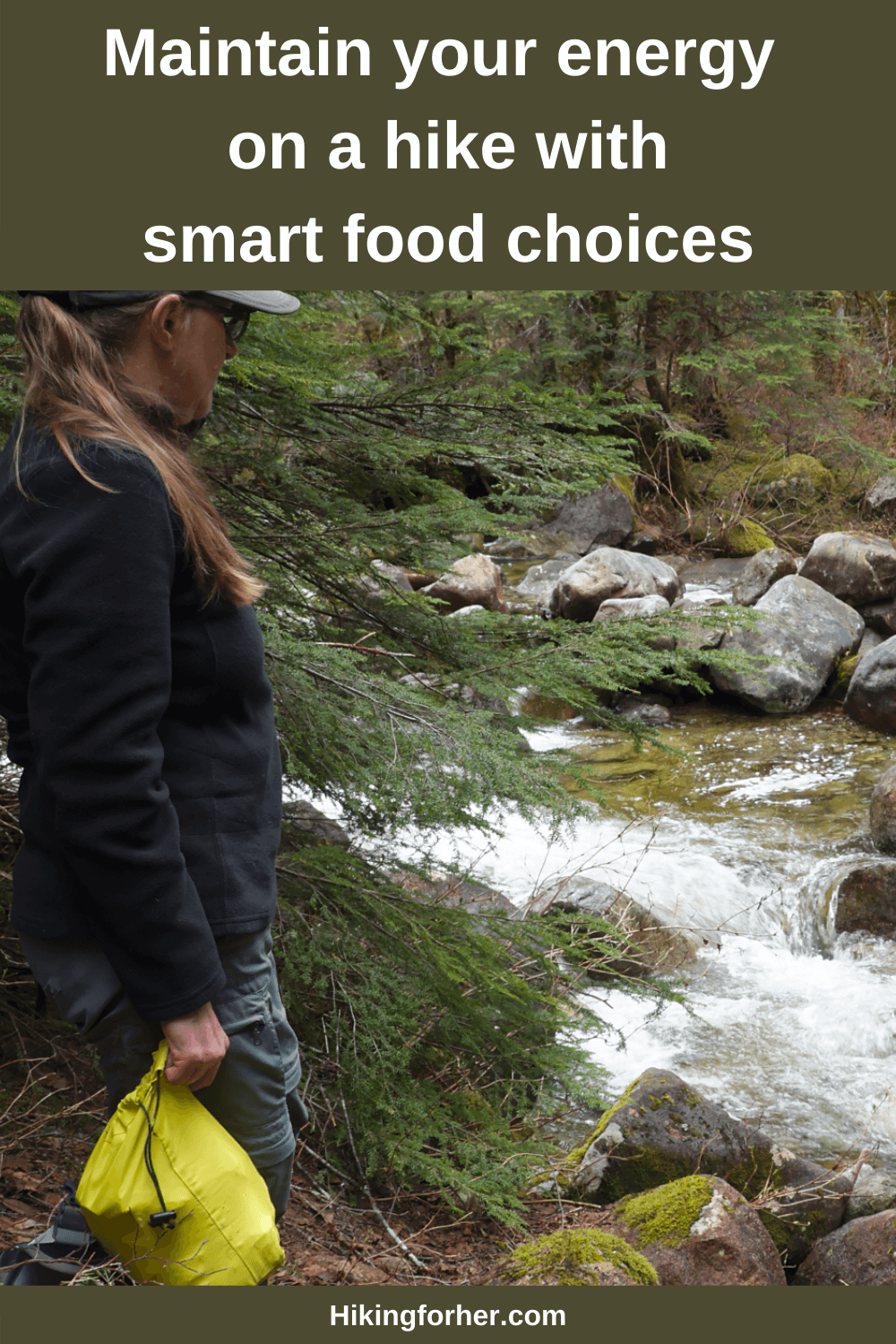

The solution to maintaining energy level during a hike depends on a steady fuel supply.
For a hiker, food = fuel.
Sounds simple, but a lot of hikers don't think about how what they eat translates into their trail performance.
Let's take a closer look at why hiking energy waxes and wanes, and how to work with the fuel delivery process your body uses to keep you going.
- Glucose
- Glycogen (stored glucose)
- The importance of a decent breakfast
Or skip down for tips on maintaining energy level as a hiker
Maintaining energy level as a hiker:
meet the biological reality of glucose
Long story short: Glucose means sugar.
That's what your cells run on.
The human hiking body has a remarkable capacity for handling hourly fluctuations in fuel, much different than machines.
- If your car has an empty fuel tank, it shuts down. End of story!
But if you have an empty fuel tank (your stomach), all of your systems remain on line, hour after hour.
Why?
Your hard working liver, and to a limited extent your skeletal muscles, deliver a steady supply of "fuel" to your cells in the form of glucose (a sugar molecule preferred by most cells).
- For more info on sugar (carbohydrate) rich food that works with your body to deliver steady fuel, read this.
This fuel delivery process happens whether or not you're hiking.
That's why you don't have to eat every five minutes, right? (Even if you feel like you want to.)
But on a hiking trail, your body depends on this constant flow of glucose to keep your energy levels high while you're exercising.
- A steady blood glucose level (the key to maintaining energy level) is the responsibility of your liver as you hike.
- And the liver relies upon glycogen.
Those hikers who follow a keto diet will disagree about the huge importance of glucose as fuel. They have adapted to burning fats for fuel via the process of ketosis.
And that's the key.
You have to switch over your body's biochemistry gradually to avoid problems.
This article focuses on carbohydrate dominant ways for maintaining energy level, as a majority of hikers rely upon them for fueling muscle contractions hour after hour.
Glycogen
and why you need it
If you've eaten a decent breakfast, and plan to stop for a snack after a reasonable interval of hiking, you're in good shape to hit the trail.
Your liver has no trouble delivering a steady stream of fuel to your contracting skeletal muscles, your brain, your heart, and all other parts of your body: in other words, maintaining energy level to meet demand.
Sugars from your breakfast will be available in the bloodstream, thanks to your dependable and multi-tasking liver.
And don't forget the back story: digestion.
- What you eat must be absorbed and delivered to the liver.
Also, the liver depends upon stored sugar (glycogen), which it built up & saved from excess sugar in previous meals.
Did you a second helping of pasta, bread, rice, cereal and other starchy carbohydrates the day before your hike?
That's how glycogen gets stashed away for later use.
Let's define "decent" breakfast
for a hiker
Note the word "decent" tied to "breakfast". That's the key to maintaining energy level early in your hike.
Are you a fan of a sugar doughnut and a cup of coffee as you drive to the trail head?
Sure, that'll work.
But you're forcing your body to work harder than it should to regulate your blood sugar within fairly tight limits over long spans of time.
How about a bowl of oatmeal with a spoonful of brown sugar plus a handful of walnuts and dried fruit instead?
This mixed meal delivers carbohydrates for fast energy, plus some staying power from protein and fat.
Breakfast is super important for a hiker
That hiker breakfast outlined above provides "slow burn" fuel (glucose with fiber, vitamins and minerals) to keep you going until snack break.
- The glucose is released from the food into your bloodstream over several hours, rather than in a big burst right after you eat.
Your liver doesn't have to scramble to regulate the amount of sugar entering your bloodstream by cutting up glycogen molecules into glucose.
Your gut might feel better, too!
Having digestive upsets on the trail? Read this.
Yo-yo spikes of energy:
not a good long term hiking plan
Big spikes of blood sugar are harmful in the long run, because this places stress on the pancreas and impedes its ability to supply a hormone called insulin.
Without insulin, the sugar in your blood can't get into your cells.
- The cells are surrounded in an ocean of sugar, calling out for sugar, thirsting for sugar....but not being able to take it in and use it for fuel.
Eventually, major organ systems begin to lose function: eyes, kidneys, immune system... that's called diabetes, and it's a chronic, life altering condition that no hiker wants to deal with.
Bottom line: To avoid long term trouble, avoid daily, large doses of sugary nutrient-poor foods. You know, candy bars!
A few solid ideas for
maintaining energy level on your hike
Try a few of these ideas for maintaining a high energy level on your next hike.
They won't take a lot of money or elaborate preparations, but they will keep you fueled up.
Make time for breakfast
Yup, even if that means getting up a half hour earlier.
If you're one of those people who pride themselves on "never eating breakfast", try seeing this choice from the perspective of your pancreas or liver on your next day hike.
Breakfast doesn't have to be complicated.
- Pop some complex carbohydrates into the toaster (bread, bagel, waffle) while you get dressed.
- Smear it with some almond butter and fruit juice sweetened jam, and munch away happily on the way to the trail head.
Or stash a few nutrient rich breakfast bars like these in your car or backpack and pull one out before you hit the trail.
One last idea: Whip up a nutrient dense smoothie of nut butter, your choice of milk, banana and flax the night before. Grab and go in the morning!
Backpackers, read these tips.
Listen to your body
When you get strong hunger signals on the trail, stop within a few minutes and eat a snack.
- Frequent, small amounts of easily digested food are easier on your digestive system than one big intake of sugar coated or protein rich foods.
Some folks carry a small bag of trail mix or dried fruit in a shirt pocket or accessible backpack pocket, and munch while they hike.
Don't ignore your hunger signals. It's like ignoring the EMPTY warning on your car's fuel gauge!
Hydration levels matter for
maintaining energy level
Paying attention to your hydration levels is also a smart move, because without water, your cells can't utilize all of the glucose in your bloodstream.
There are lots more tips for getting, and keeping, a high energy level in my Day Hiking Tips book!

Quote from a satisfied reader:
"The trail food section was also eye opening.
I never gave much thought as to what I was eating on the trail, and the explanations of what your body needs are given in an easy to understand yet scientific manner.
I’ve certainly found areas of my trail diet that need improvement, and I am excited to see how that changes my stamina, mood, and enjoyment on the trail."
Make a commitment to yourself.
You're worth it!
Commit to maintaining your energy levels during your hike and be amazed at how much further you can go, and feel great doing it!
You've only got one liver, one pancreas, and one hiking career.
So cooperate with your energy production system and you'll never have to face the "crash and burn" syndrome of hikers who rely on sugar laden trail food.
You're in it for the long haul, am I right?
In that case, read why protein is your second best friend on the trail.
Home page > Best Hiking Tips >
Maintaining Energy Level
Diane Spicer founded the Hiking For Her community in 2008 to encourage female hikers, those who wanted to begin hiking as well as those who were in love with this fantastic sport already.
On this website she shares expert hiking tips and recommendations, gear reviews and photos from her outdoor adventures to welcome everyone to learn the necessary skills for comfort and safety on a hike.
This reader supported website does not use sponsored or promoted content. There are no ads or paid link placements. Everything you read is based on decades of personal hiking experience in many different locations.
All rights reserved.
Photo credits: All photos on this website were taken by David Midkiff or Diane Spicer except where noted.
Disclosures
Privacy
Copyright
Media
As an Amazon Associate, Hiking For Her earns from qualifying purchases.
When you buy through our links to trusted outdoor gear affiliates, we may earn a commission while you pay nothing extra.