
Enjoy Happy Trails, the free monthly newsletter from Hiking For Her
Receive a free resource: "Hiking Layering System Explained"
Solo Hiking
Trip Planning
By Diane Spicer
Let's get this front and center:
With solo hiking trip planning, there's a difference between fear and caution.
The first -fear- usually strikes an unprepared or unaware hiker, or keeps a person from hiking at all.
The second implies common sense and reasonable doubts: a cautious hiker lives to minimize risks, to hike another day.
And the joy of solo backpacking is within the reach of any hiker who plans a trip around common sense.
How can you avoid fear and utilize the upside of caution on a solo hiking trip?
Check lists!
These little beauties will make your solo hiking trip planning foolproof.
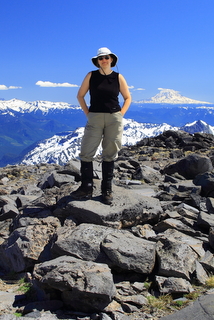 Gaiters, sun hat, sunscreen - all on the checklist!
Solo hiking trip planning:
checklists
Because you are taking a chance with your personal safety and comfort, it is essential to prepare several trip check lists:
- gear,
- food,
- "what if" (the Plan B stuff),
- and itinerary check lists
as part of your solo hiking trip planning.
Your gear list depends upon the type of hiking trip (beyond solo) you are planning.
Start with the obvious items (shelter, sleeping bag, stove, water transport and treatment), and think through what the purpose of the trip will be, keeping your old friend GRAVITY in mind.
The weight of your pack determines not only your comfort and mileage, but potentially your safety.
A quick aside here:
- Are you comfortable with your gear?
- Can you set up your tent in cold, wet, or dark conditions?
- Have you used each piece of equipment before, or
- Are you "testing it out" on this trip?
In other words, it's essential to be comfortable with the limitations and demands of your gear, and have a repair kit or at least an idea of what to do if it goes bad on you.
Examples of additions
to basic gear list
If the purpose of your trip revolves around spiritual growth, you will probably want a journal and pen, and perhaps a book with writing/centering/observing exercises to use. The weight of these items is justifiable.
On the other hand, if the purpose of your trip is to learn how to identify flowers and trees, a camera and tripod, field guides, and trail journal may be what you want to carry.
Tip:
Weigh your fully packed pack (25 pounds or less?), carry it for at least a half mile, and be stern with yourself:
- Do you really need each item?
- Or is it more of a want?
It's tricky psychology to leave your favorite stuff behind, so this might be harder than it sounds!
Solo hiking trip planning means being ruthless about leaving behind things that you could stash in your pack if a trail buddy was carrying the tent.
Food checklists
Your food list needs to be thought about very carefully, allowing a slim margin for error on the side of over-packing.
I know I've done a good job with my food check list if I have a bit of food left over at the end of the trip.
Because food is such a personal issue, it's impossible to give guidance about quantities and exact foods to pack.
But here are some general guidelines.
It's worth noting that you should plot out on paper the food you need to fuel the trip you are planning.
A side-by-side comparison of your trip itinerary and your food list should be done.
- Bad weather costs you more fuel (calories as well as stove fuel) to keep up your core temperature - will you have enough food to get through a stretch of extremely cold or wet weather?
- An ambitious mileage daily plan will require more nutrients, especially carbohydrates during the day and protein for rebuilding as you sleep.
Don't want to take a chance on your calculations? I've got a few FastFacts ebooklets that might help.
"What if"
Plan B checklist
I'm a bit of an "over" planner by nature, someone who likes contingency plans.
So I highly recommend what I call "What if" check lists.
- Creating one is a good exercise in revealing your attitude toward adversity.
Sure, it's nasty business to picture yourself with a broken bone or shivering on the side of a stream after losing your pack.
But playing out a few scenarios in your head from the comfort of your couch could make things easier if the worst happens to you in the wilds.
Example
What if you slip on loose rock and fall, twisting your ankle?
If you can get your pack off, what's in your pack to help you?
A cell phone may/may not work.
A whistle may alert others to your presence.
A signal mirror may be necessary for a rescue helicopter to find you.
Extra clothing, food, water (part of the ten essentials) may get your through a rough night until you can hobble out for help.
A personal locator beacon could summon aid.
Again, the answer to the "what if" may impact your other lists.
Tip for solo hiking trip planning:
- Read disaster stories and books that outline what went wrong, to whom, and how.
They tell you how to avoid the situation in the first place, or how to survive it.
If you can't bring yourself to read them because it will panic you, at least consider this question:
Is solo hiking really for me? Spend a little time surfacing your solo hiking concerns, and then work with them until you feel confident that you can handle whatever the trail dishes out.
Itinerary checklists for
solo hiking trip planning
Your itinerary check list will be made in triplicate and given to someone you trust before you leave, as well as someone at the ranger station.
- No
ranger station involved in your plans? You might want to leave a copy
in your vehicle, for someone with a key to your car to access if things
go wrong. It could be useful for a Search and Rescue team.
One copy rides along with you, so you don't succumb to the temptation of "forgetting" and deviating from your plan.
This is a non-negotiable list, and once you make it, you need to stick to it.
An exception
If you are base camping and want to do a day hike not on your itinerary, leave a note at base camp with your destination and estimated return time.
You can leave instructions for finding the note on your itinerary: "Look under my sleeping bag", for example, if you are uncomfortable with the idea of leaving it out in the open.
Start with this information
on your itinerary
The first thing on your checklist:
A description of your vehicle and license plate number, and where the trail head is located.
- Don't assume that "everyone knows" where you are going to park.
- Don't assume that your loved ones know the make, model and license plate number for your vehicle.
- You can save valuable time if you detail exactly where the trail head is, and give the phone number of the ranger station in that area.
Next on the checklist:
Your "start" and "finish" dates.
- Ask your trusted friend/loved one to give you a call on your cell phone if you haven't called them on the finish date.
- And please remember to call them once you're off the trail!! Panicked friends are no fun and occasionally become ex-friends.
Keep going with your
solo hiking trip planning!
Next, create a day-by-day plan.
Here's where knowing your personal limitations is very important in solo hiking trip planning.
I'm assuming that you have done quite a bit of hiking already, and know how much mileage per day is comfortable for you.
So you know that it's important to be realistic, but plan on going more slowly solo than you do with a buddy.
Why?
- You need to remain alert and aware, and want to be conservative with your energy expenditure. This will set your pace a bit slower than usual.
- You can always use any "extra" time for relaxing and exploring once you reach that day's objective!
Rely upon your on-line homework while you make your daily plan.
You did consult trail and road reports, weather forecasts, Google Earth, and other resources, didn't you?
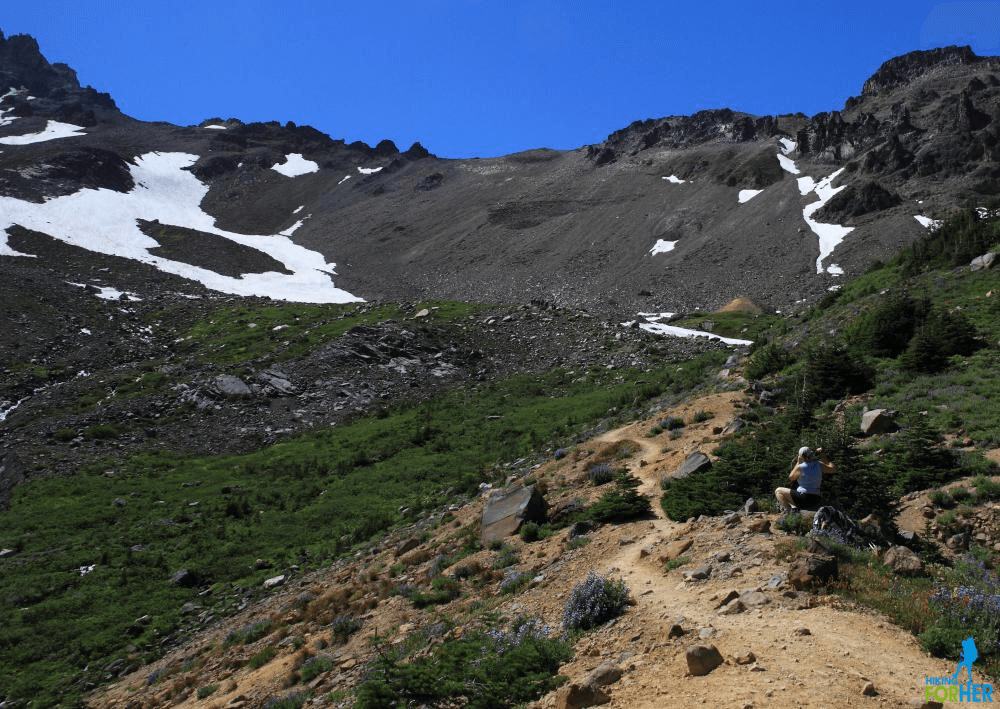 Leave as little to chance as possible when you hit the trail solo
Finish up with this
And finally, build contingency plans into your itinerary : "If there are no available campsites at Lake #1, I will hike half an hour further along the trail to Lake #2."
Try to think things through and make a reasonable guess about what you will do if your original plan isn't feasible.
This will save time if a search party comes looking for you, by eliminating the guesswork about what you were thinking.
This may be SOLO hiking trip planning, but you don't have to go it alone - make your trip plans transparent to others.
In other words, make yourself "trackable" if you don't hit your "end" date right on schedule.
Bonus round for everyone!!
One last bonus that check lists provide: Peace of mind for anyone in your life who is uneasy about you going off on your own.
These check lists are proof positive that you know what you are doing, that you have a plan, and that you will stick to it.
A few more solo hiking
trip planning tips
Please use these simple to say, hard to do tips to get yourself started on taking solo hiking trip planning seriously.
Think things through.
- Use your vivid imagination to practice how to deal with an accidental fall on the trail, an animal encounter, not making your expected mileage before dark, or other sources of stress.
Keep your margins for error near zero.
- Know your terrain, your body, how much food you have, where you'll get water and how to treat it reliably, and what the long term weather forecast holds in store for you.
Take notes on what spooked you, what enthralled you, and any other "high emotion" events.
- That's where the best learning opportunities are found, so pack a trail journal.
And then get out there and enjoy your solo hiking trip!
You're as ready as ready can be!
Feels good, doesn't it?
Home Page > Solo Hiking Tips >
Best Solo Hiking Trip Planning
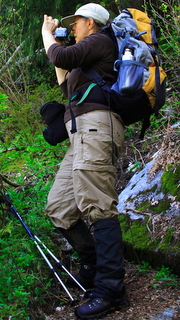
Diane started hiking in 1971. She started Hiking For Her in 2008 as a resource to encourage every woman to take a hike. Please enjoy these expert hiking tips as you explore what hiking offers in any weather, season or location.
Meet Hiking For Her's Diane
TODAY'S BEST OUTDOOR GEAR DEALS
REI Co-op Members save an extra 25% on REI Outlet fitness clothing & gear 4/12 thru 4/15.
Example: Hydro Flask bottle with cap, marked down from $49.95 to $26.73.
Use code OUTFIT24.
See ALL the great deals on the Hiking For Her Best Current Deals page!
POPULAR POSTS

Diane Spicer founded the Hiking For Her community in 2008 to encourage female hikers, those who wanted to begin hiking as well as those who were in love with this fantastic sport already.
On this website she shares expert hiking tips and recommendations, gear reviews and photos from her outdoor adventures to welcome everyone to learn the necessary skills for comfort and safety on a hike.
This reader supported website does not use sponsored or promoted content. There are no ads or paid link placements. Everything you read is based on decades of personal hiking experience in many different locations.
All rights reserved.
Photo credits: All photos on this website were taken by David Midkiff or Diane Spicer except where noted.
Disclosures
Privacy
Copyright
Media
As an Amazon Associate, Hiking For Her earns from qualifying purchases.
When you buy through our links to trusted outdoor gear affiliates, we may earn a commission while you pay nothing extra.