
Enjoy Happy Trails, the free monthly newsletter from Hiking For Her
Receive a free resource: "Hiking Layering System Explained"
Best Menopausal Nutrition Tips
For Hikers Of A Certain Age
By Diane Spicer
Menopausal nutrition for hikers is a vast, deep subject.
And I'm not qualified to give expert advice.
But I do have a background in teaching human biology to college students.
And access to lots of scientific journals and human biology textbooks, so I've done a lot of reading on this subject.
Also, I've been through The Pause, and am here to tell you it's survivable.
And here's a little secret:
- Hiking during menopause has its advantages! (no need for a down vest on a chilly day, for instance)
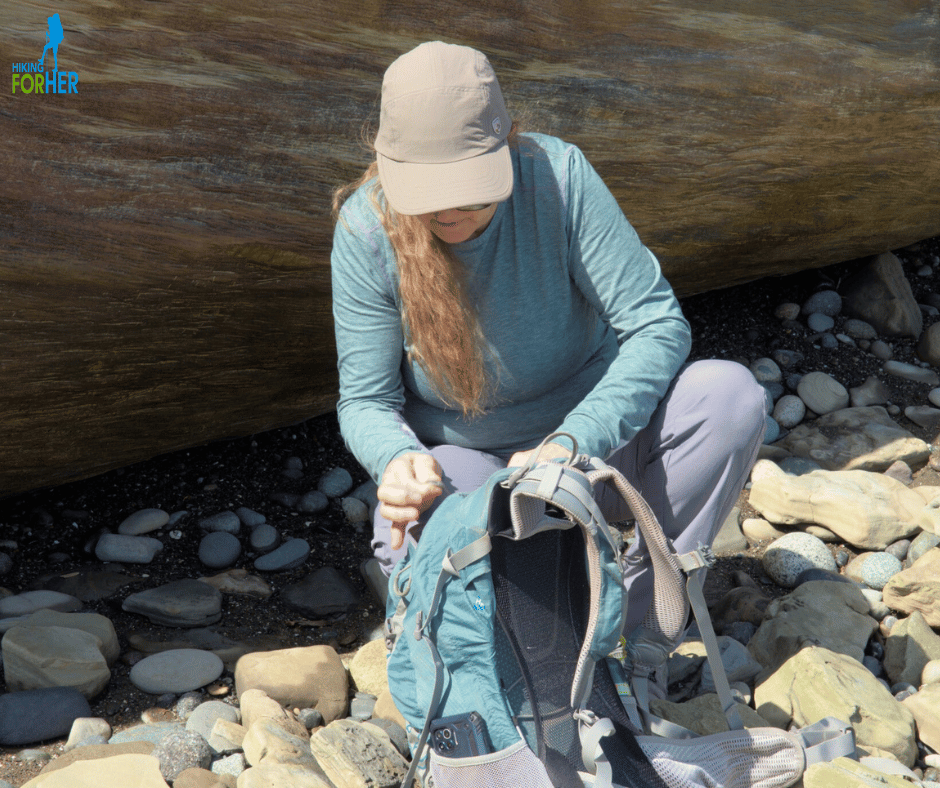
Why discuss menopausal nutrition?
What motivates me to share this information is my desire for
you to remain strong and active well into "old age" - define that with
any number you wish, but for me, it's somewhere approaching triple
digits (!!).
Let me share with you a few things I've gleaned about menopausal nutrition (and post-menopausal nutrition) for women hiking into, and through, menopause.
- This information goes beyond protein/carbohydrate/fat information.
None of this is medical advice, just some ideas for you.
The role of calcium
in menopausal nutrition
Calcium is a big deal for older hiking females.
Osteoporosis can rob a menopausal hiker's bones of strength and resilience.
- "Porous" means filled with holes, right? Great for lightweight bird bones, but definitely not what we want in our weight bearing bones in the pelvis and spinal column.
Calcium can enter your body in two ways:
diet and supplements.
Either way, it's useful if it's together with another mineral, magnesium (discussed below).
Dietary sources of calcium can include:
- anything containing cow milk
(dairy foods such as cheese, ice cream, and yogurt),
- calcium-fortified foods
such as fruit juices and nut milks, or canned fish with bones,
- some* green leafy vegetables you'd put into a salad.
A few cautions:
- Spinach can
actually deplete your calcium levels, as can coffee and some beans if
they haven't been properly prepared.
- Normal intake levels in a salad shouldn't pose a problem for most women.
So if you've never been a "salad" person, it might be time to switch from soup to salad for dinner.
What about supplementing
your calcium intake?
Calcium supplements come in various forms of calcium salts:
- carbonate,
- citrate
- malate
Talk with your health care provider about which choice is best for you.
Various factors in the decision might be:
- how much stomach acid you produce
- your gastrointestinal function
- how much serum (bloodstream) calcium you have
- whether you suffer from constipation
- whether you are taking "bone medications" or antibiotics
- whether you can swallow some of the really large tablets, or would prefer a fast dissolving supplement.
Another thought:
Buy calcium supplements from a reputable source. Ask your health care provider for recommendations.
Or look at the company I use.
You
don't want your calcium contaminated with metals such as lead, or filled up with allergens, binders, fillers or other junk.
The science says what?
And speaking of the safety of calcium supplementation, check out this chunk of recently released science.
It's actually a "study of studies", pooling information from many studies (meta-analysis) in an attempt to answer the question:
Do calcium plus vitamin D supplements increase cardiovascular risk?
The answer to the question:
Insufficient evidence is available to support or refute the association
- The article is available from the British Medical Journal here.
Speaking strictly for myself, I think it's a cautionary note for women who are at risk for cardiovascular disease to avoid supplementation, in favor of daily calcium through dietary sources.
Makes sense, right?
Mother Nature has it figured out.
One more quick calcium fact
If you're raising children or grandchildren, be aware that they are accumulating calcium in their bone matrix up until the age of 18 years of so.
- Be sure you give your
hikers-in-training plenty of opportunities to store calcium!
- Female children in particular need to deposit lots of calcium in their "bone bank", against the withdrawals they will make during future pregnancies and their own eventual menopause.
The importance of magnesium
for menopausal hikers
Menopausal nutrition for hikers should also include this mineral, because magnesium is vital for proper muscle and nervous system functions.
Hikers need to protect these functions, because that's where we get our strength, endurance, coordination, adequate energy levels, and balance.
The good news about magnesium is that it's easy to get in a normal diet.
What to eat during menopause to ensure you're getting enough magnesium:
- whole grains,
- good quality raw nuts,
- beans,
- fish,
- meat, and
- dark green vegetables.
These foods should be the backbone of your menopausal nutrition.
If you're taking a calcium supplement, this may increase your need for magnesium.
- Watch out for muscle cramping, fatigue, mood changes such as irritability, or brain fog.
- Soaking in an Epsom salt foot bath is a quick way to get magnesium sulfate into your muscles.
Magnesium supplementation (over and above what you are getting in your food) has been correlated with increased bone mineral density in post-menopausal women, possibly because it prevents the bone matrix from being turned over quickly.
- Something worth talking to your health care provider about!
Forms of magnesium
As is true for calcium, magnesium comes in various forms:
- oxide,
- hydroxide,
- chloride,
- lactate,
- glycinate
Talk with your health care provider about this, because the choice you make depends upon your symptoms and baseline, as well as any medical conditions or medications.
Here's what I ingest after a long day on the trail, to guard against night time muscle cramps which hurt like the dickens.
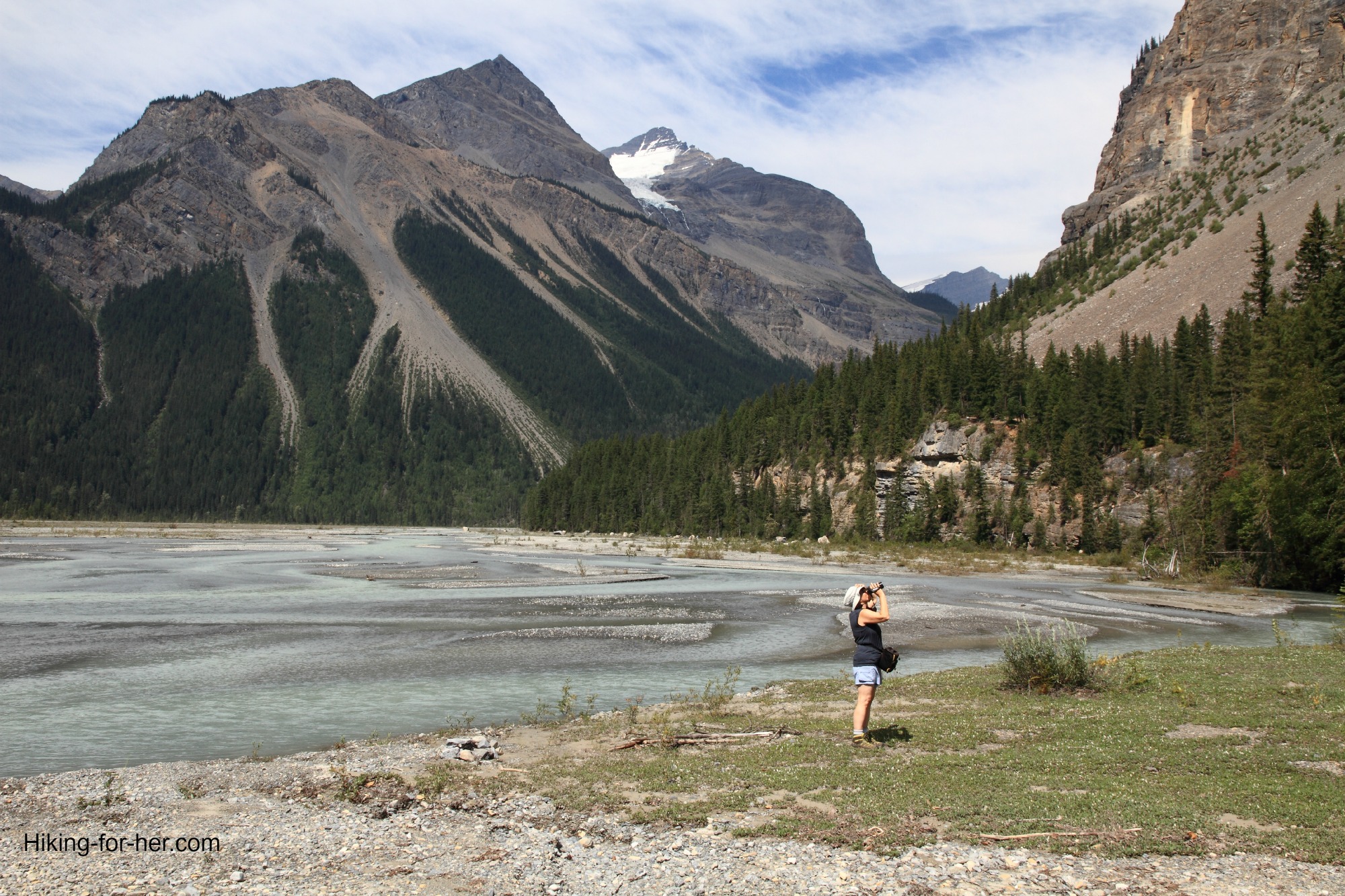 Menopausal nutrition for hikers: an insurance policy to keep you hiking to fantastic places like the Canadian Rockies!
Menopausal nutrition:
Potassium
Here's another interesting component of menopausal nutrition.
Just like calcium and magnesium, potassium is a small charged particle (ion) which is used to accomplish many jobs inside your cells.
Chances are, you are getting enough of this nutrient in your food if you are eating meat, fruit, and vegetables.
Muscle weakness and fatigue may indicate a lack of potassium, important considerations for menopausal hikers.
This is especially true if you've been sweating a lot on the trail, or have had a recent bout of vomiting and/or diarrhea (fluid losses).
Easy ways to sneak in potassium:
- Eat a banana at the trail head before lacing up your boots.
- Eat another one on the way home.
- Mix unsulfured dried apricots into your trail mix.
- Ditto for figs.
- Enjoy a luscious slice of cantaloupe after your hike.
- And you can double dip with dairy foods, because they give you calcium and potassium.
Fiber - really??
Not having enough fiber in your diet sets you up for all sorts of nastiness.
- Diverticulosis, a weakening of the muscular walls of the colon, can become an inflammation called diverticulitis.
- Straining during bowel movements to expel hardened stool can create hemorrhoids.
Just two examples of why eating plant based fiber rich foods are important as we age.
Does your daily diet include these foods?
Here are the foods you can eat to make sure you're getting your daily dose of fiber:
- Lentils
- Quinoa
- Flax
- Garbanzo beans
Trail tip:
A bowl of oatmeal topped with this ground flax gets you loaded up with fiber, but be sure to drink enough water to maximize its benefits in your intestinal tract.
Protein becomes very important
for menopause and beyond
Everyone should eat protein every day, right?
But it's hard to get enough protein on a backpacking trip.
And some of the "wisdom" out there says to forget about your protein intake and concentrate on fast energy producing carbohydrates during a hike.
Hiking For Her thinks otherwise, with all the details about the importance of protein for you here.
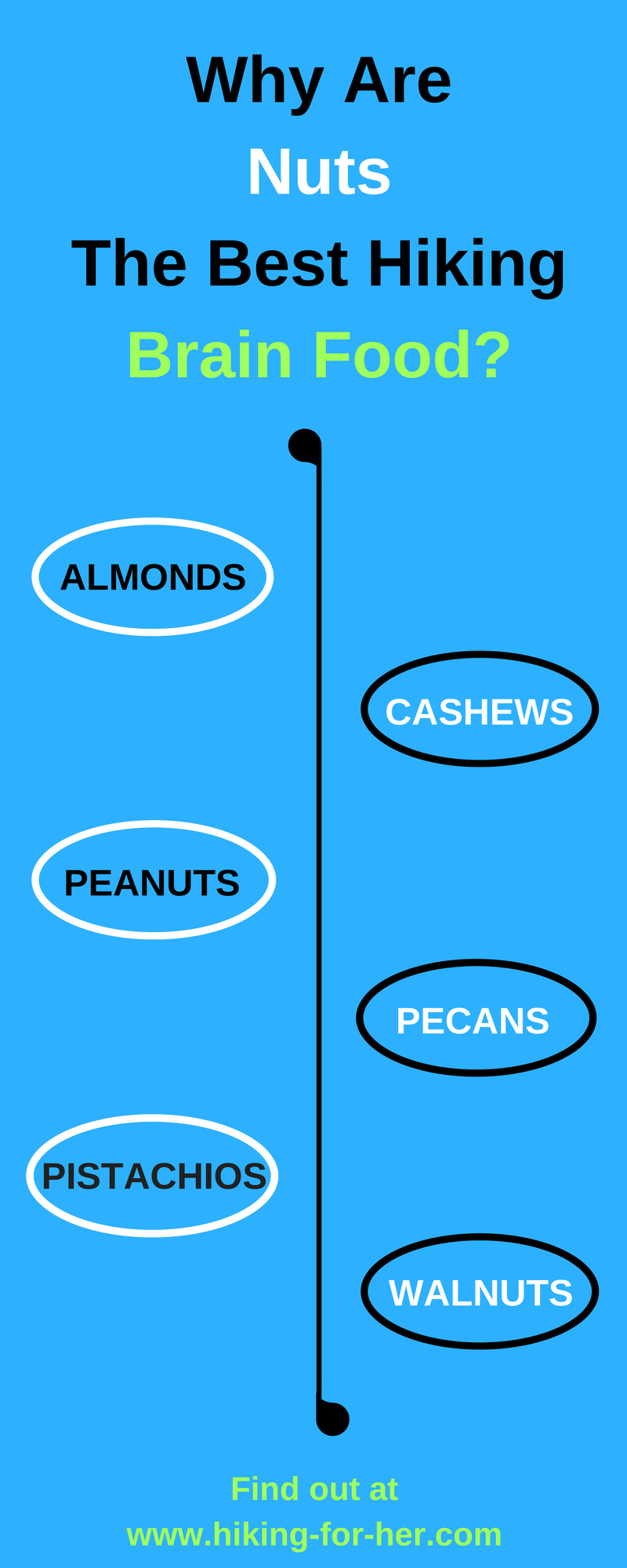
And if you've been enjoying nuts as a trail snack all through your hiking career, you're on smart hiker!
- More details here

Antioxidants are important, too
Oxidative stress is a fancy way to say that when you're out on the trail, breathing deeply hour after hour, you're generating high energy particles called free radicals in your tissues.
These energetic little trouble makers zing around and damage your cellular structures.
That means function can be impacted.
So make it a point to load up on antioxidants.
- Hiking For Her tips here
Good menopausal nutrition
is well worth your time
Take the time to eat well, and your body will be ready to take you up and down the trail as the years roll by and your hiking memory banks overflow.
Thanks for visiting!
And happy "prime of life" hiking.
It's a blast!!
Before you go, enjoy more Elder Hiking tips.
Home page > Hiking Food >
Menopausal Nutrition For Hikers
Diane Spicer founded the Hiking For Her community in 2008 to encourage female hikers, those who wanted to begin hiking as well as those who were in love with this fantastic sport already.
On this website she shares expert hiking tips and recommendations, gear reviews and photos from her outdoor adventures to welcome everyone to learn the necessary skills for comfort and safety on a hike.
This reader supported website does not use sponsored or promoted content. There are no ads or paid link placements. Everything you read is based on decades of personal hiking experience in many different locations.
All rights reserved.
Photo credits: All photos on this website were taken by David Midkiff or Diane Spicer except where noted.
Disclosures
Privacy
Copyright
Media
As an Amazon Associate, Hiking For Her earns from qualifying purchases.
When you buy through our links to trusted outdoor gear affiliates, we may earn a commission while you pay nothing extra.