
Enjoy Happy Trails, the free monthly newsletter from Hiking For Her
Receive a free resource: "Hiking Layering System Explained"
Best Dayhiking Tips:
An Essential Guide For Day Hikers
By Diane Spicer
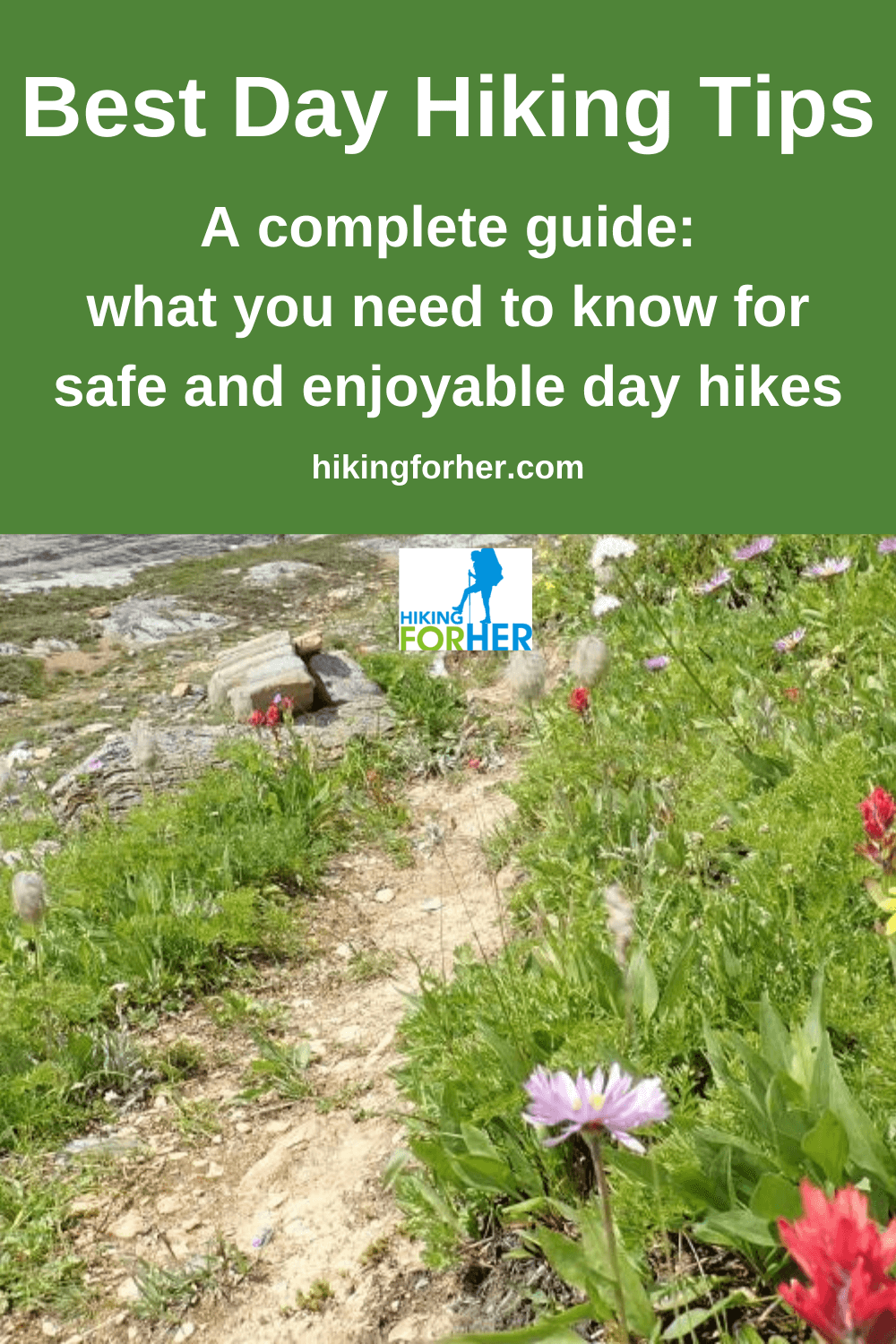
The best dayhiking tips are the ones shared by a seasoned trail veteran.
And you've just discovered them, organized for you into the Essential Guide to Day Hiking.
It's chock full of answers to your day hike questions.
Essential Guide to Day Hiking
Table of Contents
Drop down to any section of best dayhiking tips with these links:
- Day hiking defined
- How to get started day hiking
- How to plan a day hike
- What to pack for a day hike
- What to leave at home as a day hiker
- What to eat on a day hike
- What to wear as a day hiker
- Hiking clothing for spring and fall day hikes
- Hiking clothes for warm weather day hikes
- Cold weather snowshoeing and day hike clothing
- Safety tips for hot day hikes
- Safety tips for cold day hikes
- Types of day hikes to try
- How to buy the best day hiking gear and clothing
What is dayhiking?
Anyone who self identifies as a hiker has something specific in mind.
For some, it's an identity based on doing hikes which last between 3 and 10 hours, depending upon the season and the location.
That's a day hiker, by definition.
She has no intention of spending the night outdoors.
She starts the day hike at a specific trail head or other trail access point.
This type of hiker can do one of severalthings once she's on the trail:
- Return to the same trail head before dark by retracing her steps, in an "out and back" pattern.
- Return to the same trail head after completing a loop day hike.
- Exit the trail at a different trail head, with pre-arranged transportation options like a shuttle or a friend waiting to take her home.
- A variation on the shuttle theme is to meet a friend in the middle of the day hike, switch car keys, and drive each other's car home at the end of the day.
So the main thing to understand about a day hiker is that the length of her hike is determined by:
- the number of hours of daylight remaining, once she starts the hike
- the distance she wants to cover in those hours
- her energy level needed to conquer the terrain
Is day hiking for you?
If day hiking sounds like fun, keep reading!
You're in the right place to learn everything you need to know to get started, or to improve, your day hikes.
You'll also learn some insider best dayhiking tips to make your trail time comfortable and safe.
If you're more interested in learning about backpacking trips of various lengths, start with these tips.
You can read about all of the types of hikers here.
Now let's tackle that list of questions.
How do I start day hiking?
This is an excellent question.
It can be answered several ways.
Hike with experienced day hikers
The easiest, and arguably the most fun way to start day hiking is to find somebody who will welcome you along on a day hike.
That's easier said than done.
To find day hikers, you can:
- Join social media groups of hikers
- Contact bloggers who hike in your area
- Look at bulletin boards in outdoor gear stores
- Chat up salespeople in those outdoor gear stores
- Use my tips for finding hiking partners
Take a beginner day hiker class to learn
the essentials of day hiking
If groups of people are comfortable for you to learn with, find a local hiking class to ease you into the basics of day hiking.
REI Co-op has year round classes all across the U.S.
- Here are some tips on finding exactly the right one for you.
I offer a How To Start Day Hiking course a few times a year.
- Put your name on the wait list to be notified.
Local chapters of hiking organizations offer classes, too. A little on line detective work will find the groups closest to you and your preferred hiking destinations.
Start small and build your endurance
If you take a daily walk a few times a week, consider yourself a day hiker.
You've got to start somewhere, right?
A few tips:
Work up to progressively larger mileage or time goals.
Begin to carry a backpack with a modest amount of weight in it to get a feel for what trail hiking feels like.
Walk on varied surfaces, not just pavement.
- There is a big difference in how your legs and feet feel.
- You'll begin to train your muscles to anticipate uneven ground and debris beneath your feet.
When you feel strong enough to tackle a "real" hiking trail, use the tips for a successful day hike which follow in this Dayhiking Tips Guide.
How do I plan a day hike?
Another excellent question!
When you switch from weekly walks around the park or your neighborhood to walking on a designated hiking trail, you've got to be prepared for anything.
That means you have to have these things with you:
- a destination and a plan to get there and back before dark
- a firm turn around time
- the Hiking Ten Essentials
- food and water
We'll cover the last 2 in a bit.
Right now, let's consider how to choose a good trail for a day hike.
Where to find the best trails for day hikes
You can go in two directions (a tiny hiking pun):
1. Use guide books or paper maps which show well marked, labeled trails.
- Regional, state and national parks have websites where you can view, and download, day hike trails.
- They will have trail descriptions and metrics to help you choose the best day hike for your plans.
2. Use a phone app that does the same thing.
Try this source for good day hike trails: AllTrails.
It offers you all of this:
- over 75,000 trails (and counting), filtered by location, length and difficulty
- the ability to create custom maps
- access to community geotagged photos and trail reports
- a choice of a basic "free" account, or a monthly "pro" account for more features
Important planning tips for a successful day hike
After you select a trail you want to try, you need to figure out a few things:
- what your destination will be: a viewpoint, waterfall, lake, or a particular mileage number (the app mentioned above can track your mileage and position)
- how long it will take you to reach your destination, given the terrain, weather, season and your conditioning level
- how to keep track of where you are, and the passage of time, on your day hike
- what you will do when you hit your turn around time
To build confidence in your beginner hiking skills, you can explore another guide I pulled together for you: Beginner Guide To Hiking.
Why setting a turn around time on a day hike
is essential
A turn around time tells you what to do when a predetermined amount of time has passed as you hike.
- It's a safety mechanism for making sure you get off the trail before darkness falls, or before your energy levels plummet.
On your first few day hikes, set a conservative turn around time. Use a reminder tone on your watch.
If you get back to the trail head with plenty of pep in your step, you can stay out longer on your next day hike.
On the other hand, cutting it too close will create anxiety.
So here's the essential fact about a turn around time:
- It is non-negotiable.
Rule #1: You set it based on what you're estimating your hiking pace will be, matched to the terrain.
Rule #2: You do not alter the time, no matter what, even if you're just a few minutes away from your destination.
Don't let your hiking buddies, or your own little nagging voice, talk you into pushing on when you know that it's time to head back.
No good thing comes from being exhausted or unprepared to face a night on the trail.
That's when mistakes are made, and hikers get lost by missing trail signs or getting turned around in twilight conditions.
The trail will be waiting for your next hike; there is no need to push past your safety and comfort levels as a day hiker.
What should I pack for a day hike?
What exactly do you need for a day hike?
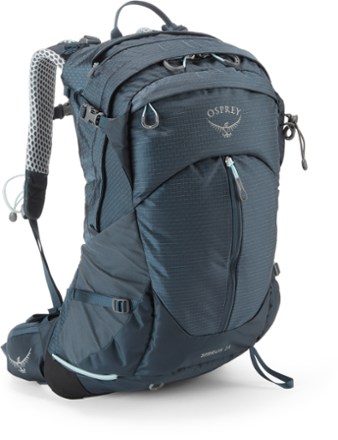
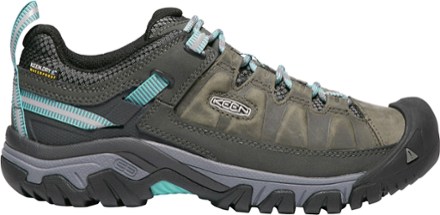
It's pretty simple: sturdy footwear, something to carry your Ten Essentials, and a way to navigate the trail.
If you've never hiked before, use these links to explore the basic hiking gear you need to get started:
- footwear that continues to feel good all day, including technical hiking socks
- a backpack to carry food & water
- the Ten Essentials of hiking
- hiking navigation tips
Recommended day hiking gear
If you've never seen a dayhiking checklist, take a peek at mine.
- It's a free pdf download, with trailhead tips and add ons.
If you're ready to get on the trail, you can't go wrong with these reliable pieces of day hike gear from top notch outdoor gear brands:
What should I not take on a day hike?
It's fine to use what you already have for your first few day hikes, but soon you will come to understand what a liability some things are for a dayhiker.
So among our dayhiking tips I'll include this short list of what not to take hiking:
- Flimsy footwear such as flip flops, sandals, or unsupportive, low cut shoes
- Thick heavy denim clothing, with seams that will bind and chafe as you move and wear your day hike backpack
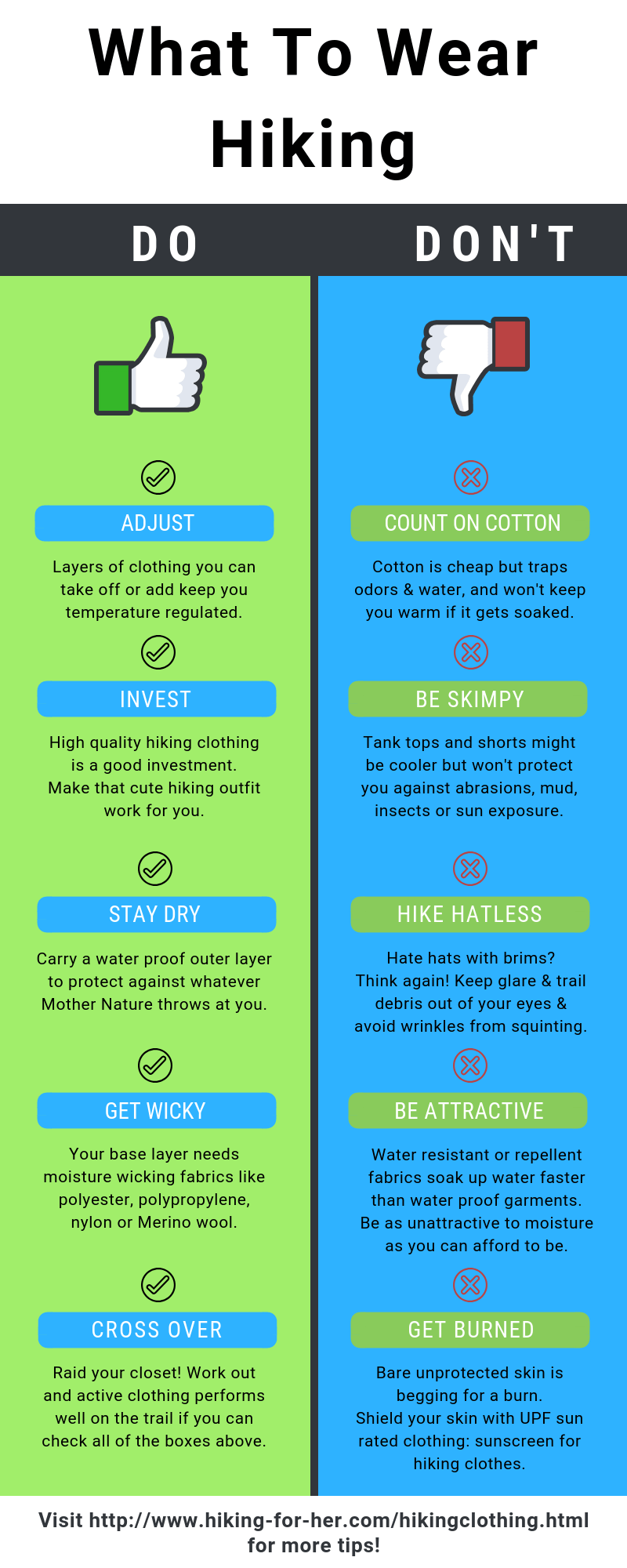
- Cotton fabrics that soak up your sweat and other moisture but don't let go of it, leaving you clammy and uncomfortable
- Thin socks that are more suitable for dress shoes than for sturdy trail boots or shoes
- Heavy electronics that you might use for a few minutes but have to carry all day
- Uncharged phones and navigational gear that are literally dead weight
- Expensive jewelry that can be lost or become difficult to take off when your body swells up a little (a normal part of hiking, but read more here).
- An uncomfortable backpack designed to haul books and a laptop, rather than your hiking lunch and Ten Essentials
- Any devices that make loud noises or music to distract and annoy wildlife and other hikers
Dayhiking tips:
What should I eat on a day hike?
You're an athlete now, so you should think about your food differently.
Calories are not evil things that make you gain weight.
Instead, they are necessary fuel for your muscles and brain so you can complete your hike.
A day hiker eats breakfast at home or on the way to the trail head, to fill up on complex carbohydrates with some protein and fat mixed in.
Example: A whole grain bagel (complex carbohydrates) spread with nut butter or cream cheese (fat and protein), or topped with an egg (protein), plus some fruit (simple carbohydrates) and milk (cow or plant sourced protein).
An excellent day hiking lunch provides mostly carbohydrates, to burn as fast release fuel to power you through your hike.
You can take a deep dive into day hike nutrition here.
Other options to explore:
- Explore day hiking food tips and recommendations here.
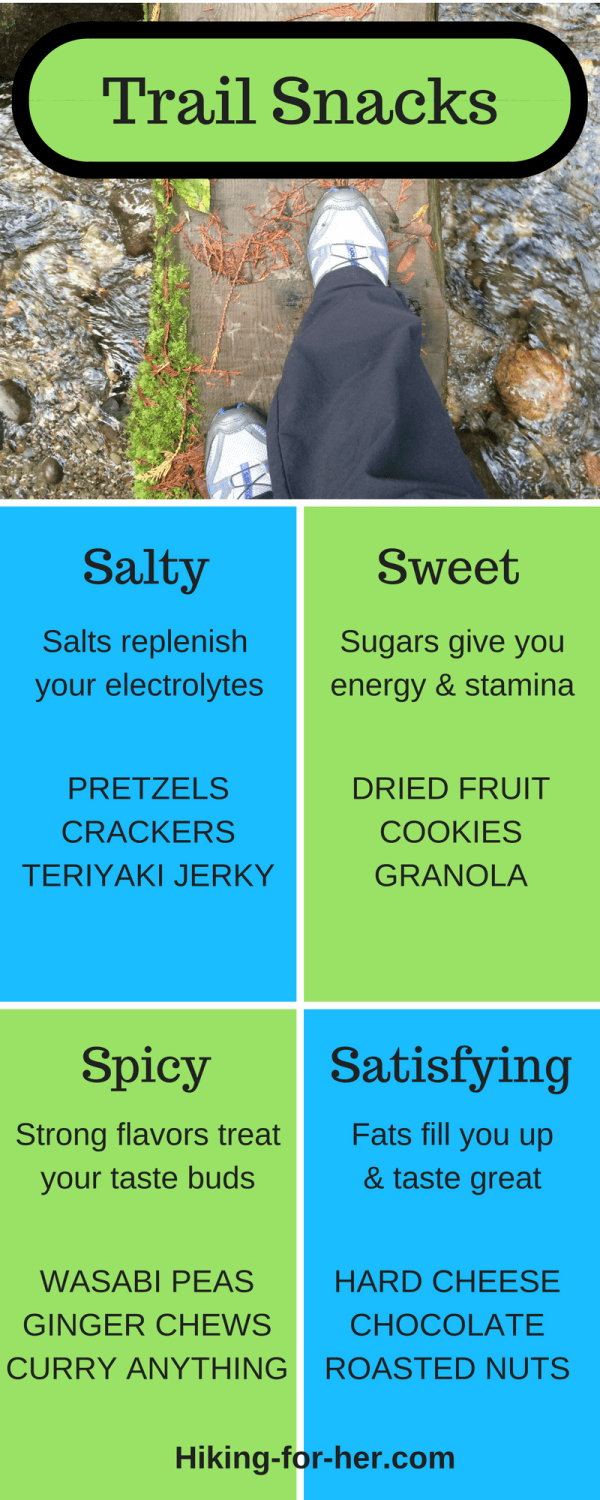
- Don't forget hiking snacks for sustained energy!
- Practice good food safety on warm weather hikes.
Pay attention to these basics, and you're all set for dayhiking on well established trails during daylight hours.
What should I wear on a day hike?
For your first few hikes, you can put together the clothing you already own into a hiking outfit.
- Caveat: But only if you scout weather forecasts for safe hiking conditions, and cherry pick warm, dry weather for your day hike.
Once the hiking bug bites (not to be confused with regular bug bites), you'll want to invest in weather-appropriate and durable hiking clothes.
- Speaking of regular bug bites, if you're squeamish about insect bites, consider carrying a bug net.
- Or become repellent.
Having trouble finding plus size outdoor clothing options? Here are some tips.
Let's take a peek
inside my hiking clothes closet
To share some seasonal dayhiking tips for hiking clothing, I'll take you through what I wear on the trail in a typical hiking year.
I'm not a rock star hiker or a trail fashionista, but I've been through my share of downpours, wind storms, hail, mud holes and bug blizzards.
- I had to figure out the hard way how to do that whole "safety and comfort" thing.
So let's short cut the process for you, based on my mistakes.
I mean learning experiences.
Of course I do ;)
The perfect place to start: the best clothing choices for chilly trails.
Spring & fall dayhiking tips:
what to wear on cool weather hikes
Cool mornings followed by warm afternoons present a challenge for hiking clothes.
What's a hiker to do to stay warm, but not too warm?
My best dayhiking tip for how to triumph in this situation:
- Pay careful attention to the layers of clothing you wear.
To give you an idea of what to wear hiking in the spring and fall, here's the Hiking For Her "official" top to bottom spring & fall hiking wardrobe.
Top layers for fall and spring hiking
Your core temperature is an important asset to guard on cool weather hikes.
Here's how to layer your hiking outfit, from the inside out:
- sports bra (there are some interesting discussions to be had about the uni-boob approach vs the cup approach)
- loose fitting sleeveless or short sleeved wicking shirt,
- maybe a vest, depending on temperature
- light soft shell or fleece jacket when you're not moving
Remove the jacket once you're ready to leave the trail head and hit the trail.
- Starting off too bundled up is a rookie mistake.
Best to be a wee bit chilly for the first ten minutes, because you'll be steaming hot in no time at all, especially if your hike is heading uphill right away.
If you're concerned about getting cold hands and ears, start off with a pair of thin fleece gloves (or waterproof gloves if it's damp) and an ear warming headband.
The vest comes off mid-way through the morning, or sometimes not at all, depending upon the cloud cover and temperature.
Tip:
I leave my vest and gloves in my pack for the entire hiking year! They are lightweight, take up a small amount of room, and are a lifesaver when I feel chilled.
Don't let too much heat escape
from your head
As mentioned above, you can start off the hike with a cozy headband covering your ears and back of your head.
- You'll be surprised by what a big difference it makes in your comfort level.
If you tend to feel really chilled, skip the headband and wear a fleece hat.
A brimmed hat (ball cap style) exposes your ears and neck for venting later in day, and works great to keep glaring sunlight out of your eyes.
- Read about hiking hats to see all of your options.
Bottom layers for cool weather hiking
Now that your torso and arms are nice and warm, here's how to keep the rest of your body comfortably temperature regulated in cool weather:
- the right hiking underwear
- abrasion resistant, water repellent pants
- socks (liners plus thick hiking socks)
- gaiters (if conditions are wet or you will be navigating through dew-laden brush along a trail)
A few other approaches to try
Some female hikers start off wearing a jacket, then strip down to a short sleeve shirt and skip a vest.
Note: you can get by with cotton if you know for a fact that day will be dry, but skip cotton year round in moist conditions.
- While it's cheap, cotton holds onto your sweat and makes you feel clammy and gross once you stop hiking.
I've also seen hikers wear nylon shorts over long underwear bottoms or tights - an interesting fashion statement.
- Leggings might be a more visually appealing option! Read my review of PrAna leggings.
What to wear for summer dayhiking
Summer hiking clothes are super simple:
- a sleeveless wicking top like this
- nylon shorts
- a full coverage hat
I'm sure you have shorts & T-shirts or tank tops in your closet which would perform admirably on dry, warm days.
Here's a Hiking For Her review of a Title Nine tank top + shorts hiking outfit made of technical fabrics that works well on the trail.
Tip:
Try to remember to stash a dry shirt in your backpack for your turn around spot, and another clean, dry shirt in the car for post-hike comfort.
Bottom line for summer
day hike clothing
Your summer hiking attire can be simple and easy to find in your closet when you first start doing straightforward day hikes.
But after a few sweaty hot hikes where you're wringing out your cotton T shirts at your lunch stop, I think you will gravitate toward more sweat-soaking, wicking technical hiking fabrics.
These promise more comfort, less odor trapping, and a much more presentable appearance back at the trail head.
Winter day hiking clothing tips
In some parts of the world, we call it snowshoeing!
Let's get a feel for the most extreme conditions you may face in a year of hiking.
- You can always dial these back a bit.
Giving dayhiking tips for cold weather is tricky because ambient temperature is low, but you're going to work up quite a sweat as you move along.
So here's what I suggest:
Use the same layering technique as in fall, but skip the sleeveless top layer.
Instead, add a high collared sleeveless zip up vest over a long sleeved collared shirt, and remove your jacket at the trail head.
- This might cause shivering for the first five minutes of the snowshoe hike, but you will warm up quickly and won't have to stop to peel off a jacket.
- Every time you stop, you begin to feel chilled. Avoid stopping as much as possible.
A fleece hat like this one and a thin pair of gloves like these Possum down gloves helps, too.
- Take them off and add them back, as your body temperature fluctuates.
Snowshoeing pants should be waterproof. Here's a thinner pair that work well for shorter days on the trail.
- Add a set of long silk underwear underneath if you expect the day to be windy or wet.
Hot weather
comfort and safety dayhiking tips
If hot, sunny hiking weather is in your plans, you can put these hiking tips to good use to keep yourself comfortable and happy.
- Hot weather hiking tips
- Avoid heat related illness
- Choose a good sunscreen
- Use UPF sun protective clothing
- Hydrate early and often
Now let's turn to some tips for how to keep yourself safe and happy on cold weather hikes.
Cold weather dayhiking tips
I've learned some behavioral
modifications the hard way, and am eager to share them with you so you
don't have to get cold and wet.
At my lunch spot, I throw down a small tarp, plunk my pack down on it, and then sit on my pack to slow down the transfer of heat from my body to Mother Earth.
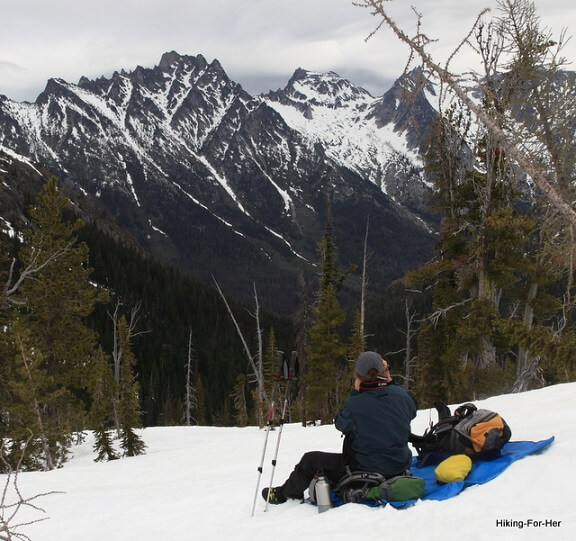 Winter conditions near the Stuart Range, Washington State, USA
I also throw on a windproof layer right away to preserve my body heat, a jacket like this one.
I may also switch out my hat and gloves to warmer versions if the wind is blowing.
On unusually cold days, I include long underwear, knowing that my waterproof pants have side zips to allow me to vent my body heat when needed (snowshoeing uphill, for example).
My head wear at the trail head changes, too: I use a wool cap, sometimes with ear flaps, sometimes not.
- If I get too warm or the day turns sunny, I switch to a ball cap or a fleece head band.
My neck seems to be the spot where cold air really bothers me, so I carry a fleece neck warmer like this one.
For winter trips, here's a valuable dayhiking tip:
- Rely upon full size gaiters like these to keep the snow out of boots and also to provide an additional layer of insulation for your legs if you sit (or fall) in the snow.
My winter boots are drastically different at this time of year - heavy and waterproof, with thick warm liners that can be dried separately.
If I decide to hike on a wet but snow free low land trail, I skip all the heavy layers and just wear a long sleeved top under a waterproof winter jacket.
- My winter jackets have underarm vents for ventilation, but even so, I'll be soaked through with perspiration by the end of the hike. That's why wearing moisture wicking clothing on a hike is so important.
Waterproof pants, no long underwear, and a rain hat (I use a "Seattle Sombrero") complete my elegant hiking ensemble.
- Read more about waterproof hiking clothing here.
Types of day hiking to explore
A day hike is defined by its length.
But that doesn't mean you have to choose the long daylight hours of high summer for a day hike.
Live a little!
Try these suggestions to experience different types of day hikes.
Rainy day hikes
Don't let the weather dictate when you're going outside.
Instead, prepare yourself to stay warm and dry during rainy day fun with these rain gear recommendations.
These rain hike tips will help you feel comfortable on muddy, slick trails.
Name brand day hikes
Go somewhere spectacular and dabble in the variety of day hiking a famous place offers to you.
Mount Rainier National Park has spectacular day hikes of various lengths. If you crave glaciers, moist meadows filled with wildflowers, and high rocky alpine destination:
- Explore your choices of Rainier dayhiking, including trail tips and videos
Snowshoeing day hikes
 Mazama Ridge in winter, Mt. Rainier National Park, Washington State, USA
Notice the snowshoe tracks, made by my husband and me in the pristine snow as we were heading to our predetermined lunch spot.
Serenity and fantastic vistas can be yours on a snowshoe day hike.
Prepare to be amazed at how different a familiar trail will look when it is blanketed with snow.
It's much easier to navigate off trail up to a viewpoint when vegetation is buried.
And it's a great aerobic workout!
Get started with snowshoeing with these Hiking For Her tips.
Solo day hiking
Thinking of day hiking alone?
- Read this for some great day hiking tips when you want to hike solo.
- Go here to prepare for your safety and comfort.
Even more options for you as a hiker!
Once you get your basic gear and trail skills dialed in, the hiking world is your oyster.
Feast your eyes on all of the types of hiking you can explore, and then get a paper and pen ready to create your hiker bucket list.
How to get everything you need
as a day hiker
in one neat, tidy bundle
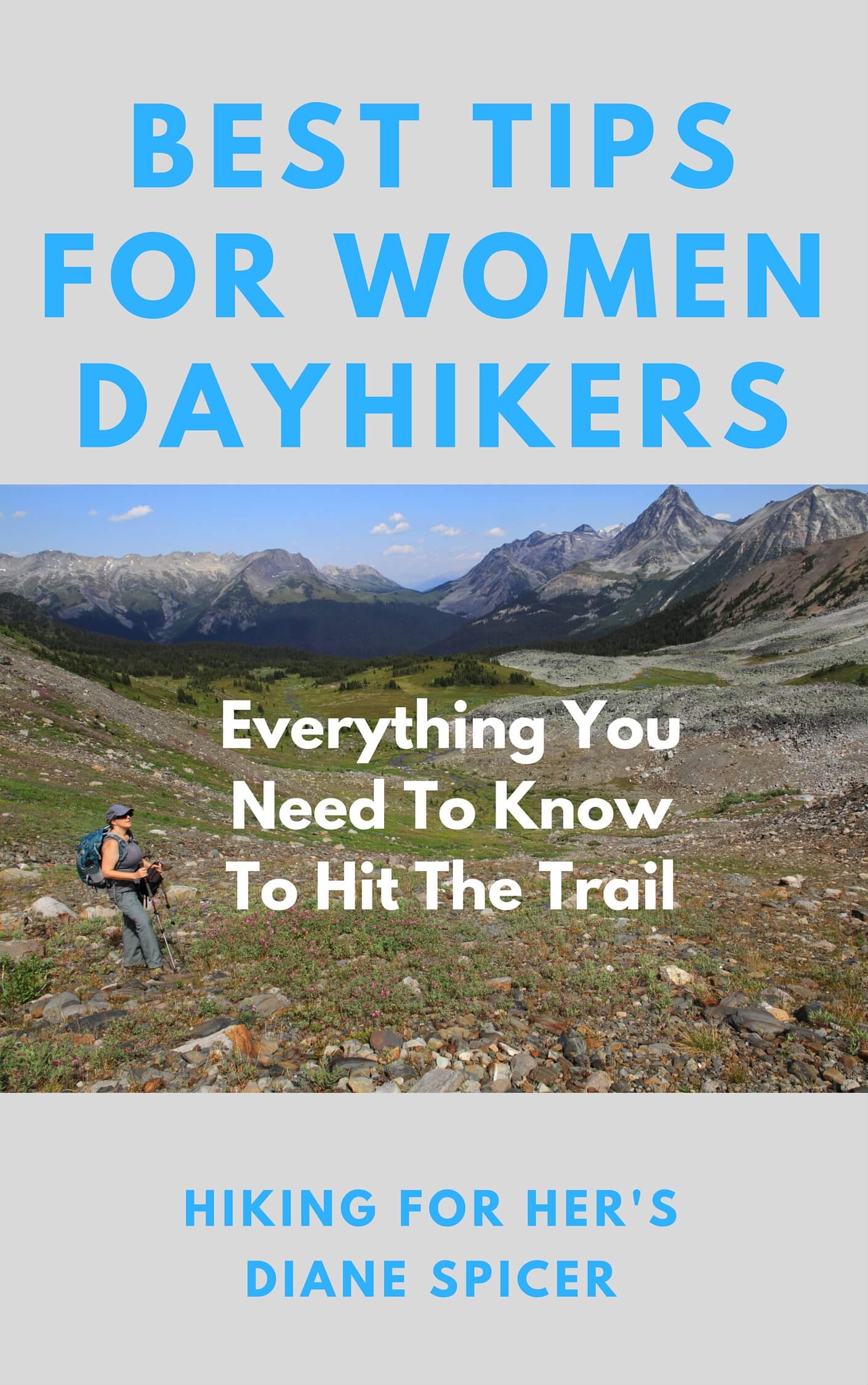
Want all of the best dayhiking tips pulled together for you in a convenient format?
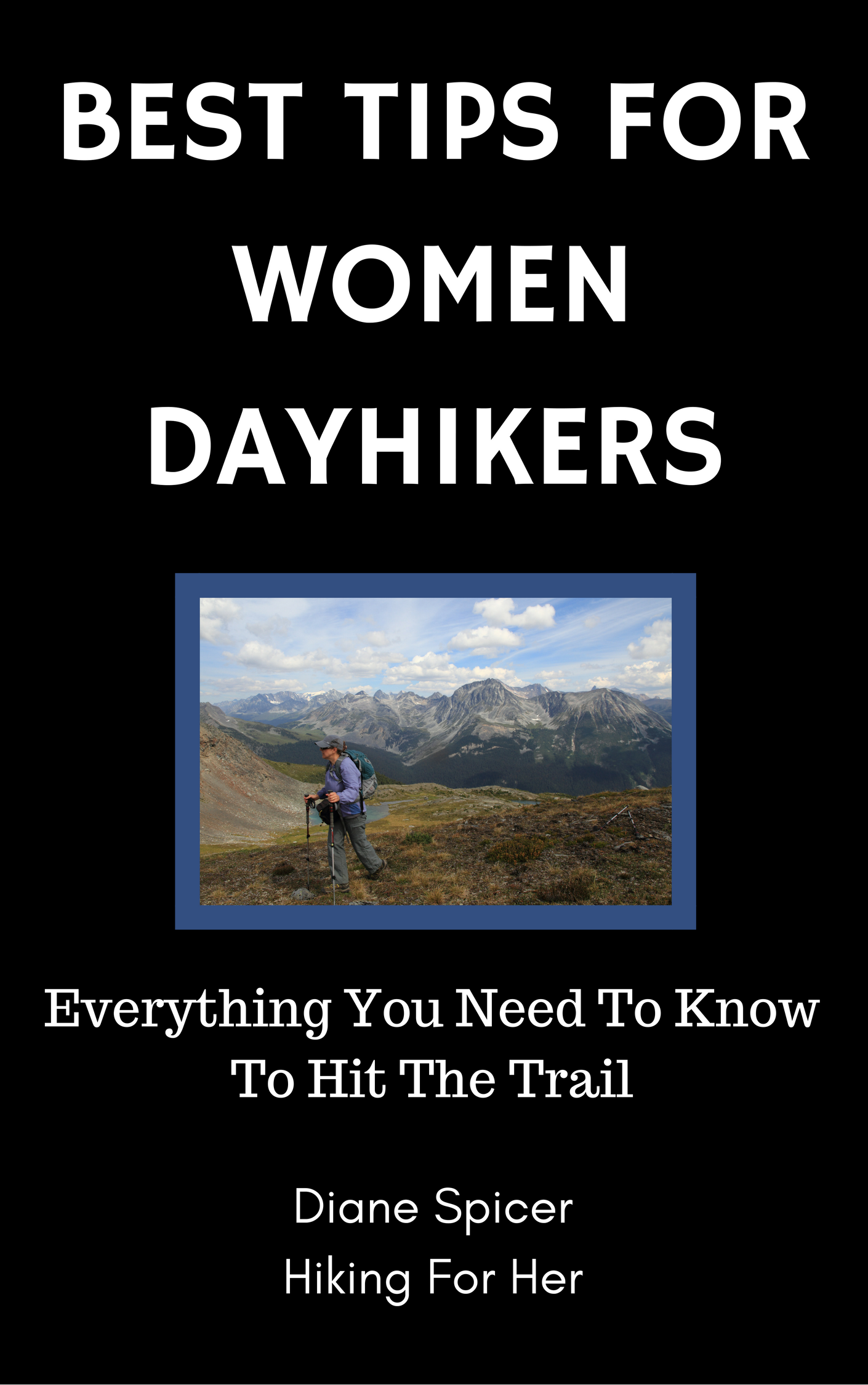
- The Hiking For Her Best Tips For Dayhikers book is what you need to hit the trail
- Paperback and electronic formats available
- Excellent reviews from hikers like you!
Only buy the best day hiking gear
you can afford
By now you've noticed how hiking can get pricey, the more seasons you are on the trail: various hats, different weights of gloves, a variety of boots, extra layers...
I know you probably don't want to hear this, but you've got enough real world experience to believe it:
You get what you pay for.
Quality, performance, fit and durability are definitely tied to a higher price point.
Certain companies seem to have a knack for delivering the goods year after year.
And then fully backing up the goods with excellent customer services and policies, updated designs and reasonable price points.
- Here's my list of best outdoor gear brands.
- Here's my list of go-to companies for discounts, along with a description of why each of them belongs on my list.
Don't be surprised to see some names repeated!
But here's a secret
I never pay full price unless I'm up against a time crunch or I absolutely want that particular item.
There are so many good deals to be had!
You can sign up to receive emails alerting you to sales, price cuts, new merchandise, overstocks - some companies will literally TELL you when to save money.
Here's one of my favorite place to score a deal: Backcountry.
And another one: REI Co-op Outlet.
Speaking of gear cooperatives...
Why not join a gear co-op to harness the power
of a large group?
Did you know there are sports equipment co-ops you can join?
This is one of my favorite dayhiking tips, because I've been using it for 3+ decades and love the "cooperative" angle:
- pay a one-time fee
- become a voting member
- enjoy a great shopping experience
You're also eligible for member-only deals and class discounts, which can be quite tempting.
I joined Seattle-based REI in 1978 (not a typo!!), and have enjoyed spending my member dividend every year since to upgrade my hiking gear.
Yup!
REI co-op benefits include a member rebate every year, based on your purchases.
Usually, the rebate is ~10%, which gives you a nice amount of money to spend on yourself - just for buying hiking gear!!
- For a closer look at the value REI delivers for women's hiking gear, read this.
There's also a Canadian (former) cooperative called MEC that I shopped a few years ago when I couldn't find the boot brand I'm partial to (Zamberlan) in any American stores.
They have lots of great deals and a wonderful selection of outdoor brands, too, for Canadians as well as anyone else willing to pay shipping.
And here's another little secret in our
dayhiking tips
Because the hike will end by day's end, I carry a little more weight than absolutely necessary.
That's because I want to feed my curiosity and enjoy my trail time to the max.
Read about the "extra" items I carry:
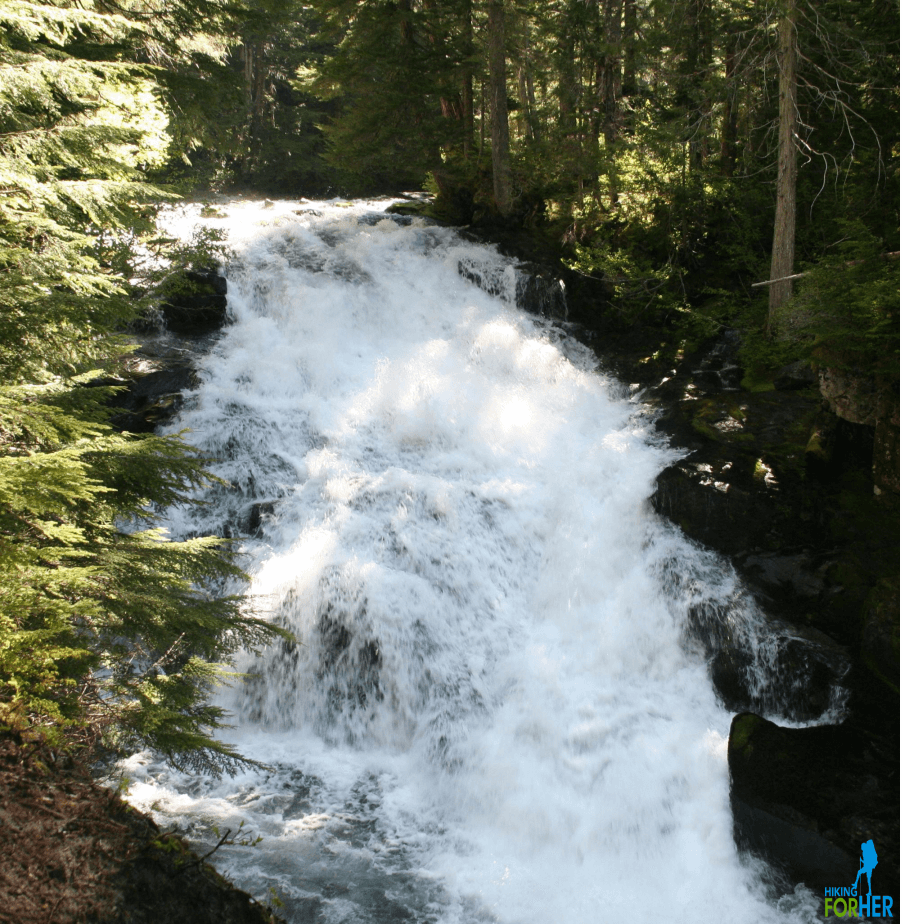 Take time to hear the roar of the waterfall and enjoy every moment of your hike
Hey, we're just getting started
on the best dayhiking tips!
These trail tips are designed to get you started thinking about what you'll need as a day hiker.
There's plenty more ground to cover, so to speak!
If you're still not sure where to start in your acquisition of a functional hiking wardrobe, or are interested in my "personal picks" for hiking clothing, drop me an email.
There are more day hiking tips to be found right here.
And here's something else to ponder:
- Maybe a day hike just isn't enough!
But don't worry.
Hiking fever isn't life threatening. In fact, I'd call it life enhancing.
Be sure you're signed up for all of the latest free hiking goodness and dayhiking tips, including monthly giveaways and the latest articles from Hiking For Her:
Best Dayhiking Tips
Diane started hiking in 1971. She started Hiking For Her in 2008 as a resource to encourage every woman to take a hike. Please enjoy these expert hiking tips as you explore what hiking offers in any weather, season or location.
Meet Hiking For Her's Diane
TODAY'S BEST OUTDOOR GEAR DEALS
REI Co-op Members save an extra 25% on REI Outlet fitness clothing & gear 4/12 thru 4/15.
Example: Hydro Flask bottle with cap, marked down from $49.95 to $26.73.
Use code OUTFIT24.
See ALL the great deals on the Hiking For Her Best Current Deals page!
POPULAR POSTS


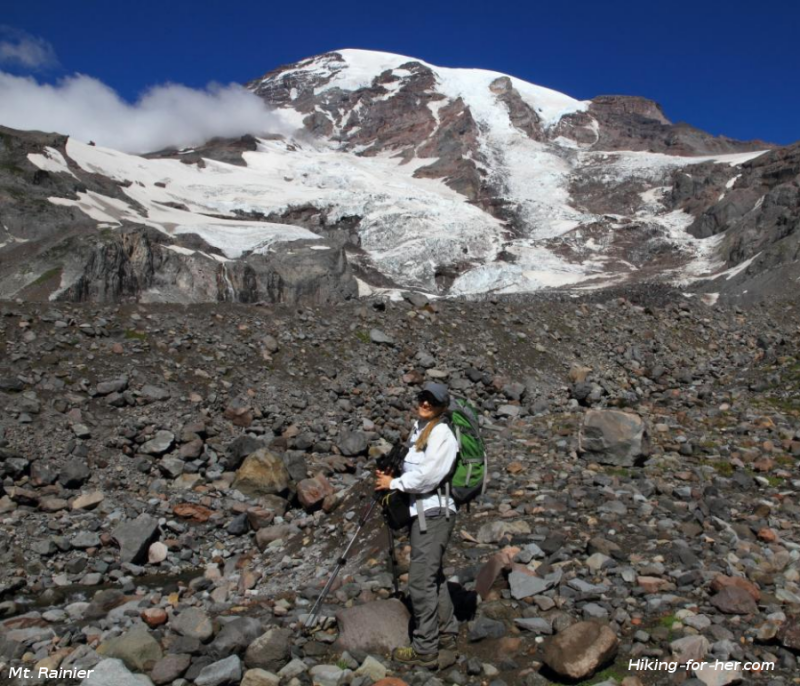
Diane Spicer founded the Hiking For Her community in 2008 to encourage female hikers, those who wanted to begin hiking as well as those who were in love with this fantastic sport already.
On this website she shares expert hiking tips and recommendations, gear reviews and photos from her outdoor adventures to welcome everyone to learn the necessary skills for comfort and safety on a hike.
This reader supported website does not use sponsored or promoted content. There are no ads or paid link placements. Everything you read is based on decades of personal hiking experience in many different locations.
All rights reserved.
Photo credits: All photos on this website were taken by David Midkiff or Diane Spicer except where noted.
Disclosures
Privacy
Copyright
Media
As an Amazon Associate, Hiking For Her earns from qualifying purchases.
When you buy through our links to trusted outdoor gear affiliates, we may earn a commission while you pay nothing extra.