
Enjoy Happy Trails, the free monthly newsletter from Hiking For Her
Receive a free resource: "Hiking Layering System Explained"
Hiking Nutrition News
And Research
By Diane Spicer
Hiking nutrition news:
Do I mean the "fluff" articles in women's magazines?
You know, the "Eat all the candy bars you want and STILL lose weight" headlines that grab your attention in the check out line?
Trail snacks = candy bars?
Nah! That's just marketing hype!
I mean REAL hiking nutrition news, hot off the press.
The scientific press, that is.
Sports nutrition news
based on science
Here's an example: ISSN Exercise & Sport Nutrition Review: Research & Recommendations.
- This is a free pdf download from the Journal of the International Society of Sports Nutrition (JISSN).
I can hear you yawning already!
But wait!
Give me 5 seconds to explain why I LOVE journals which publish review articles.
It's one stop shopping.
- You get 5 years worth of information in one article, as in this golden nugget published in the 2010, 7:7 edition of Journal of the International Society of Sports Nutrition.
- Twenty two authors pool their knowledge and deliver it to you!
Now that's hiking nutrition news a hiking woman can love.
TMI (too much info)?
Read this summary instead
Here's what the latest hiking nutrition news, summarized in that juicy little 43 page article, says.
Let's begin with this:
There's been a lot of time and energy devoted to tightening up the definition of "ergogenic aid", meaning things used as training techniques to enhance performance (physical, mechanical, nutritional, pharmacological, or psychological aids, as the case may be).
Hiking nutrition news should definitely include this topic!
Let's bottom line this with this question:
Do nutritional supplements marketed to hikers (and other athletic people) really work?
That's a question I always have when I'm standing in front of a shelf full of products screaming "I'm great! Take me home!"
- Just to be clear, it's the bottles, not me, that are screaming.
The article goes into great detail explaining how to unravel this question about sports nutrition.
Nutritional supplements are regulated in the United States - sort of.
- The article clearly states that dietary supplements are NOT drugs, which puts them into a separate category in terms of legislation and regulation (some call it "unregulated").
This, in turn, drives marketing standards - what the manufacturer is allowed or not allowed to say in advertising the product.
Have you noticed this disclaimer on supplements?
- "This statement has not been evaluated by the FDA. This product is not intended to diagnose, treat, cure, or prevent any disease."
Hmmmm ... then why are you buying it? Just because it tastes good?
There's gotta be motivation, right?
And who told you it's the thing to buy and use?
Where does your information come from, and is it trustworthy?
Just because Oprah or Ellen recommend it, doesn't mean it will give YOU good results.
Especially since popular media isn't a particularly reliable source of hiking nutrition news (or any other type of nutrition news, in my humble opinion).
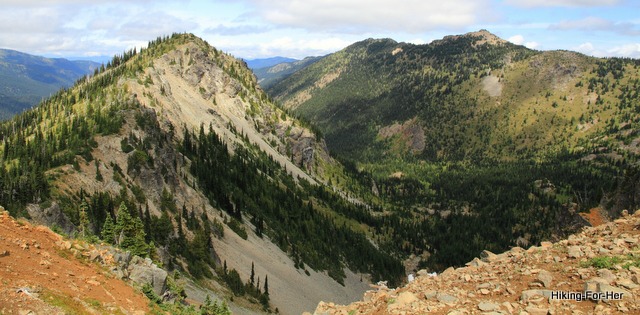 Read hiking nutrition news so you can get out there and grab some energized trail time.
Next topic:
your safety
Which brings us to the next interesting topic in hiking research news: product safety and quality.
Seems like many companies are going the extra mile (a little hiking pun, sorry...) to assure customers that their products are:
- pure,
- safe,
- tested,
- inspected,
and
- monitored during production.
An interesting recommendation in the paper:
Request a copy of the quality tests for a product.
- If the company
won't provide test results, don't purchase the product.
Dietary supplement claims
So how can you evaluate the claims on a dietary supplement?
For example, you have this question:
Will what's in this bottle really do for me what the company says it will?
This is a thorny question, and there are many layers to the answer.
The short and sweet version goes like this.
- If you really want to know what the evidence for the claim is, do your homework.
- Search the National Library of Medicine's
Pub Med Online
information service.
- However, this can get you into deep water in a hurry if you're unfamiliar with reading jargon laden scientific papers.
My humble advice?
Stick to reputable companies:
- Run a Better Business Bureau search.
- Ask other hikers you respect for recommendations.
- Look at
FDA recall notices to get a feel for which companies to trust. (Warning: You might become addicted to checking this site every week!)
And always evaluate the claims on the products with a grain of salt: Is this a reasonable claim?
- Anything
that promises to reverse aging, offers an immediate cure, or generally
sounds too good to be true is ...
- too good to be true.
Energy intake and nutrients
for hikers
The rest of this lengthy article is devoted to outlining recommendations for energy intake and nutritional needs for active individuals (such as hikers).
Here's an example:
If you are exercising at moderate to high intensity (hiking uphill, perhaps) for an hour or more, you will of course deplete your stores of nutrients.
What should you do to stay energized?
- The article recommends consuming between 10 and 15 fluid ounces of a carbohydrate/electrolyte solution every 15 - 20 minutes to keep your blood sugar (glucose levels) steady.
- No brand names were mentioned.
An interesting table embedded in the article breaks down vitamins (an example of nutritional ergogenic aids) according to:
- what is known about the action of the vitamin in the body,
- and any research evidence to link the vitamin with better athletic performance.
It's a fascinating table, given the long list of ingredients on some of the "sports" type beverages and bars.
So if you're into vitamins, take a look at this table.
Even if you're just into eating the latest "energy" bar, this table will let you see if you're paying for hype, or evidence-based fact.
One more thing I like is this sentence from the paper: "The most important nutritional ergogenic aid for athletes is water."
Right on! I've been saying that for longer than I'd care to admit!
Water is a nutrient, and when I hike, I replace it regularly.
- Your cells (and you're a cellular trillionaire) are little bags of water.
- Give them what they need, and they'll give you what you need: energy on the trail and less soreness the day after your hike.
Why read the entire
hiking nutrition news article?
One last plug for reading this entire article (use link above):
If you're curious about the safety and efficacy of muscle building/sports enhancing supplements, the authors (remember, there's a lot of them!) analyzed the scientific literature and classify each of them into useful categories:
- apparently effective and generally safe,
- possibly effective,
- too early to tell, and
- apparently not effective and/or dangerous.
Alas, here's where things get a little sticky: some of the authors take money from industry, meaning that there's potentially a conflict of interest in some of this information.
Nevertheless, it makes for some interesting reading in your non-trail time if you're going to be tackling some tough trail in the future.
More hiking nutrition news for you
For your reading pleasure, here are a few more tidbits on various types of hiking nutrition news:
Home page > Hiking Nutrition >
Hiking Nutrition News
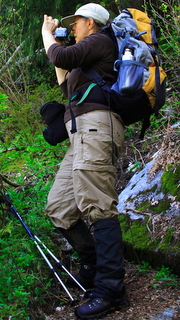
Diane started hiking in 1971. She started Hiking For Her in 2008 as a resource to encourage every woman to take a hike. Please enjoy these expert hiking tips as you explore what hiking offers in any weather, season or location.
Meet Hiking For Her's Diane
TODAY'S BEST OUTDOOR GEAR DEALS
REI Co-op Members save an extra 25% on REI Outlet fitness clothing & gear 4/12 thru 4/15.
Example: Hydro Flask bottle with cap, marked down from $49.95 to $26.73.
Use code OUTFIT24.
See ALL the great deals on the Hiking For Her Best Current Deals page!
POPULAR POSTS

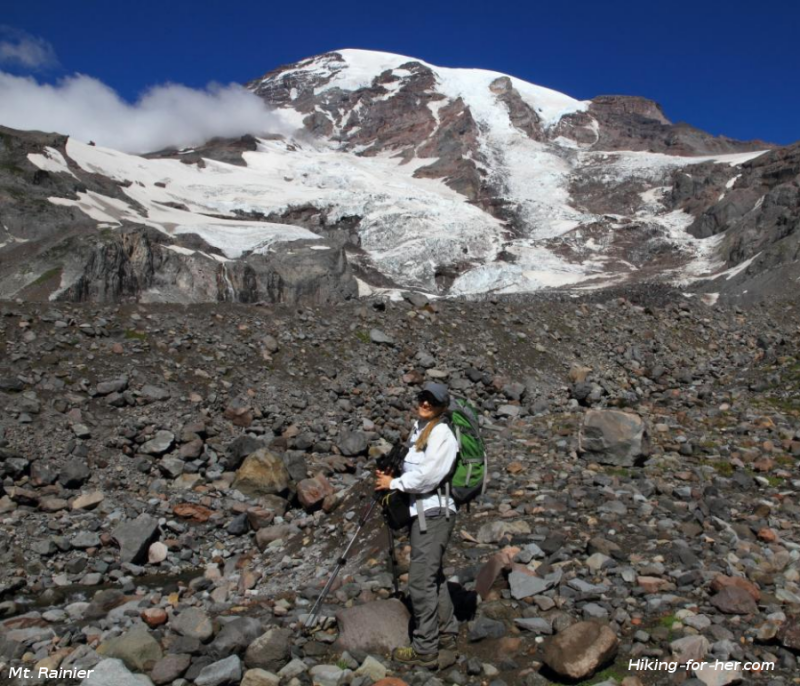
Diane Spicer founded the Hiking For Her community in 2008 to encourage female hikers, those who wanted to begin hiking as well as those who were in love with this fantastic sport already.
On this website she shares expert hiking tips and recommendations, gear reviews and photos from her outdoor adventures to welcome everyone to learn the necessary skills for comfort and safety on a hike.
This reader supported website does not use sponsored or promoted content. There are no ads or paid link placements. Everything you read is based on decades of personal hiking experience in many different locations.
All rights reserved.
Photo credits: All photos on this website were taken by David Midkiff or Diane Spicer except where noted.
Disclosures
Privacy
Copyright
Media
As an Amazon Associate, Hiking For Her earns from qualifying purchases.
When you buy through our links to trusted outdoor gear affiliates, we may earn a commission while you pay nothing extra.