
How To Document And Report Uncomfortable Trail Encounter:
Tips For Female Hikers
By Diane Spicer
Have you ever wondered how to document and report uncomfortable trail encounters?
I'm guessing most of us female solo hikers definitely have thought "What do I do about this sketchy human who has crossed the line with me on the trail?"
Based on long trail experience, here are my tips for reporting scary trail encounters.
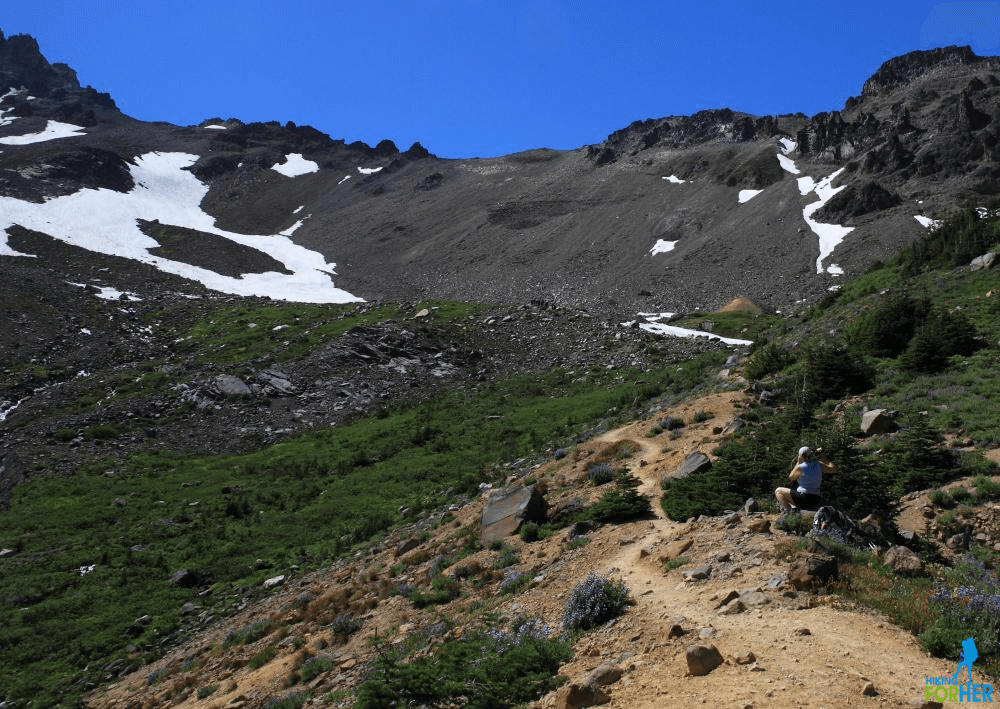 When you're alone on a hiking trail, you might meet someone who displays concerning behavior. Be ready to document and report the encounter.
How should I document an uncomfortable encounter on a hike so I can report it
accurately later?
A solo hiker needs to be prepared to the nth degree.
And on the topic of safety, like how to document and report an alarming trail interaction, being prepared means the following actions are taken without having to stop and think them through.
First, you are the one to determine when you're being pushed way beyond your comfort zone on a hike. Look at my solo hiking tips concerning fears for some scenarios that have happened to me.
After you've got a solid "This is not okay" decision in your own head, you need to use the resources at hand.
Most of us hike with our cell phones handy.
This may seem paranoid to you, but when another hiker approaches me in a strange or unusual manner, I snap a photo or start recording a video.
Use sharp mental focus to take notice of colors of gear and clothing, brands of boots and backpack, anything memorable like a logo on a shirt or hat, and what made that person seem odd for a hiker.
Examples of something that sticks out: Pristine boots or backpack, an unusual combination of clothing that is not weather appropriate, the lack of expected hiking attire, or a weapon prominently displayed.
Are they wearing a brace or bandage? Do they have injuries that you notice?
It will probably be automatic, but definitely make mental notes on the gender, age, hair and eye color, and stature of who is alarming you.
If you're talking with someone who is giving you the creeps, and you don't have your phone out yet, now is the time.
Hold onto the phone so they know they are being observed.
No phone, but have a camera handy? Same idea.
Once the person has moved on, send yourself a text message or write a note detailing all of the things you observed about the interaction.
You can also use good old fashioned pen and paper if you're carrying a trail journal.
When should I report a concerning interaction
on a hike?
There is no way around the fact that we humans can appear strange, unusual or downright weird to each other, just by being ourselves.
I've encountered someone wearing a rubber chicken on his hiking hat that made an alarming squawk at me. (Rude!)
I've passed folks who are muttering to themselves and take no notice of me. (Maybe having a bad day?)
I've had to walk past a guy who sat in the middle of the trail, staring into space. (Meditating? Tripping?)
And I've had to deal with folks who show too much interest in where I'm headed or how long I'm out hiking. (Snoopy, or way too friendly, who can say?)
So this situation is a judgment call that you will have to decide, but I'll give you my thoughts.
These are examples of
an uncomfortable trail encounter
If a person approaches or passes you on the trail and attempts to badger or pressure you into giving them personal information, that's alarming.
Anyone who is openly carrying a gun, hunting bow, long knife or machete is not hiking. They may have a legitimate reason to be on the trail in hunting season, but you're a smart hiker who knows when the various hunting seasons occur in your area.
- A weapon being prominently displayed outside of those times is extremely concerning to a solo female hiker.
When you meet another hiker, or group of hikers, who stop to mess with you, I'd call that alarming.
And I'd call messing with you something like this:
- Touching you or making a grab at your gear (hiking poles, hat, anything they can pull or tug on) without your permission.
- Catcalling or making crude remarks about your personal appearance.
- Making physical threats or insinuations if you don't want to talk or interact with them.
- Sitting down next to you if you're taking a break, without asking if it's okay. (I always take my breaks off trail.)
These are not normal behaviors for hikers.
I'm sure other female solo hikers have good examples of alarming behavior (sad, but true fact of hiking solo), but those are mine.
 If you're hiking solo, know which trail system you are using.
Who should I contact to report
a worrisome trail encounter?
The answer to this good question is entirely dependent on which type of trail you are on, layered on top of where you are hiking.
In the United States, we have multiple agencies who take responsibility for trail systems.
A National Park trail will have an associated ranger station. A state forest, ditto. A Forest Service trail, or a county park trail, will have its own bureaucracy.
Some trails don't have anyone watching out for them.
And here's where this creates more work for a you as a solo hiker.
You need to know, before you start your hike, which jurisdiction to contact if there is a problem on the trail.
Store that information, along with contact phone numbers, in your phone or trail journal.
Be sure someone at home has that information, plus the name of the trail you're on, as well.
When you call to report an uncomfortable trail encounter, be ready with your mental notes and everything you can remember about what was said and done.
Give your contact information so you can answer followup questions.
You've done all that you could to document and report an uncomfortable trail encounter, good job!
If there are trail angels or organized groups who maintain that trail, contact them with a heads up. Maybe they have run into this person before, or will keep watch for them.
And if you want to go that extra mile, write a description of the hiker(s) who alarmed you, and post it at the trailhead. If s/he sees it, they'll rip it down. But maybe they won't, and you can do your good deed for the day to alert other hikers.
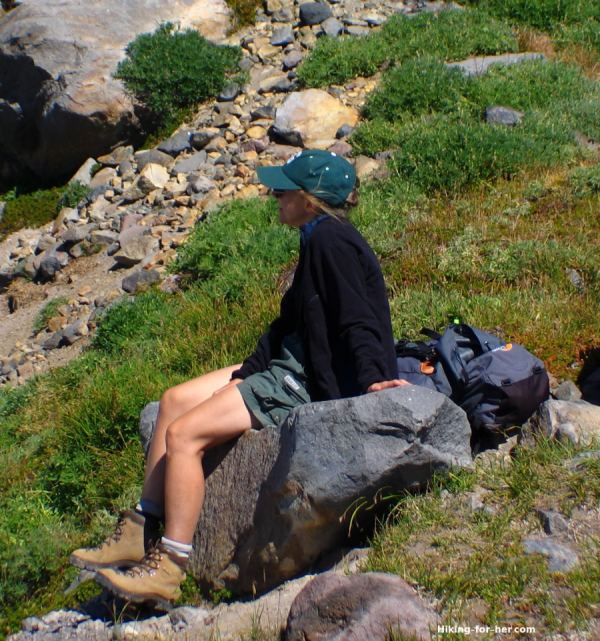 A solo female hiker needs to know how to handle uncomfortable trail encounters.
Home page > Solo Hiking Tips > Solo Hiking Fears >
How To Document And Report Alarming Trail Encounters
|
I get emails all the time about what I wear, eat, carry and love to use on the trail. That's
why I provide affiliate links to you: the best gear that I use myself and have seen used by other hikers is instantly
available for your consideration, and the gear company sends a few
pennies per dollar to this reader-supported hiking website. There is no added cost to you! Everyone ends up a winner: Great gear for you, strong gear companies, and more free hiking tips for everyone. Thanks very much for your support. It's warmly and sincerely appreciated. It also helps send these hiking tips to all your virtual trail buddies around the globe. |
 |
|
Diane Spicer was a beginner hiker in 1971, and never stopped hiking. She founded the Hiking For Her community in 2008 to encourage female hikers, those who wanted to begin hiking as well as those who were in love with this fantastic sport already. On this website she shares expert hiking tips and recommendations, gear reviews and photos from her outdoor adventures so you can learn the necessary skills for comfort confidence and safety on a hike. This reader supported website does not use sponsored or promoted content. There are no ads, no AI content or artificially generated or touched up photos, no paid link placements. Everything you read is based on decades of personal hiking experience in many different locations. Please enjoy these expert hiking tips as you explore what hiking offers in any weather, season or location. |
 |
Scraping the contents of the Hiking-for-her.com website for the purpose of AI (artificial intelligence) LLM (Large Language Model) training is strictly forbidden.
All rights reserved. No duplication of content without permission.
Photo credits: All photos on this website were taken by David Midkiff or Diane Spicer except where noted.
Disclosures
Privacy Policy
Copyright
Media
Hiking For Her is a participant in the Amazon Services LLC Associates Program, an affiliate advertising program designed to provide a means for us to earn fees by linking to Amazon.com and affiliated sites.