Is It Possible To
Safely Help Strangers On A Solo Hike?
By Diane Spicer
Solo hikers sometimes meet a situation where they have to decide how to safely help strangers on a solo hike.
Other times, they have to decide whether or not to stop and take a chance helping a stranger who appears injured, sick or lost.
These tips will help you think through common scenarios before they are right in front of you, forcing you into a decision that you don't feel good about.
Scenarios when you need to decide if you can
safely help strangers on a solo hike
There are many types of problems that can befall hikers, and some of them can be severe or even life threatening.
As a prepared solo hiker, you carry supplies for medical emergencies, routine first aid issues and gear failures.
Do you have advanced medical training? Any other outdoor skills like bushcraft? That comes in handy for you personally, and it might help a stranger on the trail.
But should you stop to help someone when you're alone?
Let's look at types of scenarios when your help may be asked for on the trail, and your possible responses.
Keep the idea of your personal safety in mind as you read.
Fast, easy solutions when strangers ask you for help
A person who is lost will probably not be sitting on the trail, bemoaning their fate. If they are, a simple question about their destination will allow you to point them in the right direction.
If someone stumbles out of the bushes onto the trail in front of you claiming to be lost, you've got to admire their timing. Be cautious about this person. The same question as above about destination should resolve the matter quickly.
Sometimes a stranger will have a gear problem, like a boot outsole that is flapping around or a trekking pole that broke. If they ask you for duct tape, and you have duct tape, and you feel okay about stopping and digging through your backpack in front of this person, that's one resolution.
If you don't feel at ease about this person or the behavior they are exhibiting toward you, say "No, wish I did" and keep moving.
Sometimes an approaching stranger will be limping or wincing. Blisters are the professed problem.
Use the same response as with duct tape. If you have Leukotape or Moleskin and you want to share with this person, that's your call. If you don't want to share, use the same line and move on.
Use caution in these scenarios as you decide whether or not you can safely help strangers on a solo hike
Now we come to the judgment calls leading to decisions that could possibly have a bad outcome for you.
Most hikers are on the trail to hike, and they have no interest in you or your destination.
But things can go wrong, and if you look approachable a stranger might ask for your help when there is an injury or other serious problem.
What should you do?
Think through your decision to help or not help anyone on the trail before you start your hike. Stick to your decision unless there are circumstances that cause you to rethink things.
And trust your instincts: if you feel anxious or afraid, if your pulse races and your heart pounds, if your gut is flip flopping, something is not right with this request for help.
Here's an example from my own trail experience, and what I decided to do.
I was hiking on a forested ridge and swung around a blind corner as the trail turned downward. In the middle of the trail a guy was sitting, cradling his knee, while another guy looked on. They both looked up as I approached.
The story was this: The sitting guy had tripped on a rock and fallen on his face, bashing his knee. His companion was too far behind to see what happened. Did I have a first aid kit they could use? Could they use my phone to call a buddy back at the trailhead?
On the face of it (ha! sorry), everything looked okay until I realized that neither one of them had a backpack. That meant unprepared newbies with no Ten Essentials, or they were not really hikers. And there were no facial abrasions, dirt on his shirt, or other signs of a fall other than the skinned knee.
I could have stopped to share bandages and first aid ointment, but that would have forced me to take off my backpack and bend over to locate the supplies. That made me feel vulnerable in front of two strangers, on a narrow trail.
I decided the guy would live with his bleeding knee, and excused myself to continue my hike.
But what if you meet someone who is having a self described medical emergency like a heart attack?
Your first aid training as a solo hiker gives you signs and symptoms to look for, and if the person is not showing any of them, do this:
Tell them to call or reach out to their support person back home, the one who knows where they are hiking. Because you are not a trained medical provider, you cannot help and must be on your way.
The point here is to give the situation the sniff test.
Use your senses to search for anomalies in the story in front of you.
Listen to your body! If you're in alarm mode, there is good reason to be alarmed.
If there is more than one stranger, be extra cautious about getting hemmed in or put into a vulnerable position (forced to turn your back, bend over, get too close to them).
Feelings of guilt or anxiety are normal when you're faced with whether or not to help.
But when you have thought about this decision ahead of time, and come to firm conclusions about what is right for you, the "Good Girl" syndrome has no hold on you.
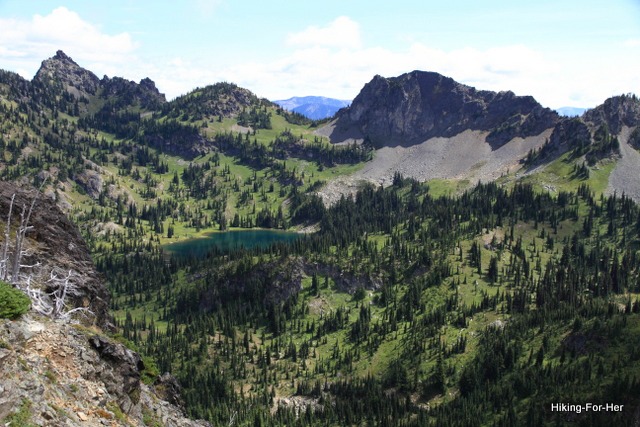 You go out here for solitude. Can you safely help strangers on a solo hike?
When it's obvious that you can
safely help strangers on a solo hike
If you see a person on the trail with obvious broken bones or blood from open wounds, that's a whole different story. Those people are not faking.
A seriously injured hiker might not be able to place a call for help. They cannot make it back to the trailhead unaided. They are scared and shaken.
You have two choices here.
Wait for another hiker to come along to help you get this person to a place where a helicopter can land or medical aid can arrive.
Or attempt to get the person calmed down, hydrated and ready to get out under their own steam, with your assistance. Carry a backpack, find a makeshift crutch, offer a shoulder to lean on.
If you decide to help the person move, be sure you are not compromising your own safety.Take a moment to assess the situation.
If the person weighs a lot more than you, can you safely support them? If the person is in tremendous pain and is thrashing or fuzzing out, should you try to move them by yourself?
Here is where knowing the trail is important. If you are in an area that receives lots of traffic, it will be a short wait before someone else comes along and you can confer on the best way to help.
If the trail is steep, rocky, exposed, or otherwise difficult, maybe the best move is to wait with the person. Injuring yourself will only result in 2 damaged hikers who need help.
If you are in a less traveled area, and you or the injured person has a personal locator beacon or satellite messenger, use it while you stay with them.
Give the hiker your extra food and water, a space blanket to keep them warm or dry, anything else that can keep them comfortable while you wait.
You should also be formulating a revised plan for your solo hike as you wait. This delay will cost you daylight, possible camp spots, and will need to be relayed to your support person back home.
When it's okay to keep hiking without
helping strangers on a solo hike
You're out there by yourself because you know you have the resources to help yourself, or summon help if you need it when something goes wrong with your plans.
But you have no obligation to share those resources with any other hiker.
Your personal conditioning, beliefs and values might argue otherwise. As women, we are raised to be helpful, to sacrifice our well being in the service of others, to ignore red flags and live with the consequences.
Leave all that at home when you're hiking solo.
You first.
Strangers in need of help second.
Harsh, perhaps?
Wrestle with it in your own mind, and make your decision before you hike. Take time to consider whether or not you can safely help strangers on a solo hike, given your physical and mental constraints.
A checklist for making the decision
to help or not help as a solo hiker
This is how I size up a situation that forces me into a decision to help someone, or to keep hiking. Take from it what you will.
1. Don't assume or accept at face value anything when a stranger is asking for help. Eyes wide open!
2. Authentic hikers will look and act like you. Look for red flags in their gear, footwear, clothing, appearance and story that might give them away as lying or exaggerating in order to stop you. Are they holding weapons, rope or anything that could be used to harm you?
3. If there is more than one stranger, go into full on Caution mode. Watch what each of them does. Don't focus only on the one who is explaining the situation. Do they seem genuine? Are they pressuring you or manipulating your emotions?
4. If you feel threatened or uneasy, and/or the person seems able to survive the situation without your help, excuse yourself and move on. If the person is claiming pain or injury or confusion but it doesn't add up to you, move on.
5. If there are obvious injuries (blood, broken bones, head trauma) or a clear medical emergency (heart attack, seizure, allergic reaction), use a phone, personal locator or satellite messenger to summon help. If the stranger has this equipment, use theirs before offering yours.
6. If you need to move the stranger out of a harmful or dangerous situation, only do it if you are not compromising your own safety and health. Otherwise, wait for someone to come along to help you.
7. Contact your designated person back home to inform them of what you are doing. Give details: the stranger's name and description, a photo if you're carrying your phone, the type of situation you're in, and when you expect to contact them again. They will know what to do if you don't check in at that time, because you left instructions about this (right?).
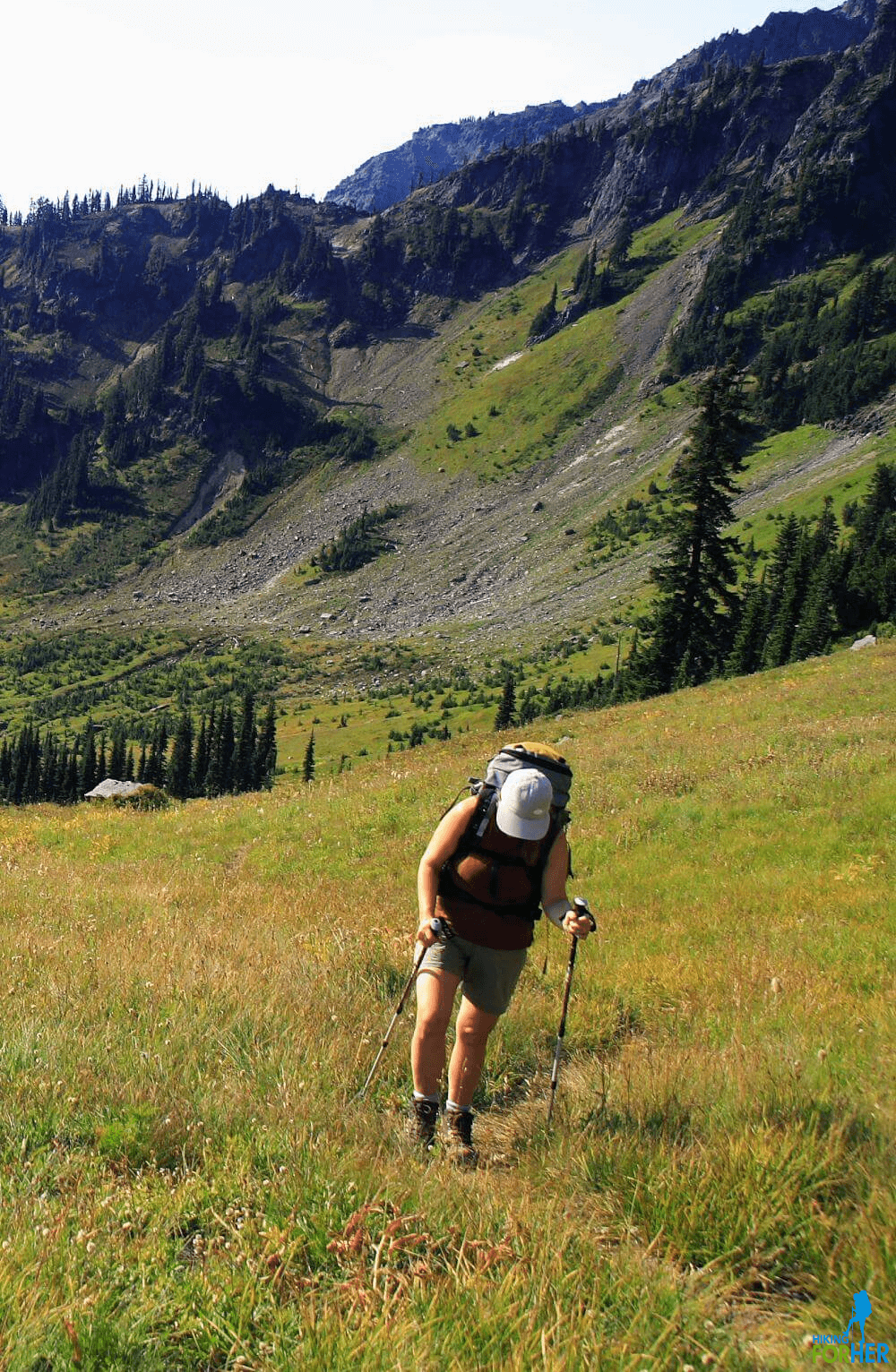 If you're in a less frequented area and you meet a stranger asking for help, what should you do?
Can you safely help strangers on a solo hike?
Your decision...
Everything depends upon your background, your comfort level with risk and uncertainty, any defensive skills you possess, and your assessment of the trustworthiness of what you see in front of you.
If you feel something is off about a hiker asking for your help, honor that feeling and don't get involved.
If you feel guilty about not offering help, sit with that feeling and dig down to its source. As a solo hiker, you have a big responsibility to yourself first.
If you see obvious medical problems, do what you can to help, or to get help for that person without injuring yourself or risking your safety. Use your Ten Essentials as needed after you use what the hiker is carrying.
The answer to "Can you safely help strangers on a solo hike?" is unique to you, and my thoughts are only one example of an answer.
Home page > Solo Hiking Tips > Solo Hiking Fears >
How To Safely Hep Strangers On A Solo Hike
|
I get emails all the time about what I wear, eat, carry and love to use on the trail. That's
why I provide affiliate links to you: the best gear that I use myself and have seen used by other hikers is instantly
available for your consideration, and the gear company sends a few
pennies per dollar to this reader-supported hiking website. There is no added cost to you! Everyone ends up a winner: Great gear for you, strong gear companies, and more free hiking tips for everyone. Thanks very much for your support. It's warmly and sincerely appreciated. It also helps send these hiking tips to all your virtual trail buddies around the globe. |
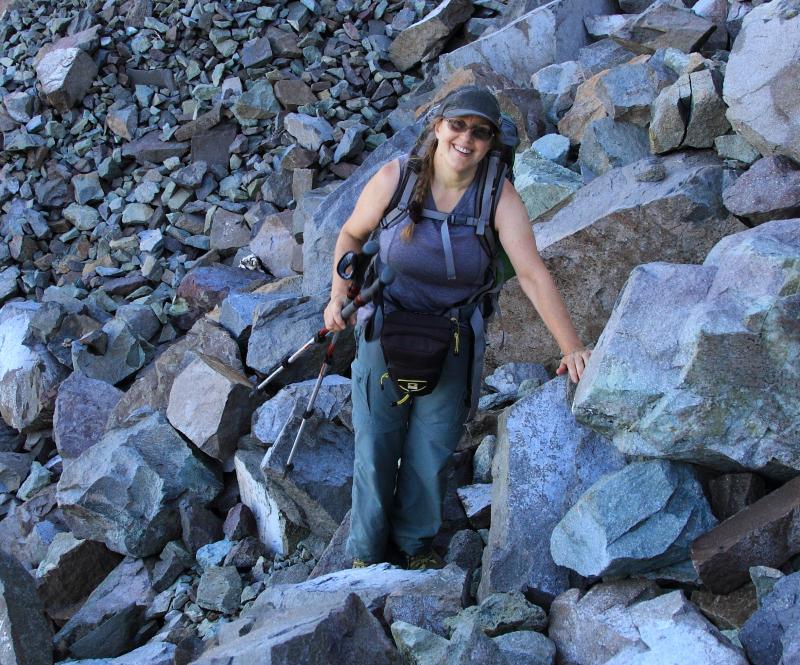 |
|
Diane Spicer was a beginner hiker in 1971, and never stopped hiking. She founded the Hiking For Her community in 2008 to encourage female hikers, those who wanted to begin hiking as well as those who were in love with this fantastic sport already. On this website she shares expert hiking tips and recommendations, gear reviews and photos from her outdoor adventures so you can learn the necessary skills for comfort confidence and safety on a hike. This reader supported website does not use sponsored or promoted content. There are no ads, no AI content or artificially generated or touched up photos, no paid link placements. Everything you read is based on decades of personal hiking experience in many different locations. Please enjoy these expert hiking tips as you explore what hiking offers in any weather, season or location. |
 |
Scraping the contents of the Hiking-for-her.com website for the purpose of AI (artificial intelligence) LLM (Large Language Model) training is strictly forbidden.
All rights reserved. No duplication of content without permission.
Photo credits: All photos on this website were taken by David Midkiff or Diane Spicer except where noted.
Disclosures
Privacy Policy
Copyright
Media
Hiking For Her is a participant in the Amazon Services LLC Associates Program, an affiliate advertising program designed to provide a means for us to earn fees by linking to Amazon.com and affiliated sites.