How To Choose A Hiking Hat
For Wet Conditions
By Diane Spicer
How to choose a hiking hat for wet conditions is a serious subject.
Once a hiker gets wet, hypothermia rears its ugly head by robbing the wet skin of heat. Bad things can follow.
So let's go through what to consider when it's time to find a good hiking hat for wet conditions, including all types of rain, damp terrain and wet snow.
We're going to look at hiking hats in terms of:
- How well it protects you against wet skin
- How to achieve the best fit in a hiking hat for wet conditions
- The durability (lifespan) of the hat
- Care and maintenance for your hat
 See all that mist? If you're hiking through it, you're going to get wet. A good hiking hat will help you stay warm.
What makes a hiking hat suitable for hiking in
wet conditions?
A hat that is designed to keep moisture off your face and neck will look a lot like a sun hat: wide brim with a chin strap.
But the fabric will be waterproof, usually nylon. Breathability, so important in warm weather hiking conditions, is not the main point here. Keeping dry is the name of the game.
The brim will be wide, tapered from a large back to more narrow front, and may be reinforced with metal or stiff material to keep it from flapping in the wind.

How much protection does this hiking hat give me
against wet conditions?
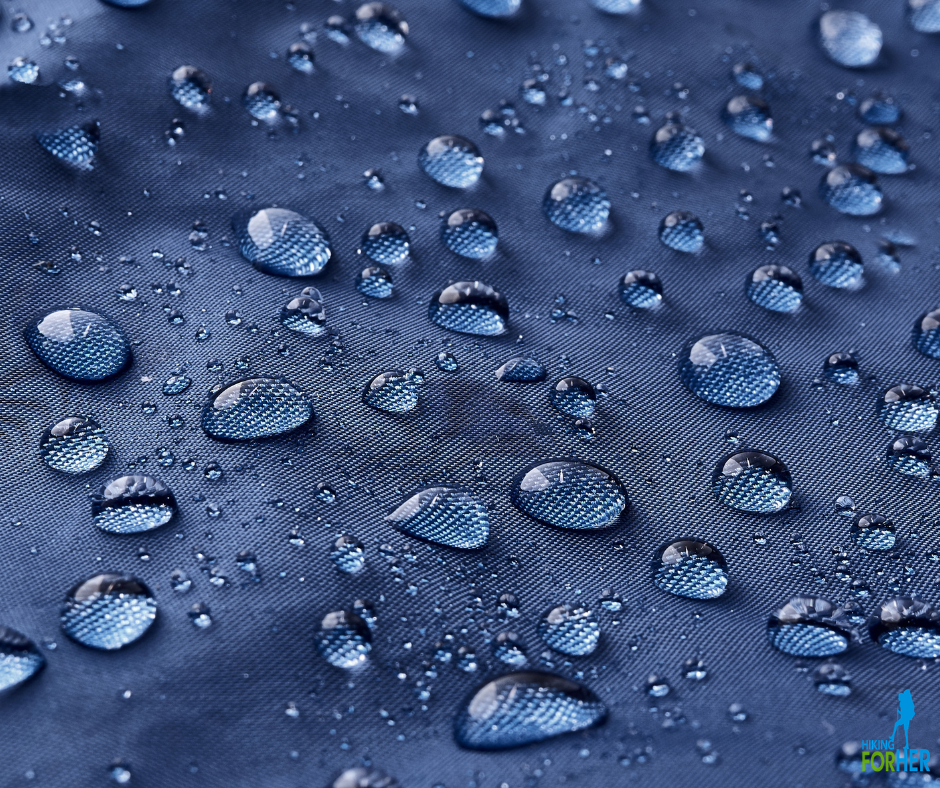 You want to see water droplets like these on the surface of your hat.
There are two threads to the story about how much protection a hiking hat for wet conditions can provide:
- The fabric
- The construction of the hat
Let's start with the construction, because it's pivotal to keeping your head dry.
A rain hat needs two things to be successful: a wide tapered brim and a cord (chin strap) to secure it to your head.
The brim should be large enough to shield you but not block your vision. This also means that hikers wearing glasses should be shielded from splashing rain drops by a generous front brim.
The brim of a hiking hat for wet conditions should taper from back to front to provide back of the head cover. Something in the range of a 3 inch wide brim at the front and a 3.5 inch brim at the back works well for most hikers.
You can also find rain hats with an extension of fabric on the back, called a neck cape. This directs moisture away from your neck.
If the brim is contoured in the right way it should direct water away from your head and neck.
A brim reinforced with a thin strip of metal or stiff fabric will prevent it from drooping into your face when it gets really wet out there.
The seams of the hat should be factory sealed to keep out moisture.
The chin cord is there to be used at all times. If the hat moves around or blows off, you're going to have a wet head. The cord may be removable, a nice feature if you know you are headed into light rain/mist in calm conditions.
Now let's talk fabric.
Waterproof nylon wins hands down for a hat you're going to wear in wet conditions. And it's lightweight, a good feature when you're navigating in aggravating wet weather.
If you see the word GORE-TEX, you know the hat will stand up to moisture.
You want at least 70-denier so it can stand up to trail conditions. The higher the number, the more durable the hat will be.
Much of the nylon you see in wet weather hiking hats is recycled, if environmental concerns are part of your shopping goals.
Nylon is not going to be very breathable, so if you hope to do double duty with one hat year round, you'll be disappointed with how hot it makes your head in sunny conditions.
Having said that, nylon will block all ultraviolet radiation pouring down on your head! It's rated UPF 50+.
Polyester also gives you a waterproof hat, and may be more pliable when it's time to tuck the hat into your backpack. Durability will be less than nylon in abrasive environments, however.
Some hikers buy a simple, inexpensive cotton hat and then wax the heck out of it: waxed cotton is an age old approach to wet or damp weather. I wouldn't trust this approach, but it's easy enough to test if you're curious.
 A typical rainy day on the trail, made even wetter by the mist from this waterfall
How can I get the best fit from a hiking hat
designed for wet conditions?
To begin talking about how to choose a hiking hat for wet conditions, let's look at some design features.
A rain hat will hug your head. But search for features you can tweak to get a more customized fit.
Look for a hat with velcro strips on the side. They allow you to release or put up the sides of the hat to modify the amount of coverage the hat provides. This can take pressure off the crown of your head and your ears, giving your head a breather, if you find the hat a bit tight.
There may be an elastic band running around the bottom of the crown, allowing you to cinch or release for a customized fit.
A wet weather hat may be lined with a polyester fabric, which can be slippery. Wearing a thin fleece or wool headband underneath the hat can hold it in place.
If you're looking at the hat online, check carefully to see if there are dimensions given for the generic size terms. Then measure your head and see if you fall neatly into one of the size categories.
If not, size up. You can use that headband trick above to get the exact fit.
Don't overlook the versatility of the chin strap. Tucked up tight beneath your chin is the way to wear this hat in the wind!
 Embrace this truth and buy the best hiking hat for wet conditions you can find. Wear it with pride on wet, grim days on the trail.
Are there other features I should consider when shopping for a hiking hat for rain and snow?
When you consider how to choose a hiking hat for wet conditions, think versatility after you cover the basics of design and fabric choice.
A hat that keeps your head dry can be worn when you're enjoying watersports: kayaking, boating, rafting.
A well designed hat can be worn during bursts of rain as you're gardening, or during a neighborhood walk.
If you like to be really warm and toasty on a wet hike, be sure your rain jacket hood is roomy enough to fit over your bulky rain hat. The hood blocks wind and sideways blasts of rain, and the hat holds in your heat and gives you a large overhang so you can see.
If you can find a hat with a wicking mesh liner and a sweat band, go for it. You will rain inside your hat (at least that is what it feels like) from the exertion of a rainy day hike, and it's good to keep salty sweat out of your eyes.
How to choose a hiking hat for wet conditions:
conclusions
You're an adventurous hiker.
Wet, windy conditions or a little snow are not going to stop you, right?
These tips on how to choose a hiking hat for wet conditions give you a good start on finding the perfect coverage for your head.
Carry a hiking hat for wet conditions in your backpack, and know that your margin of safety is good if the weather turns wet.
Happy dry hiking!
Home page > What To Wear Hiking > Hiking Hats >
How To Choose A Hiking Hat For Wet Conditions
|
I get emails all the time about what I wear, eat, carry and love to use on the trail. That's
why I provide affiliate links to you: the best gear that I use myself and have seen used by other hikers is instantly
available for your consideration, and the gear company sends a few
pennies per dollar to this reader-supported hiking website. There is no added cost to you! Everyone ends up a winner: Great gear for you, strong gear companies, and more free hiking tips for everyone. Thanks very much for your support. It's warmly and sincerely appreciated. It also helps send these hiking tips to all your virtual trail buddies around the globe. |
 |
|
Diane Spicer was a beginner hiker in 1971, and never stopped hiking. She founded the Hiking For Her community in 2008 to encourage female hikers, those who wanted to begin hiking as well as those who were in love with this fantastic sport already. On this website she shares expert hiking tips and recommendations, gear reviews and photos from her outdoor adventures so you can learn the necessary skills for comfort confidence and safety on a hike. This reader supported website does not use sponsored or promoted content. There are no ads, no AI content or artificially generated or touched up photos, no paid link placements. Everything you read is based on decades of personal hiking experience in many different locations. Please enjoy these expert hiking tips as you explore what hiking offers in any weather, season or location. |
 |
Scraping the contents of the Hiking-for-her.com website for the purpose of AI (artificial intelligence) LLM (Large Language Model) training is strictly forbidden.
All rights reserved. No duplication of content without permission.
Photo credits: All photos on this website were taken by David Midkiff or Diane Spicer except where noted.
Disclosures
Privacy Policy
Copyright
Media
Hiking For Her is a participant in the Amazon Services LLC Associates Program, an affiliate advertising program designed to provide a means for us to earn fees by linking to Amazon.com and affiliated sites.