
How To Choose A Hiking Hat
For Cold Weather
By Diane Spicer
How to choose a hiking hat for cold weather may at first glance seem to be about looking good.
For a serious hiker, there are more layers than that to selecting the best hat for winter hiking. You want to stay warm and safe no matter what Mother Nature throws at you, right?
Let's take a look at the most important features of a cold weather hiking hat:
- Skin protection
- Comfortable fit
- Versatility
- Durability
- Other features you may need in a hat for cold weather
- Options beyond a hat for cold weather hikes
All of these combine to make how to choose a hiking hat for cold weather a rewarding experience.
How do I choose a hiking hat for cold weather
to protect my skin and ears?
You would expect a cold weather hiking hat to cover your forehead, crown and ears.
And you would be correct.
Most hiking hat styles for cold weather hikes do all of that: the beanie, ear flap hat and trapper hat.
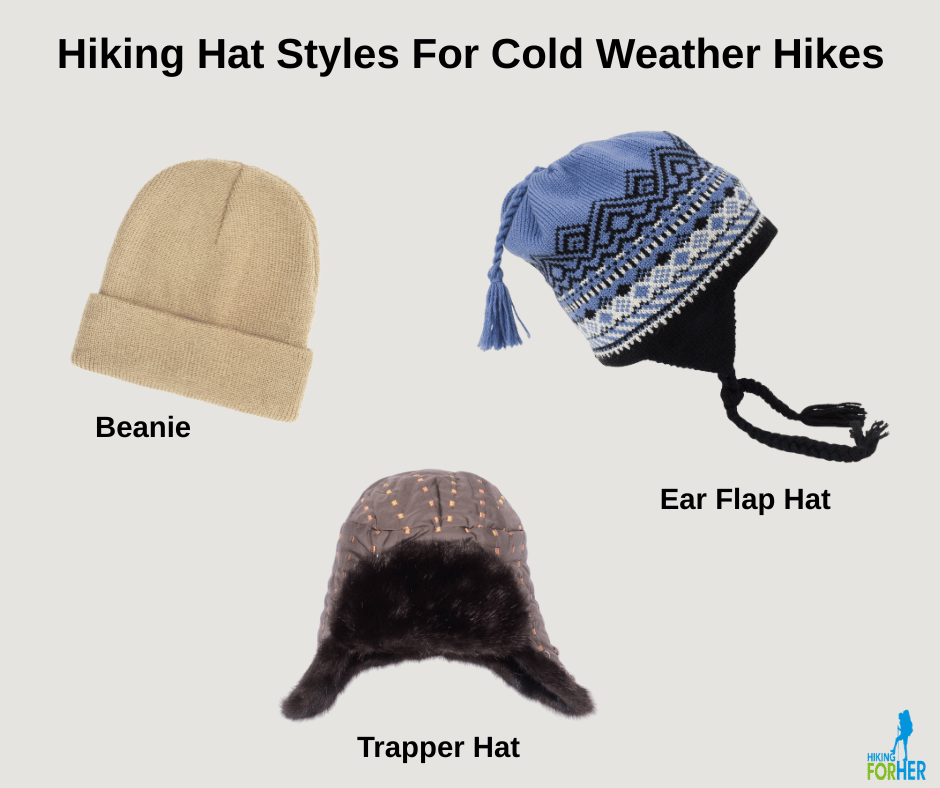 These options are good cold weather hike choices, but you could also choose a modified ball cap with insulation if ear coverage is not important to you.

One important note before we get into details: A beanie is called a toque in some regions of the world.
The name doesn't slow us down as we let take a closer look at the pros and cons of each style of hiking hat for cold weather.
Beanie style hiking hat for cold weather
A beanie is versatile because you can pull down the cuff over your ears or fold it up when you don't want ear coverage.
It can accommodate anything else on your head, such as ear muffs, electronic devices, hair accessories, if it's not too closely fitted.
The cons of a beanie for a hiker are twofold: The hat may stretch out and get too large over time and need to be replaced, or the hat may ride up on your head and allow heat to escape.
Choosing the right fabric will eliminate these drawbacks of a beanie style hiking hat.
Choose Merino wool, soft yarn from polyester, or fleece are good choices. Throw in double layers and you're covered, literally.
Stretchy polyester that fits closely is a good choice if you're going to wear a helmet or hood over the hat. This fabric choice might snag or unravel, so its durability may be less than ideal.
Ear flap hats for cold weather trails
If you don't want to take a chance on your ears getting cold, go with an ear flap hat.
The name tells you the pros of why it's a good choice for hikers who feel the cold extra hard.
Look for an acrylic knit with a fleece liner to maximize your chances of a warm head and protected ears.
If you really like a ball cap fit, you can find ear flaps and insulation incorporated into them for cold weather.
If you choose a style that allows you to tie two strings together to secure the hat on your head (think windy conditions), you can untie and bring the two ear flaps to the top of the hat before tying them out of the way.
The cons? Be sure the hat is large enough for your unique head dimensions, and can accommodate your hair style.
If you go with a tie-in-place style, it may untie and get in your visual path at inopportune times like stream crossings or icy footing.
Trapper style hats for cold weather hiking
Here's where we can have a little fun with the topic of how to choose a hiking hat for cold weather.
A trapper hat incorporates the ear flaps we noted above, and then goes way beyond them with extra features and what some might consider a slightly goofy look.
Select wind and waterproof fabrics, and a lining of fleece or synthetic fur (unless you're a real trapper, then I guess you can go for real fur).
A secure way to lift and fold the flaps out of the way gives you versatility in terms of coverage and temperature comfort. Look for buttons or snaps at the sides of the hat to do that.
Some trapper hats include a chin strap to secure the hat on your head.
The pros of a trapper hat are knowing that your ears and head won't suffer in cold, biting temperatures and windy conditions. Bonus points for a very stylish look!
And all that heat you're generating as you hike? It's going to cradle your head (saying that like it's a good thing).
The cons of wearing a trapper hat are possible dents in your self image when you meet hikers on the trail (the side eye thing), and reduced ability to hear through the thick ear flaps.
Also, buttons and snaps can break or detach from the hat.
As you can see by now, how to choose a hiking hat for cold weather is not as simple as one might think.
How do I find a hiking hat for cold weather
with a comfortable fit?
Regardless of which type of hat style you choose, you need to try on the hat to be sure it fits well.
And by well, I mean not tight enough to cut off circulation to your brain and induce headaches, but snug enough to stay put as you move AND give you full coverage.
The size of your head is going to dictate which brands of hiking hats work best for you.
Most hats are offered in sizes small, medium, large and extra large, but figuring out exactly what that means is hard unless you're able to try on the hat.
Read online reviews to get a sense of what those words mean for you if you're going to push the magic button without a try-on.
If you're bald, a soft fabric is a must for comfort. Who needs a scratchy hat?
In any hat you consider, look for flat fitting seams to reduce bulk and give a snug fit.
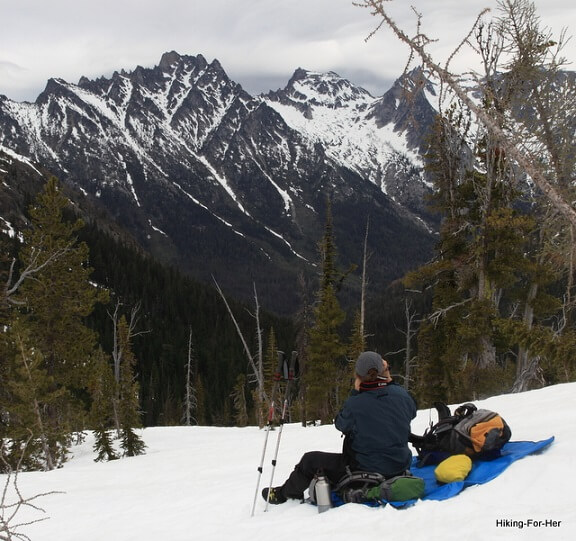 Your summer ball cap isn't warm enough in cold weather conditions, unless it's calm and mild
What should I look for in a durable hiking hat
for cold weather?
Durability is a word that is important to a hiker, because it stretches the hiking budget while delivering value.
Durable fabrics for a cold weather hiking hat include Merino wool, fleece and polyester.
The durability of a hiking hat can be measured in three ways:
1. You want a hiking hat that stands up to abrasion and dirt.
2. Your hiking hat should be easily cleaned, preferably in a normal wash cycle. Merino wool may require extra steps. Hanging the hat up to air dry extends the life of the hat.
3. You need your hiking hat to remain warm and cozy, so avoid cheap fabrics that will pill up, pull apart or unravel. Merino wool and fleece are your best bets here, but of course will cost more.
 Frowning in concentration because my head is warm enough to think good thoughts
Are there features beyond the basics that I should look for in a cold weather hiking hat?
Oh, yes, glad you asked.
Keeping in line with our sensible suggestions, you can make a cold weather hiking hat even warmer by adding double layers and a cozy lining.
If you choose Merino wool, pay attention to the number associated with it. Example: a 250 base layer fabric is considered a light weight hat for mild temperatures. Choose a higher number for colder conditions.
Another Merino tidbit: This wool is soft and handles moisture without holding onto odors. A nice choice!
Some beanie style hats are reversible, a two-for-one-price option.
Now let's have some fun.
If you're a logo collector, look for the hat brands that display a prominent patch on the front of the hat.
Color choices are wide open for cold weather hats, so go a little crazy and choose a bold color paired with an eye catching pattern to really stand out on the trail. Hunter orange with tiger stripes, anyone?
You can stick to vegan (no animal derived components) options and still find lots of hat choices.
What about a pompom or other decoration on top of the hat?
How to choose a hiking hat for cold weather to fit your personality can become an indoor sport ;)
 A windproof hood over a beanie style hat is a good combination in cold weather
Do I have options other than a hiking hat
in cold weather?
Oh yes you do, curious hiker!
The balaclava comes immediately to mind. It's designed to cover your entire head, but also keep your neck and ears warm. Think hat + hood + scarf.
Some balaclavas will cover your entire face, from chin to eyes and no forehead exposure. Great for you ninja hikers.
Choose Merino wool or heavy weight fleece fabric for maximum warmth. Stretchy polyester may be a good choice if you're going to wear a helmet or hood.
The pros of the balaclava include a looser fit to allow head and neck movements and to accommodate a hat, plus the ability to customize how much of your head you want covered.
A balaclava with drawstrings (may have adjustable locks) will customize the fit around your head.
Cons of a balaclava are that it's bulky in your backpack if not used, and if you're a mouth breather the fabric will get saturated and begin to make you claustrophobic.
You do have another option for head gear on cold hikes, but I wouldn't recommend it in severely cold conditions.
A headband is a minimalist choice for cold weather head protection, made of Merino wool or fleece. Other types of fabric are too thin and won't do the job for you unless they are fleece lined.
A headband is small and can be stowed in a pocket, but be sure to look for a tapered design that will fully cover your ears.
How to choose a hiking hat for cold weather:
conclusions
There you have it, how to choose a hiking hat for cold weather with 3 hats plus 2 other options for keeping your head as warm as possible on cold hikes.
But wait! There's more!
Hikers are always looking for ways to stretch the hiking budget. Gear that does more than one thing makes our eyes shine!
A hiking hat can be pressed into service as a seat cushion, towel, lens cleaner, dog mopper, eye shade, head rest and extra insulation around water bottles.
When you're not wearing the thing, keep loose bits of gear together inside your hat, like a headlamp, trail snacks, gloves and an eyeglass case (voice of experience).
Now you are ready to head out (catch that?) on a chilly trail fully prepared to have a warm and safe hike.
Home page > What To Wear Hiking > Best Hiking Hats >
How To Choose A Hiking Hat For Cold Weather
|
I get emails all the time about what I wear, eat, carry and love to use on the trail. That's
why I provide affiliate links to you: the best gear that I use myself and have seen used by other hikers is instantly
available for your consideration, and the gear company sends a few
pennies per dollar to this reader-supported hiking website. There is no added cost to you! Everyone ends up a winner: Great gear for you, strong gear companies, and more free hiking tips for everyone. Thanks very much for your support. It's warmly and sincerely appreciated. It also helps send these hiking tips to all your virtual trail buddies around the globe. |
 |
|
Diane Spicer was a beginner hiker in 1971, and never stopped hiking. She founded the Hiking For Her community in 2008 to encourage female hikers, those who wanted to begin hiking as well as those who were in love with this fantastic sport already. On this website she shares expert hiking tips and recommendations, gear reviews and photos from her outdoor adventures so you can learn the necessary skills for comfort confidence and safety on a hike. This reader supported website does not use sponsored or promoted content. There are no ads, no AI content or artificially generated or touched up photos, no paid link placements. Everything you read is based on decades of personal hiking experience in many different locations. Please enjoy these expert hiking tips as you explore what hiking offers in any weather, season or location. |
 |
Scraping the contents of the Hiking-for-her.com website for the purpose of AI (artificial intelligence) LLM (Large Language Model) training is strictly forbidden.
All rights reserved. No duplication of content without permission.
Photo credits: All photos on this website were taken by David Midkiff or Diane Spicer except where noted.
Disclosures
Privacy Policy
Copyright
Media
Hiking For Her is a participant in the Amazon Services LLC Associates Program, an affiliate advertising program designed to provide a means for us to earn fees by linking to Amazon.com and affiliated sites.