Tips On How To Choose A Hiking Hat
For Warm Weather
By Diane Spicer
There's more than you'd think that goes into how to choose a hiking hat for warm weather.
These tips will answer all your questions when it's time to consider a new hiking hat for hot, sunny trails.
Or to replace a worn out hat (way to wrack up the miles, hiker!).
We'll consider these important features of a hiking hat for warm weather:
- Sun protection
- Comfortable fit
- Ventilation
- Durability
- Care and maintenance
See? There is a lot to consider to get the perfect hat for your hiking adventures when it's hot, humid, sunny or all of the above.
These tips will give you everything you need as you ponder how to choose a hiking hat for warm weather.
Does the hat offer good sun protection?
There are two features of a hiking hat to consider when you are looking for protection from the sun.
The first question to answer is whether the hat is designed to shield your eyes from the glare of the sun, and ultimately from the ultraviolet radiation blasting into your face.
The feature to consider here is a the presence of a brim, and how large it is.
A bucket style hat provides minimal protection from glare, while a trucker style or baseball cap does give you a brim to provide a bit of shade for your face.
Think about your ears and the back of your neck, too. Does the hat provide any fabric to drape over those areas of your head?
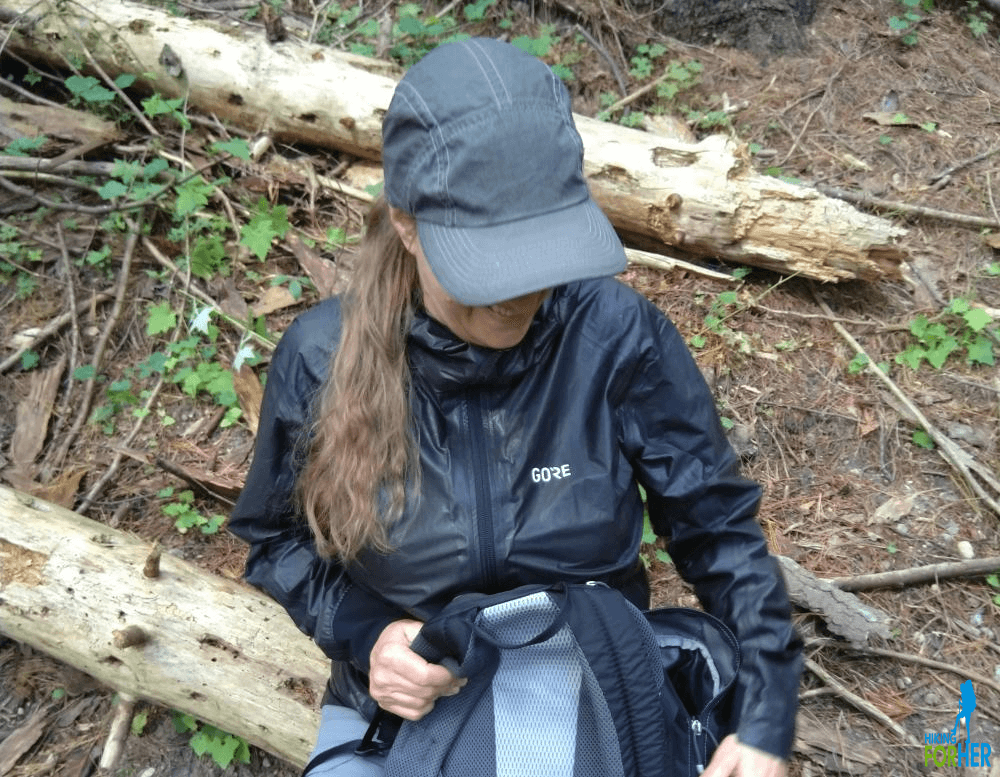 This ball cap provides shade for the hiker's eyes but leaves the ears and neck exposed.
Here's where a well designed sun hat comes into the picture.
This style of hat does cover your ears, back of the neck and provides a lot of shade to your face.
The brim can be up to 4 inches, which throws a lot of shade on your face.
The hiking sun hat may have a string or some sort of tie down (sometimes called a chin strap) to keep it in place in windy weather.
The strap also allows you to remove the hat but keep it close on your back when it's not needed.
Many sun hats have lightweight mesh panels at the crown, useful when we discuss ventilation below.
A few sun hats I've seen go one step further: a sometimes detachable fabric called a neck cape to give complete and total coverage of your ears and back of the neck. These can be as long as 7 inches.
 The combination of sunglasses and a sun hat shades the face and provides protection from ultraviolet radiation
The other feature to consider is the UPF rating of the fabric used to make the hat.
While any cloth provides protection against UV rays, a hiking hat may be rated with a number.
Pay attention to how large that number is, because the larger the number the better the protection against the sun frying your skin.
For example: a UPF rating of 50+ will block a lot of UVA and UVB rays. This gives good protection for skin and eyes as you hike through sunny terrain.
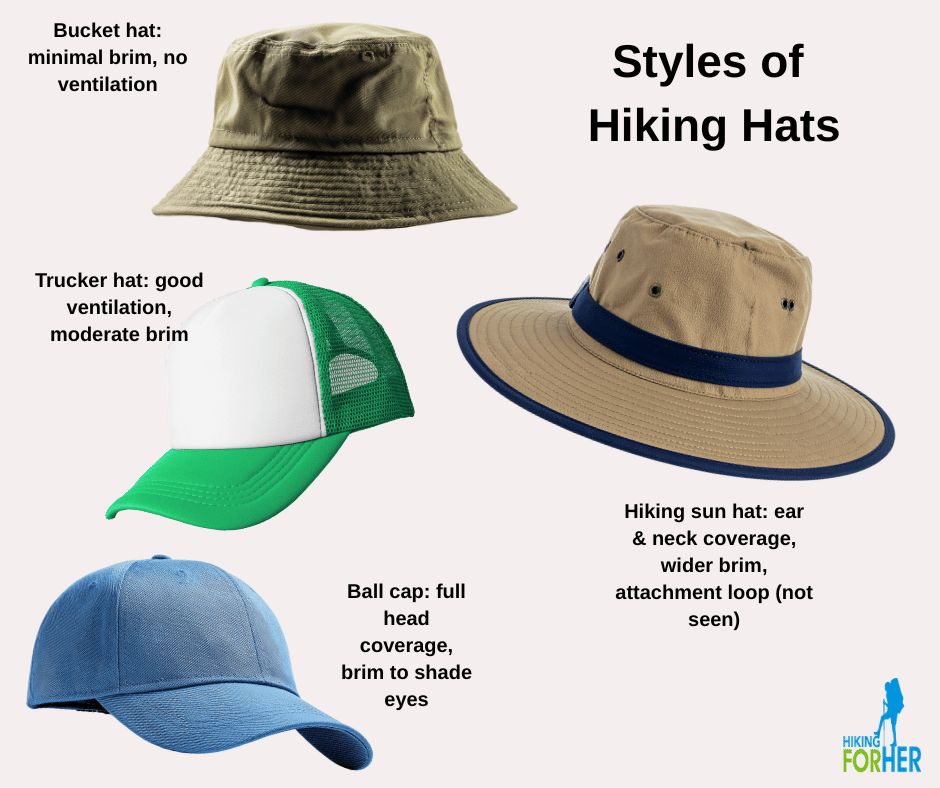 A hiker may have one of each of these styles of hiking hats, for different types of trails and depending on the season and weather variations
One more option for protection against the sun on a hike
You have one more option, which is not a hiking hat but a useful piece of clothing to have in your gear closet: a sun hoodie.
This is a lightweight long sleeve shirt with an attached hood that can be used to supplement your trucker hat or ball cap, as I did in the photos below.
The hood provides full ear and neck protection from the sun, but the fabric is breathable and you can't even feel its weight on your head.
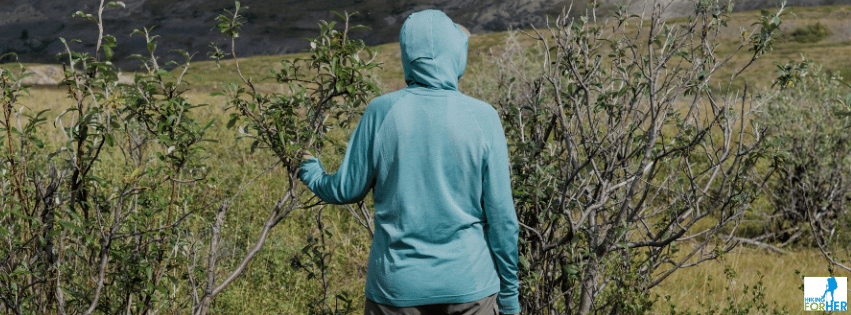 A hiking sun hoodie not only covers up your face and neck, but your arms. Use it for sun protection but also bug protection.
If you don't have a sun hoodie but are curious, I reviewed three different styles of sun hoodies.
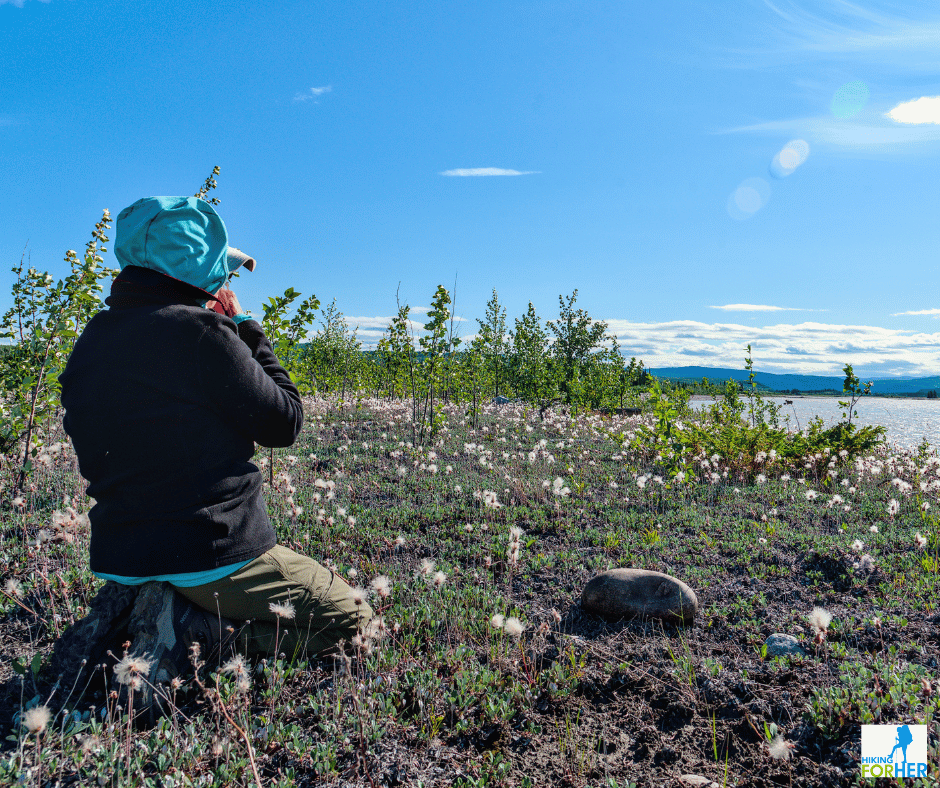 A ball cap plus a sun hoodie with hood up is a great protective combination when the clouds evaporate and you're in exposed, buggy terrain
Is the hiking hat a comfortable fit?
When it comes time to consider how to choose a hiking hat for warm weather, you want to avoid pinched ears, a groove carved into your forehead, and possibly even a headache from a hat that's too tight.
If you go with a bucket hat for warm weather hiking, you've got no options to adjust the fit of the hat. Choose one that has room for your hair and fits a bit loosely to allow air flow.
If you choose a trucker hat, there will be plastic, sometimes metal, tabs on the back of the hat to adjust the fit. Customize it to your head circumference.
Also take into account your hairstyle on a hike. Some women put their long hair into a bun, and that can interfere with the fit of the hat unless adjustments are easily made.
If a ball cap is what you prefer to wear on a hike, you will have the ability to adjust it to your unique head dimensions using plastic, fabric or velcro tabs on the back of the cap, sometimes with a metal buckle to provide more tension.
Same caveat as above: on days when your hair has more volume, adjust accordingly.
And here's a note for hikers with ponytails: avoid velcro closures unless you want to yank your hair off the hat each time you take it off (voice of experience here).
There is one more option to make your hiking hat fit well: a toggled cord at the crown to adjust the fit. These can be found on sun hats.
More features to make your hiking hat fit well
But there is even more to how to choose a hiking hat for warm weather, in terms of a good fit.
Some hats have a soft fleece or felt band that runs around the inside. It not only provides a more solid contact with your head, but it wicks up your perspiration to prevent it from running into your eyes.
- That's why it's fondly called a sweat band.
You're going to generate a lot of sweat on a hot hike, right? Yes, I want sunscreen and salt to burn my eyes, said no hiker ever.
Trucker hats don't usually provide the soft band of fabric, meaning the hat directly contacts your head. This can be uncomfortable for some hikers.
Some ball cap styles do provide a sweat band, be sure to check if you're ordering online.
Most of the sun hats I've seen have this feature, but you may not need it if the hat has large ventilation panels and is made of moisture wicking fabric.
One more thing: Sun hats and some bucket hats have a fabric cord or loop (chin strap) that adjusts in length to give you a tighter, or looser, fit. These are good to have in windy conditions.
Does the hiking hat have good ventilation?
Home page > What To Wear Hiking > Hiking Hats >
How To Choose A Hiking Hat For Warm Weather
|
I get emails all the time about what I wear, eat, carry and love to use on the trail. That's
why I provide affiliate links to you: the best gear that I use myself and have seen used by other hikers is instantly
available for your consideration, and the gear company sends a few
pennies per dollar to this reader-supported hiking website. There is no added cost to you! Everyone ends up a winner: Great gear for you, strong gear companies, and more free hiking tips for everyone. Thanks very much for your support. It's warmly and sincerely appreciated. It also helps send these hiking tips to all your virtual trail buddies around the globe. |
 |
|
Diane Spicer was a beginner hiker in 1971, and never stopped hiking. She founded the Hiking For Her community in 2008 to encourage female hikers, those who wanted to begin hiking as well as those who were in love with this fantastic sport already. On this website she shares expert hiking tips and recommendations, gear reviews and photos from her outdoor adventures so you can learn the necessary skills for comfort confidence and safety on a hike. This reader supported website does not use sponsored or promoted content. There are no ads, no AI content or artificially generated or touched up photos, no paid link placements. Everything you read is based on decades of personal hiking experience in many different locations. Please enjoy these expert hiking tips as you explore what hiking offers in any weather, season or location. |
 |
Scraping the contents of the Hiking-for-her.com website for the purpose of AI (artificial intelligence) LLM (Large Language Model) training is strictly forbidden.
All rights reserved. No duplication of content without permission.
Photo credits: All photos on this website were taken by David Midkiff or Diane Spicer except where noted.
Disclosures
Privacy Policy
Copyright
Media
Hiking For Her is a participant in the Amazon Services LLC Associates Program, an affiliate advertising program designed to provide a means for us to earn fees by linking to Amazon.com and affiliated sites.