Hiking With Hot Flashes:
How To Hike Through Menopause
By Diane Spicer
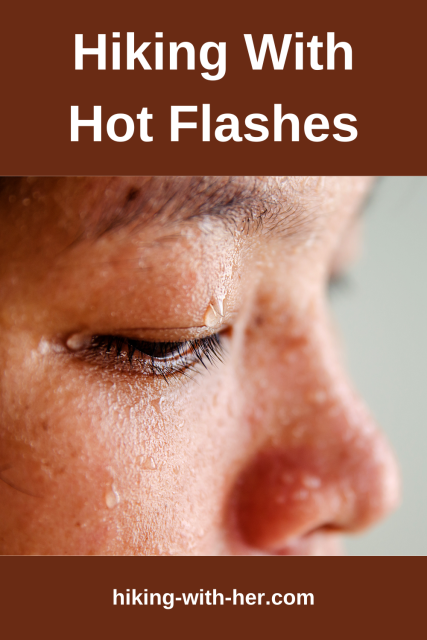
If you're hiking with hot flashes, let's not sugar coat this.
Hot flashes suck.
Hiking does not.
Are you experiencing menopausal heat that distracts you from the trail?
- Some folks call them hot flushes.
- Others call them power surges.
Regardless of the name, you're not going to find the flushing and surging to be charming for very long.
The question: How do you cope while hiking with hot flashes?
Let's work on our burning question from the inside out.
Hiking with hot flashes:
insider information
You can only control so much during menopause, but you can definitely control these internal factors:
- your food intake
- your attitude
For general tips on menopausal nutrition for hikers, read this.
Now let's forge onward: what to eat or avoid eating while hiking with hot flashes.
To beat the flush, avoid these foods
on a hike
Certain foods trigger vasodilation, bringing more of your hot core blood to the surface.
As a result, you feel warm. Or warmer than you already do, if you're in the middle of a flash.
Eliminate these foods from your hiking menu, and you're one step closer to having less intense hot flashes while hiking.
Here's a list for you to consider. Remember, I'm only the messenger :/
Caffeine
Caffeinated beverages or energy gels exacerbate hot flashes.
Your usual mug of coffee on the way to the trail head might work against you on a hike.
It wasn't until menopause that I
discovered green tea.
Green tea will deliver a modest dose of caffeine to get that first mile of trail out of the way, without leading to stomach upset.
White tea, even less caffeine.
- Try these as a solution to less intense hot flashes if you absolutely cannot picture yourself without caffeine.
- I talk about all of the reasons why tea drinking is a great hiking habit for all of us here.
Much as it pains me to say this, chocolate also contains caffeine. Some menopausal women are really sensitive to even small amounts.
- So it's worth eliminating it from your hiking lunch sack just to gauge the results.
- If eating chocolate triggers a hot flash, you have my sympathy. I was once in that sad little boat myself.
Less spice and salt, please
Spicy foods using high voltage pepper or curry are not your friend right now.
Switch to crackers and snacks with strong but satisfying flavors that won't lead to vasodilation, such as:
- basil
- oregano
- garlic
- soy (isoflavones are somewhat controversial during menopause, as this article explains)
Super salty foods create bloating and discomfort that will be magnified during a hot flash.
Eliminate these foods from your trail food:
- instant noodle soups
- salami or heavily seasoned jerky
- salted nuts and pretzels in trail mix
What to eat when hiking with hot flashes
Now that you know what's on the "no fly" list, what should you be eating during a hike?
Cooling foods while hiking with hot flashes
My strategy was to replace dry (salty, spicy) sandwiches with these day hike foods:
- Sticks of crisp carrots, celery, jicama, red peppers with hummus
- Apple slices with nut butter
- Peeled boiled eggs
- Creamy cheese chunks (BabyBel) or sticks
To keep these foods from spoiling during warm weather, here are my tips for day hiking food safety.
I also carried a double walled metal container for refreshing iced beverages: a Hydro Flask.
- A Hydroflask doesn't drip with condensation on the outside, making it a good neighbor inside your backpack or riding along in an outer mesh pocket.
- I had to make peace with the fact that it was a bit of extra weight, but sipping cold water bought me some comfort on a day hike.
- Good trade off, in my flushed opinion.
- Read my Hydro Flask reviews to see if you agree.
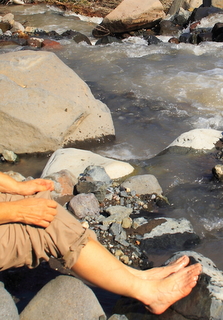
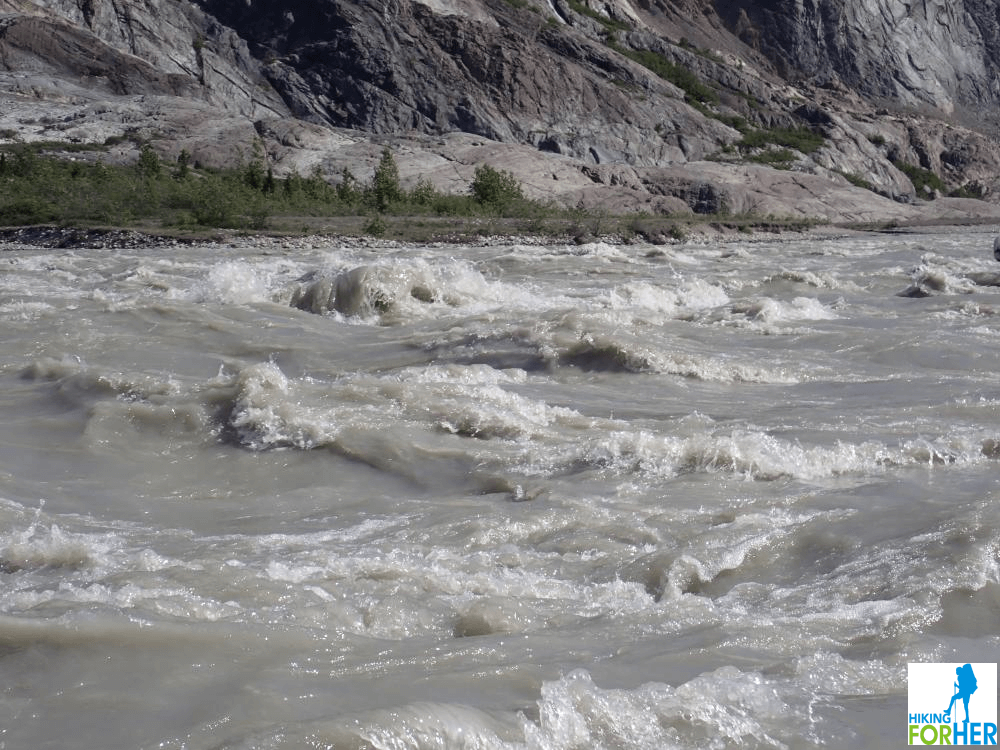 Choppy river water gives off fresh cool breezes. Imagine you're here!
Attitude schmattitude
Hiking while you're in the middle of a power surge makes a woman cranky.
You have my permission to embrace the crankiness.
For real?
Yes, embrace the power.
I had a little "embracing" mantra that I would recite to myself when I felt one of my hot flashes coming on.
I repeated it to myself for the duration of the flash, while doing slow deep breathing.
Maybe it will help you:
Heating up. Let it go.
Boiling over. Let it flow.
Does this seem ridiculous?
Hear me out.
This little poem really helped me while hiking with hot flashes, in two ways.
It reminded me that the heat and discomfort wouldn't last forever.
And it directed my attention back to the hiking, away from the hot flash.
- "Let it flow" meant that I should continue to flow along the trail, or enjoy the flowing water I sat beside, or the flowing cloud layers overhead.
Distraction, you might call it.
And just like with a toddler, it helped to adjust my attitude
Which is why I'm willing to look ridiculous by sharing it with you.
(Hey! Whatever it takes to get and keep you on a hiking trail, Hiking For Her is willing to try.)
Here's the punch line
about hiking with hot flashes
What you think about, and focus on, dictates the satisfaction level of your hike.
- Acknowledge your discomfort, and then keep on being an awesome menopausal hiker!
This time of life is temporary, and will earn you deep wisdom if you hike through it.
Hiking with hot flashes:
external adjustments
There are several concrete steps you can take to prepare yourself to meet the hot flash challenge gracefully on the trail.
Some are obvious, but you might not have taken time to make these simple changes as you face The Fierce Flushes.
Let's take a look.
Modify your destinations
Shady, forested hiking trails and windy ridge tops help keep you as cool as possible in the middle of a hot flash.
Take out your hiking maps and apps, and find those types of trails. You're only saying goodbye to the hot open trails temporarily!
Here's another tip that worked for me.
I started my hikes really early in the day, enjoying the cool dewy summer mornings.
And I took a siesta when it got really warm, starting back to the trail head a bit later in the day than I normally would.
Caution: Be sure your head lamp has plenty of juice, just in case you over estimate how much day light you have left.
Change your clothing
Hikers already know the clothing layering system, which is explained here.
But during the Reign of Hot Flashes, you want to modify the system just a bit.
Bring at least one clean, dry shirt in a plastic bag on every hike, year round.
- The sweaty, nasty shirt goes into the bag once you don the clean one!
Carry an extra sports bra if you're right in the thick of Hot Flash Territory.
- And a soft, absorbent hiking towel to dry the creases and soft tissues between your breasts before putting it on.
If you've never invested in moisture wicking fabrics, now is the right time.
- Here are my suggestions for worthy hiking clothing.
Your usual clothing may begin to annoy you, because suddenly it feels too constrictive.
- Allow yourself to go up one size for ease of movement and more air flow, especially around your chest and neck areas.
- Add a few loose fitting sleeveless hiking shirts into your hiking wardrobe.
- Switch from button up or high neck shirts to V necks.
- Draw string pants and shorts might feel better than snap closures.
Personal sized towels help
Carry two small absorbent and lightweight towels, one to mop your face and neck while the other one dries draped over your backpack.
I carry these.
Consider wearing a Buff made of their CoolNet UV fabric. It's a towel that moves with you!
Carry cooling methods
Freeze your water bottles the night before your day hike.
- Carry them in plastic so as they melt they can't ruin anything inside your pack.
Carry frozen ice packs like these, deep inside your backpack during a hike.
- Apply these to your chest and face during particularly bad episodes of flushing.
- Or hike with one stuffed under your head band or inside your sports bra.
Have you ever seen a cold pack that you activate on demand, like this one?
I used many of them during the summer months for instant cooling on my face and neck while backpacking.
- They're one more thing to carry in your backpack, but the relief was worth the weight.
A cooling scarf, activated with a brief soak in cold water, also saved the day plenty of times. You can activate it with tap water and carry it in a plastic bag until needed.
- Here's the one I prefer.
Fully utilize your plunging opportunities
Take the plunge! (sorry, couldn't resist that one)
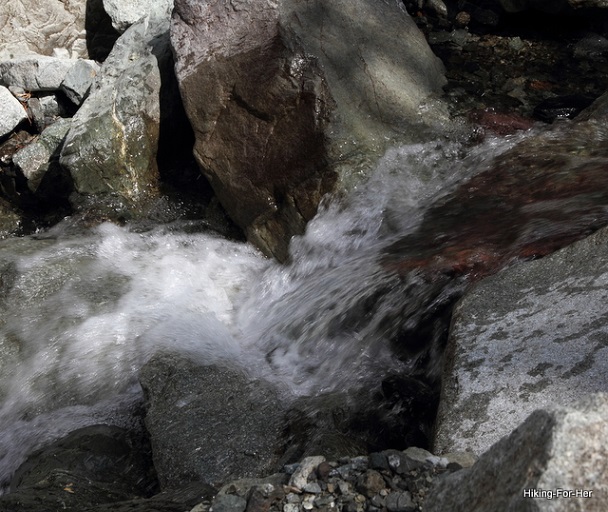 Ah! A plunging opportunity
- Plunge your hat into cool surface water, soak it thoroughly, and then put it back on your head.
- Do the same with a thermal regulation scarf like the one mentioned above.
- Plunge your hands into the snow and allow the coolness to cascade down your arms if you're blessed with close proximity to snow fields or glaciers.
- Never been skinny dipping? Those icy cold alpine lakes are your best friend right now.
- Trail mud and river silt were never favorites of mine until I took off my boots and savored the coolness during a hot flash.
Adjust your turn around time
Make room in your hiking itinerary for some self care when hot flashes strike.
- Build in extra time for refreshing hydrotherapy at surface water along your route.
- Give yourself time to recover from a hot flash by stepping off the trail to sip water, deploy an ice pack, and mop up.
- Realize that multiple hot flashes during a hike will sap your energy. Choose moderate mileage goals and be pleasantly surprised if you feel that you can hike further on any given day.
Choose your hiking companions wisely
You know who deeply understands how challenging hiking with hot flashes can be?
Yeah, exactly. Any woman your age, or older.
Find a woman trail buddy who doesn't mind when you have to stop hiking to tend to your needs.
A supportive male who can modify hiking goals depending upon your hot flash status is also a good choice for trail companionship.
Also on the list: pre-menopausal women who are not horrified by your flushed face, sweaty neck, and soaked shirt.
- Oh, wait! Isn't that any hiker who hikes hard?
- Good news! You'll blend right in :)
The bright side of
hiking with hot flashes
Always look for the silver lining, that's what Hiking For Her says!
And there are a few benefits to note in this menopause hiking scenario.
Cold weather hiking heat source
Now that I'm on the far side of menopause, I have to admit that I counted on my hot flashes to keep me warm on cold weather hikes and snowshoe trips.
- In my estimation, one hot flash equals 1.37 layers of hiking clothing.
And while backpacking, one good hot flash can heat up a cold damp sleeping bag in a jiffy.
Full disclosure: It will also leave you damp and clammy after the flash. Stay tuned for reliable hot flash backpacking tips.
Coming into your power
We live in a culture that worships youthfulness.
Hot flashes will force you to face the fact that you're passing into a new phase of life.
A powerful phase, in my humble opinion.
Older women know who they are and what they want.
They know where they're headed, both on and off the trail.
Here's a fun fact to fixate upon:
Every time you go through a hot flash, you are one step closer to having menopause behind you.
I'm here to tell you that leaving behind the ordeal of handling a monthly cycle as a hiker is fantastic!
- No more worrying if you have enough supplies, or the right supplies, on every backpacking trip results in more brain power for enjoying your hikes.
Hurrah! More power is coming your way soon!
Hiking with hot flashes:
maybe not so scary now?
I've shared some ideas to help you survive and thrive while hiking with hot flashes, but your own experiences and questions are most welcome.
You can reach me here.
Need all of my flashy tips all in one place?
- Coming soon: a checklist to build your own Hiking With Hot Flashes personal kit.


Home page > Best Hiking Tips > Menopausal Hiking >
Hiking With Hot Flashes
|
I get emails all the time about what I wear, eat, carry and love to use on the trail. That's
why I provide affiliate links to you: the best gear that I use myself and have seen used by other hikers is instantly
available for your consideration, and the gear company sends a few
pennies per dollar to this reader-supported hiking website. There is no added cost to you! Everyone ends up a winner: Great gear for you, strong gear companies, and more free hiking tips for everyone. Thanks very much for your support. It's warmly and sincerely appreciated. It also helps send these hiking tips to all your virtual trail buddies around the globe. |
 |
|
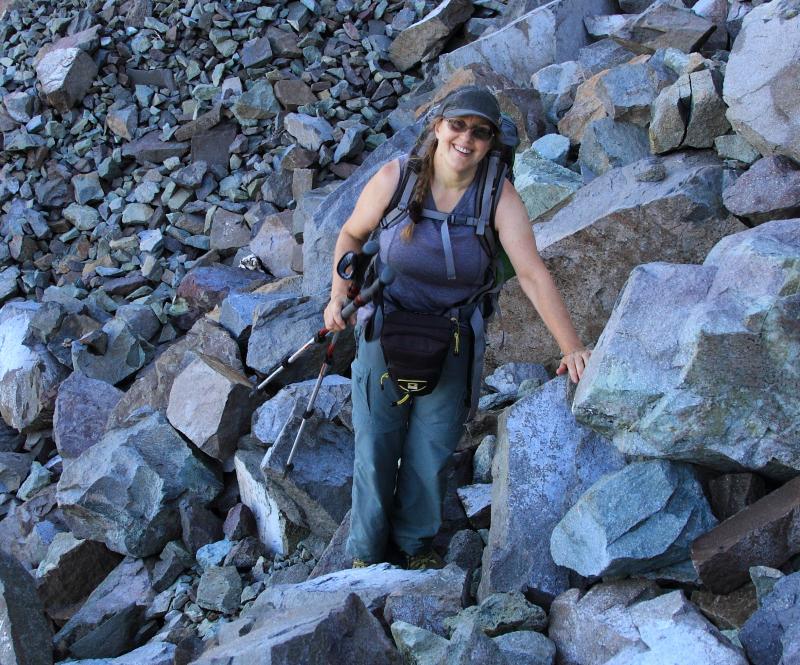
Diane Spicer was a beginner hiker in 1971, and never stopped hiking. She founded the Hiking For Her community in 2008 to encourage female hikers, those who wanted to begin hiking as well as those who were in love with this fantastic sport already. On this website she shares expert hiking tips and recommendations, gear reviews and photos from her outdoor adventures so you can learn the necessary skills for comfort confidence and safety on a hike. This reader supported website does not use sponsored or promoted content. There are no ads, no AI content or artificially generated or touched up photos, no paid link placements. Everything you read is based on decades of personal hiking experience in many different locations. Please enjoy these expert hiking tips as you explore what hiking offers in any weather, season or location. |
 |
Scraping the contents of the Hikingforher.com website for the purpose of AI (artificial intelligence) LLM (Large Language Model) training is strictly forbidden.
All rights reserved. No duplication of content without permission.
Photo credits: All photos on this website were taken by David Midkiff or Diane Spicer except where noted.
Disclosures
Privacy Policy
Copyright
Media
Hiking For Her is a participant in the Amazon Services LLC Associates Program, an affiliate advertising program designed to provide a means for us to earn fees by linking to Amazon.com and affiliated sites.