
Enjoy Happy Trails, the free monthly newsletter from Hiking For Her
Receive a free resource: "Hiking Layering System Explained"
Hiking Pack List:
Don't Forget A Thing
On Your Backpacking Trip
By Diane Spicer
A hiking pack list seems too organized and deliberate for free spirits like hikers, right?
Wrong!
A basic hiking pack list is a great starting point for new hikers.
But it is also useful for seasoned hikers.
And a list works for Santa Claus, right?
Let me explain my logic by sharing the best tips on how to pull together your own useful hiking pack lists.
Why the Ten Essentials belong
on your hiking pack list
There already exists a list of famous "hiking 10 essentials".
Maybe you've heard of them, and are tempted to roll your eyes and ignore them?
Hold that thought.
Then there is my personal "must haves" list, followed closely by my "consider these" items.
All of them combine into one powerful package for surviving a trail disaster, or spending an unplanned night in the woods.
- You'll have your own unique "must have" items to add to your packing list, but feel free to borrow my ideas for comfort and safety.
So let's get the details of the 10 essentials out of the way first.
"Essential" implies you gotta have 'em.
Oh, so true!
In no particular order, here they are.
Extra food
gives you a margin of safety
as a hiker
Without cellular fuel, you're going to be hungry and weak.
So over pack the lunch sack just a tad.
It provides you the margin of safety you just might need if you don't make it back to the trail head on schedule.
Don't begrudge the weight of a few extra energy bars at the end of the day hike.
- They make a great snack on the way home!
If you're really into the idea of hiking nutrition to maximize your strength and endurance, read these tips.
Extra clothing
Flash forward in your mind, beyond the day's warm, sunny and dry (ideal hiking weather) conditions.
What would nightfall in the forest feel like?
How would it feel it cloud cover rolled in and dropped the temperature quickly?
Today's fleece and microfiber clothing is so lightweight, there's no excuse for not having an extra layer along even in the height of summer.
- I'm never without a pair of fleece gloves, a change of socks, and a fleece pullover in the bottom of my pack, along with a wool hat, even in the warmest season.
- Read all about hiking clothing worn in layers here.
Eye protection
Your eyes are a critical navigational tool.
If you can't see, you're not going anywhere and will have to rely upon the people back home to find you (you did leave an itinerary or at least the name of the trail with someone you trust, didn't you?).
Sunglasses are considered essential for that reason.
If there is snow travel involved in your plans, you must also shield your eyes from the UV rays bouncing merrily up from the snow surface into your eyeballs (snow blindness).
You might need to step up your game to glacier glasses, or sunglasses over your glasses.
Knife
How "old school" - a knife, just like they taught us in Girl/Boy Scouts.
To fend off a bear?
Nope. Not a fair fight and it annoys the bear.
How about these more likely scenarios?
- To prepare some kindling for starting a fire.
- To gut a fish for emergency rations.
- To do whatever needs doing in a first aid situation (think splinter removal, or trimming a pants leg to expose a wound).
- To cut open the toe of your boot to allow you to limp back to the trail head with massive blisters or an injury.
Just add it to your hiking pack list, 'cuz you just never know when you'll need a sharp blade.
And if you're the kind of hiker who loves multi-purpose gear, here's the multi-tool for you!
- It even has a sharp blade ;)
Fire starter
Some people like to carry candle stubs, others carry some sort of flammable chemical like this.
Me?
I carry an old film canister filled with dryer lint or cotton balls coated with petroleum jelly.
- Good luck finding one of those anymore. A zip lock bag works just as well, tucked into your survival kit.
I also carry a few tea light candles in case I have to start a fire using damp wood.
Staying warm and dry is Job #1 in an emergency situation, so be sure you can get a fire going if at all possible.
Matches
What good is your knife and fire starter if you can't start a fire??
I inherited an old metal pull-apart canister to carry my waterproof matches, but a ziplock bag and some wooden matches would do the trick.
Here's the whole kit: matches, striker and case!
Tip: Don't bring book matches, because they get damp and might not ignite in less-than-ideal conditions.
First aid supplies
You can buy a very complete kit like this.
You can cobble one together on your own.
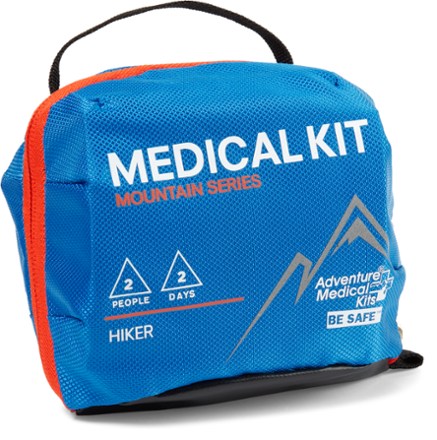 Adventure Medical Kits Mountain Series Hiker Medical Kit | REI Co-op $25.00 Adventure Medical Kits Mountain Series Hiker Medical Kit | REI Co-op $25.00
|
Or find something in the middle in terms of weight and cost, a small but useful medical kit like this one. |
What do you
absolutely need in your kit?
It depends somewhat upon where you are hiking.
For instance, snakebite supplies are not needed in the Pacific Northwest area west of the Cascades, but make sense in Eastern Washington or the desert Southwest.
It also depends on how much of a risk taker you are as a hiker.
However, there are some universal essentials in a first aid no hiker should be without:
- pain relief,
- antiseptic
- soap or sanitizer
- band aids
- gauze
- cotton balls
- tweezers
I consider clean water as a medical necessity, so add water purification tablets to the list.
Illumination: flashlight?
I carry a headlamp instead, because it's a good idea to leave both hands free to navigate in the dark or attend to gear.
But a lightweight flashlight like this, using LED illumination, would be a good idea on your hiking pack list for beginning day hikers.
- Just remember to do a battery check when you switch out your pack contents at the turn of the season.
- And turning the batteries around so there's no chance of accidental "ON" position in the murky depths of your pack is also recommended.
Topographic maps
I never used to include a map on my hiking pack list, back in my wild youthful days. It is embarrassing to admit that now, knowing how many ways I could have gotten lost.
In my own defense, I always stayed on well marked trails and I always had a good idea of how far away from the trail head I was at any one time (well, that's mostly true...).
But yeesh! no map???
- Rookie mistake! Don't make it!
Now I love to pour over maps, stitching together big areas in my head, visualizing what's just over that next ridge, and building a huge mental map of the Pacific Northwest in my head.
Topographical maps give you a unique view of the contours of the terrain, a useful navigation and safety feature.
I consider it a game, and not an easy one for a spatially challenged person such as myself.
But this mental exercise really pays off when I'm hiking, because I can cast "as the crow flies" mental tendrils in any direction and know, really know, where I am.
But there's no way to reach that level of comfort with directions unless you carry maps with you, take them out during breaks, and study them.
It's a great form of entertainment at your lunch spot, too.
So promise me that you'll pull out the map and figure out what's in front of you, then behind you...
and be sure to check out Google Earth and World Wind for fantastic satellite images and well marked maps for any spot you're heading to.
Compass
Goes along with the map on your hiking pack list, right?
Take a navigational course if compasses confound you.
I confess that I'm still building my skills, relying upon my hiking partner (a.k.a. husband) for navigation, when I really shouldn't.
It's one of my vows this hiking season: learn to navigate confidently using the aforementioned map and a compass like this.
And there's always a new GPS system to master!
To play it really safe, also carry a Personal Locator device.
- This makes good sense if you're hiking solo.
- For your peace of mind, and for the folks back home.
Don't forget
the common sense
OK, so there's the bare-bones essentials hiking pack list. Ho-hum, right?
Just common sense.
That's exactly right.
Common sense can get you through all sorts of scrapes.
Look over the list again.
Notice how there are "themes" embedded in the list.
- For example: If you're lost and are going to stay put, you need to be warm (extra clothes, fire starter, knife and matches) and not hungry (extra food - a great aid for thinking clearly in an emergency situation).
- maps,
- navigation tools
- insect repellent might also be necessary on your hiking pack list so you can stay sane while dealing with a crisis.
Don't forget these: polarized sunglasses. They're a step up from inexpensive glasses, but really cut down the glare.
And if there's an injury, you need to deal with it efficiently by using your first aid kit, knife, extra food, shelter &
warmth until help arrives - or you can hike out safely.
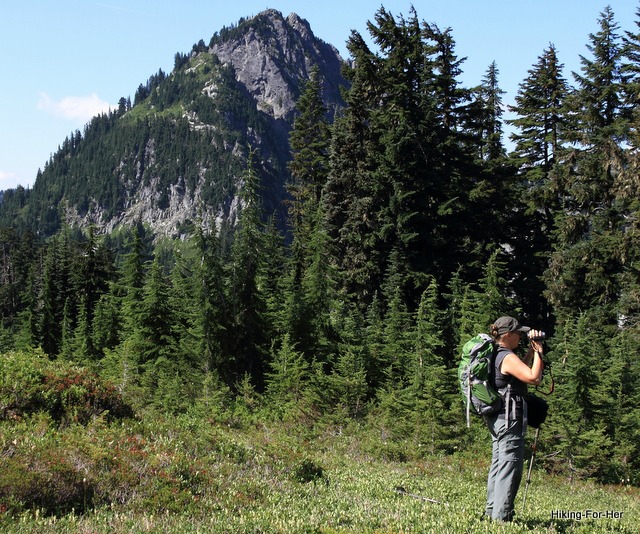 I can relax because I've got my ten essentials!
Now add a few things to your
Hiking Ten Essentials!
Now for a peek at my own personal "MUST HAVES" which I add to my hiking pack list, and which change seasonally.
In my opinion, each of these deserve a spot on anyone's "essential" list, and I'll explain why.
Emergency shelter
You just never know when you'll need to take shelter.
I carry an ancient blue "space blanket" purchased in Houghton, Michigan in 1976.
It has a few chunks of duct tape patching some tears, but will serve me well as a tarp or insulating layer on the ground should I need it.
You'll probably notice it in a few of the pictures on this website. (I have a red one, too, stored with my camping gear. If memory serves, the store was running a "2 for 1" sale that day...).
This worthy little tarp rides along in my pack through every season, having earned its place on my hiking pack list.
In winter, I spread it out on the snow, put my pack on it, then sit on my pack to keep from getting cold muscles.
In summer, it makes a fine picnic blanket on rough rocks or wet soil.
I've also sat out some rain squalls beneath it.
There are thinner "mylar" types of space blankets, and I do carry one of those in my pack, to be used as a reflective surface to signal my location from the air.
But I find that it's too thin to stand up to much wind or rain.
That's why I am never without my trusty tarps.
Get one just like my faithful blue one and tuck it away in your pack... just in case.
Tip: A red one might be a better choice if you're hiking in areas with lots of lakes. It can be seen better by planes or helicopters.
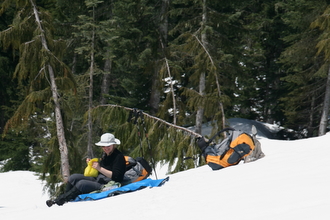 There's my blue tarp! A prominently featured item on my hiking pack list in every season.
Sunscreen
This should probably be thrown in with sunglasses above.
I am a firm believer in preventive medicine.
Why treat skin cancer when you can prevent it?
I always carry SPF30 or higher, and stop at least twice on a hike to reapply it.
Caution! Sunscreen stings like crazy when it gets into your eyes, so wear a bandanna or hat to prevent drips into your eyes.
And consider UPF hiking clothing like long sleeves and long pants as a sun deterrent, too.
- That goes along with the "extra clothing" idea, right?
Extra water
and/or treatment supplies
Some people complain about the weight of the water they carry during a hike.
I consider hydration a blessing, and strive to have a little extra in my water bottle at the end of every hike.
So I'd caution you to think through the hike(s) you have planned, and know where your water sources are.
- Bringing water treatment technology along is an absolute necessity if you are doing anything other than a straightforward day hike on a popular trail.
- A rookie mistake is to underestimate your hydration needs.
Emergency repair kit
I stash a nylon zippered bag in the bottom of my pack, filled with:
- nylon cord,
- strong
safety pins,
- needle and thread,
- nylon cable ties of various lengths,
- extra zip lock bags of several sizes,
- a few extra bootlaces.
I've wound lots of duct tape around my larger water bottle (the one I use in every season), and use it for blister prevention, field repairs to equipment, and patching holes in my pants.
Is a huge gaping hole in your hiking pants an emergency?
- You be the judge of that.
For a complete rundown on what a gear repair kit contains, read these tips.
Pen and paper
If you get into a jam, chances are you will be rattled and perhaps mentally confused about what to do.
Have the mental discipline to sit yourself down, and write down the last time you knew where you were:
- When did you leave the trail?
- How long
ago?
- What landmarks can you recall?
Next, pull out your topographic map.
Try to back track in your mind, keeping notes on the paper, to where you came from.
If you can't back track for some reason in your physical reality, at least you can get a mental grip and fight off the panicky feeling that always leads to bad decisions.
Gripping the pen gives your adrenaline rush something to focus on, and helps prevent (or control) panic.
Read more about trail journals here.
More uses
Another use for pen and paper?
- Leave a note detailing your situation at a trail head or somewhere along the trail for others to find.
I'm sure you can think of other uses for paper, too (such as adding to your hiking pack list on the fly, fire igniter, fly swatter...)
Just be sure it's weatherproof, like this!
Baby wipes
Not just for babies! Be sure these make it onto your hiking pack list.
I use these as toilet paper, or to clean my hands prior to eating.
NOTE: I pack out used wipes in a plastic bag, for proper disposal at home. Hiding them under a rock (or blatantly leaving them on the trail) is not cool.
And be sure they're unscented.
More ideas for your
best hiking pack list
CONSIDER THESE additions for your hiking pack list:
- A metal
bowl or cup with a handle to melt snow or boil river water, hold berries, or catch rain water.
- A sturdy unbreakable whistle or other signalling device such as a lightweight unbreakable signal mirror, or an old DVD or CD.
- Something soft and cushy to sit on. I love cold wet rocks just as much as the next hiker, but sometimes I love a warm, dry caboose better. Try this pad!
- An illustrated, laminated list of wild edibles in your area (in case you can't remember and don't want to risk being poisoned on top of everything else in an emergency situation).
To get really organized,
put together some hiking kits
I'm all about pack organization and lightweight hiking.
So I've developed two hiking kits that save space, weight, and panicky decisions.
If you're interested in reading about what's in them, here are the links:
Above all else, remember this
HFH philosophy...
Make a hiking pack list and check it twice
Hey! If it works for Santa Claus, it will work for you.
You might like to read these next!
Safe Sunscreens For Hikers: Tips On How To Choose The Best
Safe sunscreens for hikers: choose your SPF sunscreen carefully and apply it regularly. These Hiking For Her tips will help you make a smart selection.
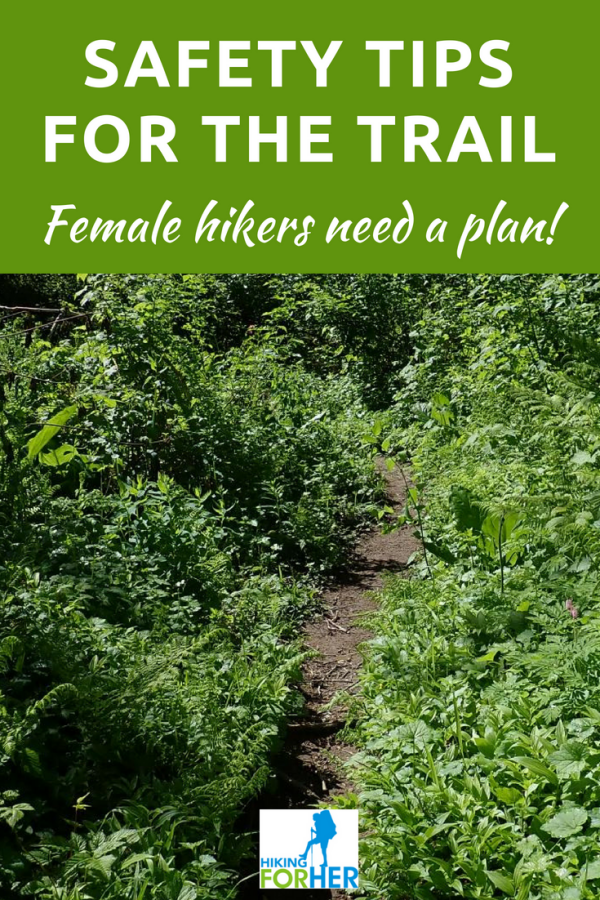
Hiking Safety: Female Hikers Need A Plan
Your hiking safety as a female hiker is not a matter of luck. Plan ahead, head off unsafe conditions when you can, react appropriately when things go wrong with these tips.
Backcountry Hiking: How To Experience Off Trail Explorations
Backcountry hiking is not for beginners. But it's a goal to work up to because backcountry hiking is a slice of heaven on earth. Find out why right now!
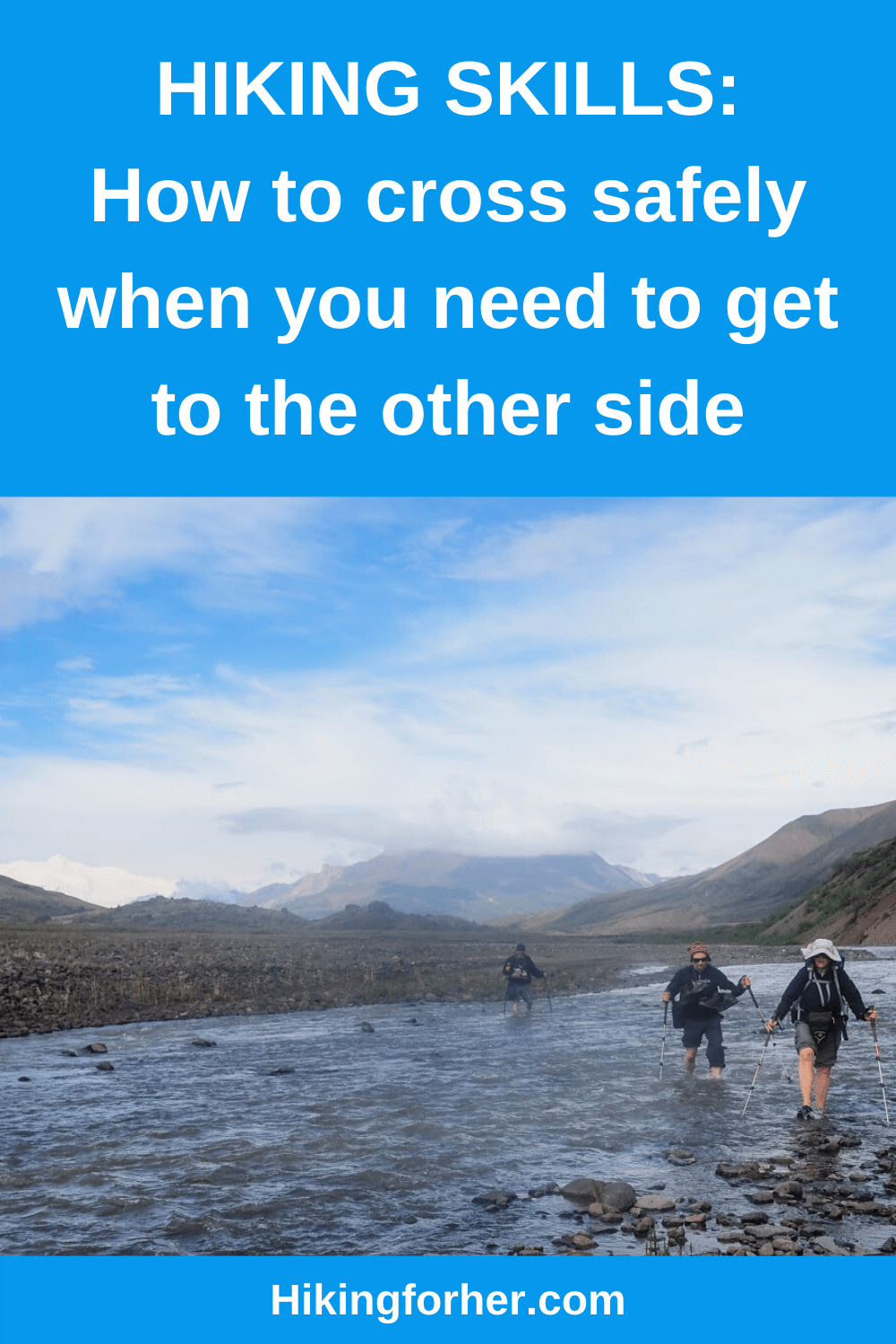
Water Crossing Safety Tips: Best Practices For Hikers
These water crossing safety tips encourage you to plan ahead, stay in the moment, and make smart decisions when faced with how to ford a river or stream.
Home page > Best Hiking Tips >
Hiking Packing List
Some of the links on this page, and elsewhere on this site, are affiliate links.
If you go ahead and purchase items for your hiking pack list, you are supporting the continued outpouring of the best hiking tips - at no extra cost to you!
Thanks very much, you are deeply appreciated.
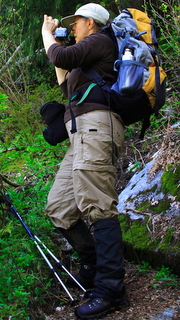
Diane started hiking in 1971. She started Hiking For Her in 2008 as a resource to encourage every woman to take a hike. Please enjoy these expert hiking tips as you explore what hiking offers in any weather, season or location.
Meet Hiking For Her's Diane
TODAY'S BEST OUTDOOR GEAR DEALS
REI Co-op Members save an extra 25% on REI Outlet fitness clothing & gear 4/12 thru 4/15.
Example: Hydro Flask bottle with cap, marked down from $49.95 to $26.73.
Use code OUTFIT24.
See ALL the great deals on the Hiking For Her Best Current Deals page!
POPULAR POSTS

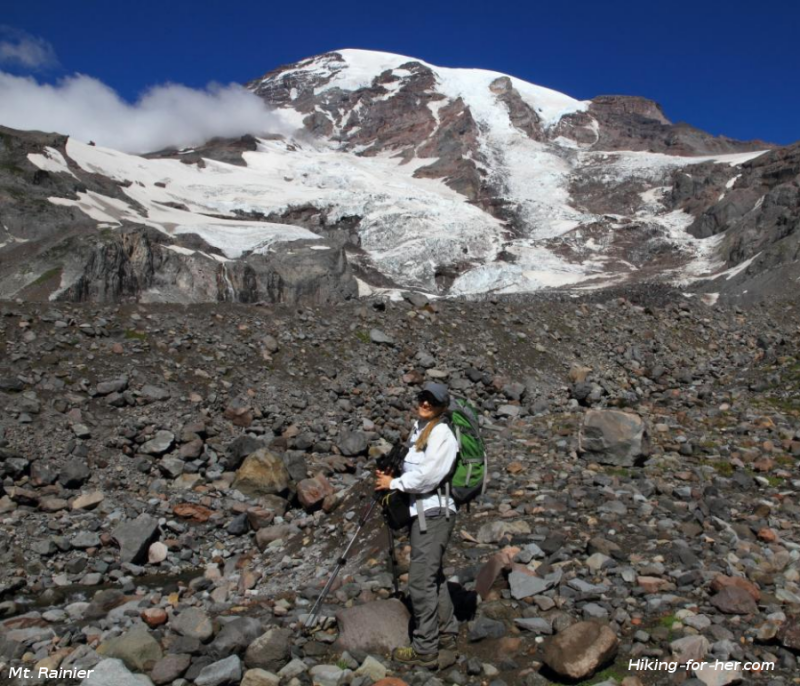
Diane Spicer founded the Hiking For Her community in 2008 to encourage female hikers, those who wanted to begin hiking as well as those who were in love with this fantastic sport already.
On this website she shares expert hiking tips and recommendations, gear reviews and photos from her outdoor adventures to welcome everyone to learn the necessary skills for comfort and safety on a hike.
This reader supported website does not use sponsored or promoted content. There are no ads or paid link placements. Everything you read is based on decades of personal hiking experience in many different locations.
All rights reserved.
Photo credits: All photos on this website were taken by David Midkiff or Diane Spicer except where noted.
Disclosures
Privacy
Copyright
Media
As an Amazon Associate, Hiking For Her earns from qualifying purchases.
When you buy through our links to trusted outdoor gear affiliates, we may earn a commission while you pay nothing extra.